Type your question here!

Saturday, June 24, 2023

Palm Fronds Falling From Mexican Fan Palm. Wrong!

Q. I see palm trees with the fronds falling off all around our Sun City McDonald Ranch as on our daily walks. Was wondering if this is part of the palm’s life cycle or is it a disease problem?

Palm fronds falling were thought to be from the Mexican fan palm. Not really.

A. Some palms have fronds that drop from the tree and other palms that don’t. The usual dropping of fronds may or may not be typical to some palm trees like the Mexican fan palm. It depends.

Mexican fan palms flowering.

            It's a genetic issue. Seed production in palms is from the wind, not from bees or flies. There can be a lot of genetic variability when starting plants from seed. In other words, there is a lot of variation in palms because they are started from seed. There is such a thing as "seeded varieties" (some lawn grasses) but for the most part not in palms.  

Mostly California fan palms near a lagoon in 29 Palms.

            The palms you have a picture of are generally Mexican fan palms. Mexican fan palms are typically started from seed. Mexican fan palms are famous (mistakenly) for "self-skinning". There is a lot of variability in that feature of Mexican fan palms. What you are seeing is genetic variability in these palms because of the seeds.

            Palm fronds separate from the trunk because of rotting (rotting diseases) but this does not happen as often with California fan palms. These typically have a fatter trunk that holds on to the palm fronds and may form a "skirt" of old dead fronds that cling to the trunk. So, we call fan palms with a fatter trunk "California fan palm" and those with a skinny trunk Mexican fan palm.

Is the Western Fence Lizard Vegetarian or Omnivorous?

Q. Will the Western fence lizards that took up residence in our yard 2 or 3 years ago and ate our tomatoes. Or has it been something else?  They really keep ants down. Thoughts?

Western fence lizard and meal. From https://www.ocregister.com/2010/06/19/lizards-in-your-yard-are-a-good-thing/

A. My understanding is that the Western fence lizard is mostly a meat eater (ants, roaches, spiders) and not a vegetarian (your tomatoes), but I could be wrong. I thought it would be damage easy to recognize such as rats or rabbits (omnivorous and gnawing damage, my first thought) or birds like the boat-tailed grackle (vegetarian and pecking damage).

Gnawing on tomato not from the Western fence lizard.

            Sometimes fruit like tomatoes will ripen ahead of time if they are damaged first. I would rely on the fact tomatoes are climacteric fruit (they will ripen off of the vine and kept at room temperature for a few days) and avoid the problem and harvest them while they are still green but starting to ripen. The fruit turns from a darker green to a lighter green as part of the ripening process. If this is an "animal" problem, they are sensing ripening fruit and either smell this or see it.

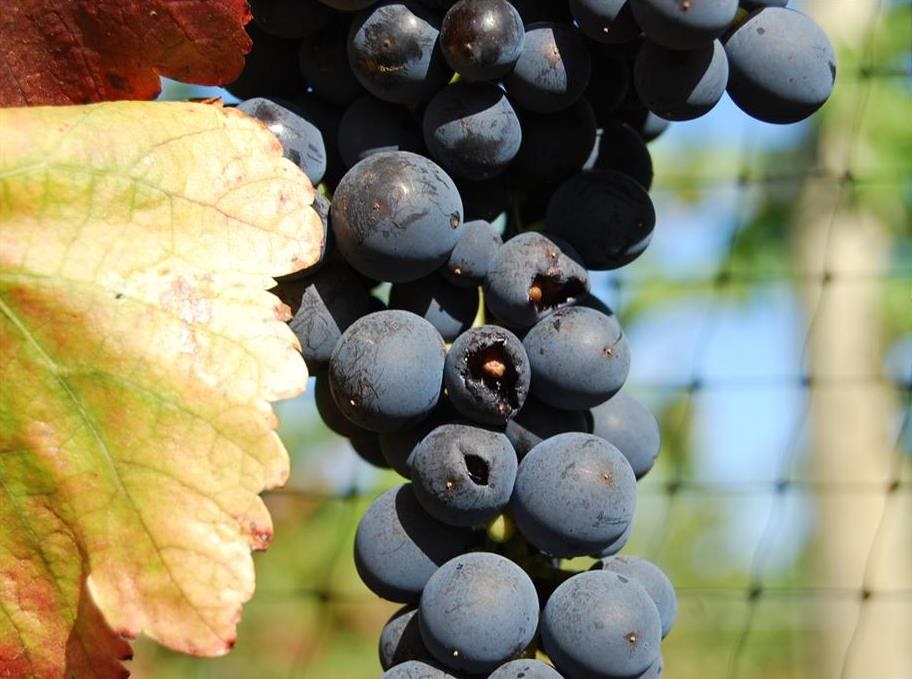
Bird damage on grapes

            This may not be an "animal" problem at all. It might be best to stay ahead of the problem instead of trying to figure it out.

Calcium Deficiency of Tomato and Blossom End Rot

Q. I wanted to ask about a strange occurrence in my tomato garden. Not all, but some of my tomatoes when they ripen, have these black spots only at the bottom of the tomato crop. I just wanted to reach out and see if you could tell me about what causes or could be causing the discoloration?

Blossom end rot of tomato

Blossom end rot of pepper

A. That is normally a physiological problem on tomatoes, peppers and some eggplant this time of year called blossom end rot. Some scientists claim it is caused by an imbalance of calcium in some of the fruit when soils are cooler. Sometimes calcium sprays can fix it. Some varieties of tomatoes show this problem more than others. This imbalance of calcium in other plants is called "bitter pit" in susceptible apples like 'Mutsu' and "corky spot" in susceptible pears like 'Comice'.

Bitter pit of 'Pink Lady' apple

Corky spot of  'Comice' pear

            Apples and pears take regular leaf sprays of calcium as a temporary fix in them. The easiest way to fix this problem in tomatoes is to use a less susceptible variety to blossom end rot. Otherwise, it may take several sprays of a liquid calcium spray (such as calcium chloride or calcium sulfate mixed in water) to fix it. The fruit is okay to eat, it just looks odd.

Sucker Control Under a Wall

Q. My neighbor's tree is sending out suckers that go under my cinder block wall and come out in my planter. I try to pull them out and spray them with weed killer, but to no avail. Is there anything I can do to keep them from coming up? I have the same problem in the front yard but it's the neighbor's palm trees and seeds. They root in the front yard. Anything I can do to kill them too?

Palm seedlings


A. Actually, these are two separate problems. The palm seedling cure is the easiest to fix. When palm seedlings are about 8 to 12 inches tall, pull them out. It works best in wet soil after irrigation. Palm seedlings will die if the bud in the top of the plant, the terminal bud, is removed or killed but it leaves the rest of the plant which can be unsightly. There are sprays that will kill the plant. They are sold as woody brush killers, but they must be sprayed only on the problem areas.

            The first problem requires more work on your part. There is no spray, but you will have to remove the planter, remove or cut the roots that are suckering, and put in a physical “root barrier” and then put everything back.


White Fuzzy Problem Solved

Q. What are those “white fuzzies” on the stems of tomato, peppers, beans, and even outdoor landscape plants?

White fuzzies (as I call them) are egg masses from insects closely resembling tiny cicadas.

A.  These are “plant or leaf hopper” egg masses. Thanks to everyone who responded. Planthoppers and leaf hoppers are basically the same insect. The female lays her eggs on the surface and then covers them with a whitish waxy fuzz. You never see immatures because they drop to the ground from the eggs, much like cicadas. You only see weak winged adults like the grape leafhopper. 

Unconfirmed Eutypa dieback (Pierces disease) on table grapes.

The only times they cause plant problems are when there are lots of them (grape leafhoppers) or when they send viruses and bacteria such as those that cause Pierce’s Disease.

            When these immature forms hatch from these eggs, they even look like very tiny cicadas. If you did see the immature forms from without the help of a magnifier, you might mistake them for flies. Once in the soil, they feed on plant roots until they are adults and need to reproduce. In the case of Eutypa dieback, these insects transmit this disease by feeding on the roots.

Size of Trees and Root to Shoot Ratios

Q. I have a large old 40-foot oleander tree. Every year as it begins to flower, some of the leaves turn yellow and drop. I realize I may need to fertilize but I was also thinking of cutting the trunks at about 20 feet, just below where it branches to encourage new healthier growth. Do you think this is an option? Obviously, I would do it late summer when flowering has finished.

Not a 40 foot oleander as the readers says but this oleander tree is about 18 feet tall.

A. It’s a temporary fix. There is such a thing as “root to shoot ratio”. What that means is that the top of the tree returns to its pre-pruning height as quickly as possible. It’s because of the size of the roots. The energy for growth is funneled into the top of the tree because the roots are at a maximum size for its height. Once the tree “catches up” to the size of its roots, it will slow in its growth because its nutrients for growth are partitioned once again.

Persimmon pruning and root to shoot ratio. This persimmon did not flower or fruit for two seasons until top growth (shoots) caught up with the root size (roots) demonstrating the importance of root to shoot ratios.

            Your oleander needs more water as the summer approaches; four times more from winter to summer and even more as it gets bigger. You can add more water without increasing the minutes by adding or changing drip emitters. But the nice thing about most oleanders is that they handle desert heat well, unlike some other “trees” that get bigger. Oleanders are Mediterranean trees in their water use, not “desert” trees.

December and January plant water use is about 400% more in the summer of June, July, and August.

We have found that giving a tree, growing in a moat six feet in diameter, about two inches of water gives it enough water until its next irrigation. The difference in water use of plants from winter to summer is about 4 times. The number of times that is done in a week or month depends on the time of year and whether it is a “desert tree” or not. At that size, if enough water is applied (so that its roots are wet to a depth of about 24 inches) will last until the next irrigation.

This is about a 15 year old nondesert tree watered with a bubbler and basin (about 15 minutes using pressurized irrigation) at about half of its canopy size. That same tree would require about 7 or 8 drip emitters and watering perhaps two hours to achieve the same thing and using the same amount of water.

What I can’t tell you is how many minutes that takes with drip irrigation. That needs a “gallons to minutes” conversion. In Las Vegas, mesic (nondesert) trees are watered about three times a week in the summer. In the winter they are watered a week or ten days apart, or about four times as long as during the summer months. When changing the irrigation time, focus more on the number of days per week or month rather than the minutes of applied water. It is too confusing. The number of minutes to water is seldom changed with a seasonal change in watering.


Ash Decline (Disease). Or is it?

Q. What might be happening to our ash trees? We noticed that a couple of our ash trees are not doing well at all.  I did a quick google search yesterday and found an article you wrote about ash dieback. I’m hoping that’s not what is happening to our trees, but it does look like it. The only other thing that might have happened is that my husband put sterilant down on some rocks nearby last November. Now we are wondering if perhaps the sterilant made its way down to tree roots that may have been growing beneath the rocks?  I believe he treated the whole area with the sterilant, and you can see where the tree trunk is located in relation to the rocks.  If it is in fact a chemical injury to the trees, is there anything that can be done?

Ash Decline (disease) or not?  Ash Decline looks just like the trees are not getting enough water. You wont know until you water it (give it some extra water) for a few weeks and find out. Unless you want to pay a big plant pathology bill.

A. I don’t think your ash tree has this particular disease. After looking at the pictures you sent, I think it was caused by the sterilant. It’s helpful if you can tell me the name of the sterilant used. Many sterilants are taken up by plant roots. The sterilant damage usually occurs on leaves and stems. On leaves, sometimes they “scorch” (their leaf margins will burn). This is what I think I see. In many cases the leaves turn yellow or become “bleached”.

This is the type of "yellowing" I'm talking about. It is not "sterilant" yellowing but this is the color I am talking about.

            Tree roots watered by rainfall extend horizontally to about the length of their height. So, if you roughly (visually) lay the tree on its side and spin a circle with it, that roughly extends the length of their roots (with rainfall).

Some pine trees I was given to spray with Dicamba, because we saw some dicamba issues on some pine trees when I worked for Utah State University as a Horticulturist.

            In the desert tree roots follow water. Wherever water is applied, that's where you will find its roots if this area is under its canopy. I noticed a lawn under the tree. Did you kill a part of the lawn with sterilant? Many sterilants are taken up by plant roots but this sterilant can oftentimes be seen in the leaves.

Dicamba was also used as a sterilant. This is what dicamba damage looks like on pine trees. Shout out to my friends in SLC Utah.

            If it is sterilant damage, you can try a couple of things. First try to wash it out. It may or may not work. Putting a lot of extra water in that area may flush the sterilant out. Just remember to give a day or so without water to give a chance for the roots to "breathe". Roots need both air and water to survive.

            There is a chance that putting activated charcoal (expensive, activated carbon its called and is specific to the sterilant) may help but it depends on the sterilant used.

            When there is consistent rainfall, roots of trees extend all through the soil under its so-called “canopy”. Your ash tree grows in a lawn. Watering lawns is more even, regular, and consistent than rainfall. Ash trees do remarkably well in lawns. In my opinion that is their preferred way of getting water to the roots.

            Ash trees infected with ash decline are not getting enough water to the dying limbs.  This disease plugs the water conducting vessels in tree limbs. As this disease slowly gets worse, more and more limbs begin dying because of a lack of water. The homeowner ends up removing the tree because it looks “ugly”.

             To see if your tree has this disease or not, give it some extra water once a week during the summer! An extra irrigation during the week tells you if the tree has this disease or not. If the tree does not improve in a few weeks with this extra irrigation, then assume the tree has the disease.

            The mistake made by most homeowners, in my opinion, is not removing the tree as soon as they decide one way or another. If you have confirmed this disease, then remove the tree as soon as possible. This tree can spread this disease to other ash trees!

Roots of Plants Vary in Depth

Q. How deep are plant roots?

Plant roots vary in depth from less than 12 inches to more than three feet. Large trees are watered to the deepest roots get water (guessing its three feet).  Citation is lost.

A. It depends on the size of the plant. This is because the roots of plants extend beyond their drip line. Roots of plants have the potential of growing anywhere under a plants canopy. When a plant is surrounded by dry soil, applied irrigation is very important for root growth. So is air. Roots must “breathe”. If you visually lay a plant on its side spin a circle with it, that will roughly describe where its roots can grow when there is plenty of rain. That is not true in the desert. Even tall lawn grasses have shorter roots if they are watered and then mowed closer to the soil.

Plants generally follow a "40-30-20-10" rule when their roots pull water from the soil. This means as the top quarter begins drying out, the water is used or pulled from deeper in the soil. That is why is it so important not to water every day unless they are very small plants like lawns, vegetable beds and annual flowers. Those roots at the bottom of medium to larger plants cant get the water and their roots suffocate or "drown". Citation lost.

            The functions of roots are not just to supply the top of the plant with water, but this plant must stay upright and resist the pushing by wind. This is one reason why tall plants have water that’s applied deeper than shorter plants.

            If the plant is small, water it only to 12 inches. Small plants don’t need as much support and the water travels smaller distances. Large trees and shrubs are watered as deep as 24 to 36 inches! Their roots must carry water a lot further as well as keep these big plants upright under their weight and in the wind. The water they need is applied to the soil deeper than when watering short plants. They need deep watering because the soil under the roots is dry. Deep roots are needed as the tree gets bigger because of its ever-increasing canopy size and weight.

            The taller the plant the deeper are the plant’s roots needed for transporting water and support.

            As plants get larger, they need an increasing number of the same drip emitters to apply water to the soil. By adding more drip emitters, you can keep the minutes the same. With very large trees and shrubs at some point you may need to increase the size of the emitters, as well as their numbers, to keep the minutes the same.

Stake Wires Will Strangle a Tree If Left Too Long

Q. I have a tree that was staked and now the wires used in staking it are starting to strangle the tree trunk.

Staking trees are for a number of reasons. Make sure the stakes are removed after one year, two at the most.

A. That's a common problem on large, staked trees planted in home landscapes. It's a gamble on the wind whether to stake or not to stake. I encourage people to stake nearly all plants. It's cheap insurance. On smaller 5-gallon plants (sometimes even 15-gallon shrubs) the small, square, green nursery stake found in the container may be adequate if cut loose from the plant, driven or pushed into the moist, solid ground beneath the plant. Retie the plant when you’re finished. Always have some half-inch, stretchable green nursery tape on hand. It's very useful.

If trees are smaller when planting there is no reason to use big stakes. The purpose of staking is primarily to keep the roots from moving until the tree gets established and its roots can keep it from blowing over in the wind.

The purpose of staking any plant is to keep new roots from being damaged during establishment. The movement of roots usually happens during strong winds. Planting in wet planting holes and amending the backfilled desert soil may get around the use of stakes with smaller plants. Use your judgement.

Typically staking is only needed for one growing season and then removed. One growing season is all that is needed to establish plant roots in the surrounding soil and make the plant secure against wind.

Some homeowners may think the reason for staking is to hold the tree upright. That's only partially true. On occasion more than one growing season of staking may be needed when planting trees grown too close to each other in wholesale or production nurseries. In cases like these, metal ties are loosened and then retightened at the end of each growing season to prevent “choking the trunk” as seen in your picture. Remember, plants grow in two dimensions; length AND girth. Sometimes excessively tall and weak plants must be pruned smaller to encourage new, stronger growth.

Staking is sometimes needed particularly to protect the plant from blowing over and stabilizing the roots.

The proper way to stake a tree is to allow the canopy and trunk of the tree to move but not its roots. Movement of a tree’s trunk allows it to gain taper (become stronger) as it grows in size. Trunk taper may or may not be missing because of production nursery practices. Properly grown trees have a tapered trunk as you look at it from top to bottom.

Cracks in Tomatoes

Q. What causes cracks in the tomatoes near the top where the stem is? I have also seen some of my tomatoes with very deep cracks. Let me know what you can tell me about this.

The types of cracks speaks volumes. Longitudinal cracks, like this one running the length of the fruit, is caused by expansion of the fruit when it is ripening. Cracking that are radial, or run around the fruit is mostly genetic.

A. There are two types of cracking, longitudinal cracks (which you have) and radial cracking (which you don’t have). Yours are longitudinal cracks. Radial cracking is mostly a varietal issue. Some varieties of tomatoes show these radial cracks more than others. If you have radial cracks, grow a different variety next season. That will lessen, but not eliminate, radial cracking.

This is a so-called "Heirloom" variety called 'Caspian Pink'. It demonstrates radial cracks typical of the variety 'Caspian Pink'. Not much you can do about it except lessen it under better conditions but the radial cracks will still be there. All type of cracks do not harm the fresh eating of these fruits unless it spoils.

            Another possibility is uneven amounts of water to the fruit. These types of skin cracking causes mostly longitudinal cracks. The swelling of the fruit and then shrinking back to its original size can cause cracking because of the expanding fruit. This type of cracking (longitudinal cracks again mostly) is lessened by using a surface mulch on top of the soil. Sometimes watering differently will help. 

Longitudinal cracking of the fruit by irregular watering even with a surface mulch of straw applied.

If you are using surface mulch, I would recommend wood or pine shavings (like rabbit, horse, or hamster bedding). It “melts” (decomposes) into the soil easier than straw which has fibers that are tough to decompose. Straw works but is more difficult to get it to break down quickly.

            You don’t need a thick layer of surface mulch but just enough to shade the ground and lessen water lost by soil surface evaporation.

Friday, June 16, 2023

Attracting Honeybees into a Garden Landscape

Q. I’ve been trying to attract bees to my garden and thinking about a hive at some point. Need to put in some year-round flowering plants first. Rosemary comes to mind. Any thoughts or literature that comes to mind.

Rosemary flowers in the winter so it is a good choice for attracting and feeding honeybees to keep the hive alive.

A. Rosemary is a good choice; it flowers during the winter and is lower in water use since it is a Mediterranean plant that is smaller. Any plant that has conspicuous flowers during early spring and is cold hardy will work. That is one reason roses work so well. Other plants to consider that flower during that time and are cold hardy for our climate include the different Texas sage and Tecoma types.

Texas ranger (sage) flowers during the winter and is a good choice for attracting and feeding honeybees.

Don’t forget a mixture of annuals and perennials that have brightly colored flowers. Use many different colored flowers like mustards, clovers, desert bluebells and blue eyes, and the like. Scratch the seed into the soil with a rake and start watering them twice a month in December and January with 15 minutes of water from a sprinkler. Turn off the water when your fruit starts flowering.

Honeybees haul water if its in the garden.

Don’t forget water. Honeybees like to haul water during the winter as the hive starts to warm up. Bird baths and plastic troughs dug in the ground help attract bees and other critters. Don’t let the bees drown. Put rocks in the water so bees have a place to land. Honeybees are active during the daylight anytime temperatures are in the mid-50s, clear and sunny and little to no wind. Night flowering plants such as some cacti don’t work because bees need to see the sun to fly. Honeybees are supplemented with sugar water when they can’t find flowers they like. Feeding the colony with sugar water helps to keep the population alive during the coldest parts of winter.

Vegetable Growing in Moapa and Virgin Valley Southern Nevada

 Requests for Dr. Witwer’s information on raised bed gardening, his “Bible” I call it, overwhelmed and surprised me. I just finished sending out copies to everyone and my fingers are tired! (Ask me to send it to you ((morrisr@unr.edu)) because UNR doesn't carry it anymore.) 

Dr. Wittwer was the former vegetable extension specialist for Michigan State University before he retired to southern Nevada. In Logandale, Nevada, he maintained a large in-ground vegetable garden for many years before moving and eventually passing away. Logandale, in its agricultural area called the Moapa Valley and located about 60 miles north of Las Vegas, is slightly warmer but has a similar climate to Las Vegas.

Use His Recommended Varieties First

It is essential to use his recommended varieties but his recommendations on fertilizers and pesticides can be substituted for “organic” forms if you prefer. When using raised beds, or Bartholomew’s “square foot gardening”, look for more compact forms of the same variety to learn from. Vegetable breeders “earn their pay” by recognizing popular varieties in regions would be even more popular with homeowners provided they have enough space to grow them. They concentrate on making them small or changing their fruiting habits in some way. The ‘Early Girl’ variety of tomato is now available from Burpees as an example as a “bush” or determinate type instead of the continuously vining type called “indeterminate”.

Reasons for Raised Beds (or Modified Raised Beds Called "Containers")

There are many reasons for constructing raised beds; rocky soil beneath it, uninhabitable because of pests like nematodes, small space requirements, beautification, etc. A type of “raised bed” are nursery containers. 

Even smaller “raised beds” such as ornamental containers in the landscape can add beauty and height to traditional gardens. Unlike larger raised beds they can be easily emptied, scrubbed clean, sanitized, and refilled again with new soil. Remember to fill them to within one inch of the container “lip” to maximize their soil depth and ease their heat dissipation. Use the same or similar soil mix in the container to make watering them easier.

Remember pots get hot on the outside unless the pot has something shading it. Double potting them (so they have an air space) is one answer in keeping the heat under control.

Plants Grow Toward Light

Q. I pulled out my old, bent crepe myrtle and bought a new one from a grower. It's still small, but I noticed the "trunk" is already curving. Is this going to be a problem like the old one? Is there something I should do now, or will it straighten itself out as it grows? When I plant it, should I put the root ball in the ground at an angle so the trunk is pointing more or less straight up?


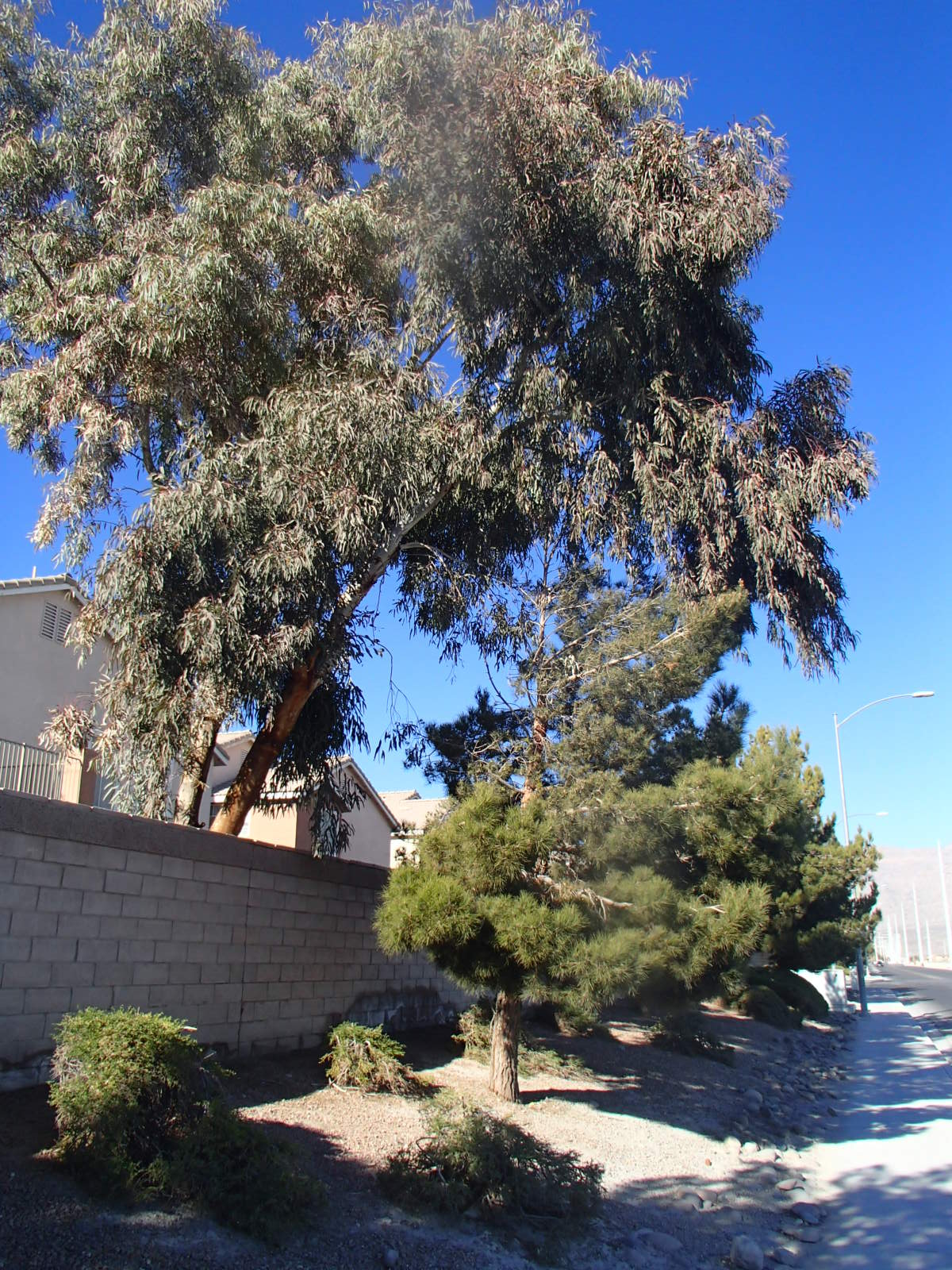
Pine tree leaning due to shade on its West side from the eucalyptus.

A. As soon as you plant it, the new growth will start straightening (bending toward the light) as it grows. The light will come at it from all different directions than in the nursery. When you plant it, plant it as straight as possible and let the plant figure it what is straight with its new growth. You can help it “straighten out” with pruning. As you guessed, the plant will figure it out as it grows.

Pine tree leaning. What is not known to you is that there was a large tree that burned down (died) last year to the left side of that tree on the other side of the wall. That's why it is leaning.


Leaves and buds are light receptors. The side that is open will "fill in" with new growth as long as the plant gets enough light, water and fertilizer to push this new growth. The top growth from leaves and buds (where it "sees" light which determine where and how stems develop) is what we call "positively geotropic" which means it “grows up”.

Roots are "negatively geotropic" which is a fancy way of saying roots “grow down”. Of course, root growth is encouraged by water, air, and fertilizer. Top growth is encouraged mostly by light but heavily influenced by irrigating and applying fertilizer to push new growth.

Saturday, March 25, 2023

Both Nitrogen and Iron Fertilizers Contribute to Dark Green Plant Color

Q. Thanks to your previous advice I used an iron chelate, applied it to the soil in March, and got my plants to develop a dark green color rather than a yellowish green color.


Shrubs that the reader was speaking about. Not sure but they do look like desert natives.

A. There are many things that develop a yellowish color in plants besides needing an iron fertilizer or chelate. The plant you questioned appears to be native desert plant, a Texas sage. That is odd needing an iron fertilizer for native desert plants. They are usually accustomed to our soils and don’t need iron. Watering or a nitrogen fertilizer may be the issue.

Not sure but I do recommend iron chelates that contain EDDHA as the chelating agent. It works in all the different alkalinities of desert soils. EDTA and DTPA iron chelates don't.

Regardless, the two fertilizers that can create dark green leaves are nitrogen and iron. If that plant is native to the Western US, then yellowing leaves is more likely issues involving either nitrogen or watering too often. Nitrogen causes stem growth as well as dark green leaf color. Adding only an iron fertilizer or chelate causes the new growth to become green but does not stimulate new growth that much. When iron is involved, the yellowing occurs on newer growth. Yellowing due to a need for nitrogen occurs all over the plant. Also, the yellowing of leaves due to iron may be a yellow leaf color while the veins of the leaves stay a darker green.

wk
Winter yellowing I call bronzing of a shrub due to very cold temperatures for Las Vegas.

Two types of “overwatering” can occur; watering too often or giving the plant too much water all at once. It is easier for the plant to resist “overwatering” from the second kind than the first kind. It is easy to water desert native plants too often when placed on the same irrigation line as non-desert plants.

Mesquite leaf yellowing and leaf drop during winter cold temperatures.

Another reason for yellowing of plant leaves are cold temperatures. This type of yellowing is more of a “bronzish yellow” leaf color and happens during cold weather. Cold weather damage to mesquite leaves (yellowing or bronzing) is a common occurrence during cold weather just before the leaves may fall from the tree if it gets cold enough.

Pine Trees Don't Need as Much Fertilizer as Fruit Trees


Pine trees in the desert do not need as much fertilizer as fruit trees. We don't expect as much from them as we do fruit trees.

Q. I have a few Aleppo pine trees that I fertilize and water regularly growing in Logandale. I am wondering how much fertilizer to give them each year and how much to water them. I am wondering if I can get them off of the irrigation due to a shallow water table here and apply less fertilizer.

Pine trees access water from shallow aquifers if they are within a few feet of the surface of the soil. One way to see if that is the case is to look for salt pushed to the soil surface by shallow water.

A. In my experience trees like Aleppo pine need fertilizer applied AT THE MOST once a year and perhaps less often. In the case of pine trees mostly nitrogen and potassium because we don’t need them to flower or fruit. That requires fertilizer higher in phosphorus, the middle number. Whenever the trees are “improved” (hybridized or improved for some reason) they need to be fertilized more often and need more care. For example, most fruit trees require one full or a split application of fertilizer twice a year.

This is Burgundy plum growing in Las Vegas, NV. Fruit trees will need more fertilizer if we want large fruit to be produced. Are expectations aren't as high for pine trees so they can get by without applying as much fertilizer.

My guess is that your pine trees, at the most, will need fertilizer applied once a year in the spring. Improved trees like fruit trees need about one pound of a nitrogen fertilizer in the spring (or the fertilizer divided in half and applied twice) for each 1000 square feet under their canopy. Aleppo pine trees require it less often or apply less total amount each time you fertilize.

New growth of older pine trees should be at least 8 inches or more to give adequate growth for a full canopy.

Look at the results of irrigations and applications of fertilizer. The fertilizer is needed every year or every other year. A tree of that size should put on about 8 inches of new growth every year to keep it full. That takes primarily nitrogen similar to a lawn fertilizer (21-7-14). Don’t skimp on nitrogen and potassium in the fertilizer for pine trees. Because they are “all green” and no flowers or fruit you can apply less of the middle number (the amount of phosphorus).

As far as applying irrigation less often or eliminating them, you need shallow groundwater to about 5 to 7 feet deep. At the same time force its roots to grow deeper in the soil so it can discover the water. Pine trees have taproots or large roots that can grow deep if given the chance. Groundwater can go down in the summer months and up to normal in the winter. What I am telling you is that you might need to water occasionally during the summer months.

This is bubbler and basin irrigation on pine trees. The basin doesn't have to be deep but it must be flat and capture the water from the bubbler so it stays put long enough and penetrates the soil deeply.

When you irrigate, water the trees deep when you do, water them less often and watch the tops. Force the tree roots “to go after” deeper water and see how much fewer extra irrigations they need and still maintain 8 inches of new growth during the early summer months.

Friday, March 24, 2023

Winter Cold Damage and Freezes

Oleander after a strong freeze.

This is the time of year, the second week of December, we normally experience the start of freezing temperatures. The likelihood of freezing temperatures increase through the winter. Sometimes freezing temperatures occur in November, as it did a few years ago, but that's rare and not “normal”. What I mean by “freezing temperatures” is plant damage that occurs anytime the air temperature drops below 32 degrees Fahrenheit (F). Those familiar with Celsius or centigrade, may realize this temperature is the same as 0 degrees on the Celsius scale.

Cold or freezing damage.

Refrigerators Don't Freeze

As a reference point, the temperature inside most refrigerators is set to around 40 degrees F, or 8 to 10 degrees above freezing; too cold for most tropical fruit and plants but not too cold for temperate fruit like and plants apples and peaches. Chilling injury (plant damage that occurs because air temperatures are too cold for the plant but not yet freezing) is one reason many ripe tropical fruits, like tomatoes and (more obviously) bananas, should not be exposed to the 40-degree F temperatures of a refrigerator. 

If winter temperatures aren't cold enough to kill, the plant will regrow from buds.

Chilling Injury

All parts of tropical plants such as tomatoes and bougainvillea, experience “chilling injury” when temperatures drop a few degrees above freezing and may extend to 50+ degrees F. Chilling injury (as opposed to freeze or frost damage) occurs at different temperatures and depends on the plant.

Tomato plants might freeze at 32F but the fruit is damaged below 55F.

Chilling injury damage to tropical and subtropical plants include small stem and leaf discoloration, leaf roll, poor growth, and susceptibility to some diseases like root or collar rot. Symptoms of chilling injury include a change in color such as yellowing or bronzing of leaves that ultimately result in leaf scorch or drop, the slowing or halting of growth, leaf drop, water-soaked patches in soft and semi-hard tissues, susceptibility to diseases, and wilting. Chilling injury is due to cooler or cold weather (above freezing) temperatures to tropical plants growing outside of, or close to, the fringes of their normal range. As a side note, I noticed leaf and stem discoloration (closer in color to leaf “bronzing”) in mesquite, palms, citrus and a wide range of plants growing at different temperature ranges.

Chilling Injury and Vegetables

Vegetables can exhibit chilling injury and freezing damage as well. So-called “warm season vegetables” such as tomatoes, peppers and eggplant can show chilling injury anytime the air temperature drops into the damaging temperature range I mentioned earlier. Cool season vegetables, on the other hand, may sail through the same temperatures, or lower, or require a crop cover when temperatures are below freezing. Vegetable varieties may differ in their chilling injury by a few degrees. The ‘Dragon’s Tongue’ variety of bush bean is more susceptible to collar rot (chilling injury) when grown in garden soil a few degrees cooler than other bush bean varieties.

Nopales freeze damage during the winter of 2007-2008

Temperate Flowers and Fruit Can Freeze

Temperate fruit like apples and pomegranates, unlike tropical fruit like tomatoes and bananas, are not damaged at refrigerator temperatures (around 40 degrees) because fruit from these trees can handle these lower temperatures. The ideal storage temperature for these types of fruit is somewhere close to freezing (0 degrees F) and combined with high humidity. A high humidity slows water loss and helps delay some fruit from shriveling.

Refrigerator Freezers and Freezing

The freezer part of our refrigerator is set to around 32 degrees F, or about 10 degrees below the “refrigerator temperature.” Our nighttime winter temperature frequently drops to a “refrigerator temperature” range at night during the late fall, winter and early spring and occasionally into the “freezer temperature” range during the early morning hours of December, January and occasionally early February. When nighttime temperatures reach the “freezer range” is when we often times see plant damage or experience fruit loss, but we may not know it yet.

Open Flowers can Freeze

Open flowers of any fruit (citrus, peach, apple and others) can’t handle temperatures below freezing (32 degrees F) even though most plants or trees might show no damage at all! When flowers are simply buds and not yet open, there is a small amount of freeze protection provided to the developing flower. This freeze protection starts disappearing as the flower buds mature into open flowers. As the flower begins opening, and the frost-sensitive ovary is surrounded by the freezing night air, is when we experience damage or fruit loss. Fruit loss due to a frozen flower ovary can happen in a few seconds. This is why sprinklers, ultimately resulting in applied water turning to ice on the flowers, are used in orchards to prevent freeze damage to flowers (ovary). The act of water freezing releases a small amount of heat that protect flower ovaries from death.

Early winter freeze damage to persimmons.

Was the Flower Frozen?

If you are curious if the ovary of a flower from your fruit tree was damaged during a freeze, pull the flower apart a few days after a suspected freeze and inspect the ovary for death. Ovaries that eventually turn into fruit will be robust and green. Dead flowers drop from the tree early or have a dull, water-soaked appearance if they are still attached. Just because the flower you inspected was “dead” doesn’t mean there will be no fruit produced at all. It takes about two or three weeks for all the flowers to open in spring flowering plants. Several consecutive light freezes in a row (or only one hard freeze) are needed to totally wipe out a crop of fruit from a mature tree.

when a fruit tree flowers it is hold your breath that no freezes happen during this time. When fruit tree flowers are open is a dangerous time for freezing temperatures.


Freezing Death Differs

 There is a temperature difference between the freezing death of open flowers and the freezing damage or death of the plant or tree. For citrus this difference can range from the same temperature as flower death (32 degrees F; limes and true lemons) to lower temperatures (mid 20 degrees F; Myer lemon, grapefruit, and kumquat). Much of this depends on how many minutes or hours a killing freeze lasts and at what temperature.

Temperature, and duration of that temperature, are what is critical. With open flowers, freezing temperatures are needed for just a minute. With plant or tree death, the same temperature is needed for a longer time period. With some fruit trees (such as citrus), the temperature difference between flower and tree death can be small (0 to 7 degrees). In other fruit trees (such as apples, pear, peach and apricot) it can be much greater (20 degrees or more).

Weather Apps

What to do about freezing temperatures and fruit or plant loss? Track and use weather station apps during times when freezing temperatures might occur. Buy a recording thermometer for your backyard and hang it in your important trees. If you are into growing vegetables, use a soil thermometer to judge when to precisely plant.

Weather stations like this one can play a critical role in helping to predict if freezing temperatures are a possibility.

What to Do?

Move fruit trees to a new location. If your fruit trees are less than three to four years old, now is the time of year to move them. South and West-facing sides of walls and buildings are tough to grow plants because of the heat they reflect. Some citrus are in landscape “wind tunnels” that remove flowers during strong winds. North and east sides of buildings and walls as well as backyards have a gentler environment. In cooler, gentler areas of the landscape expect flowering to be two to three weeks later. Group plants together so they can share water, fertilizer, and protect each other. If they can't be grown together, consider constructing wind barriers.

Try kumquats which are a cold hardy, subtropical citrus trees. The small fruit can be freshly harvested and eaten from the tree but still gives you that citrus “kick”. Kumquat flowers several times during the summer instead of just once and yet is small enough to grow in a container. Flowering more than once during a single growing season increases your chances of having a successful crop if you have late or multiple freezes.

Wrapping a fruit tree correctly might give you a few degrees of winter protection from cold.

Grow fruit trees that flower continuously. Pomegranate, fig and jujube are temperate cold and heat tolerant fruit trees that flower continuously through the growing season.

Fruit Trees Benefit from Neighboring Plants

Always group plants and fruit trees together. Improve the soil at the time of planting and every couple of years. The water, soil improvement and shade that they provide and share is a big benefit to them when grown in the desert.