Type your question here!

Showing posts with label irrigation. Show all posts

Monday, June 26, 2023

Starting a Raised Bed...Again

Q. I want to start up my raised vegetable bed again after two or three years. Can you help?


A. Raised beds can be simple or complicated. It's what you want or like.

Raised beds can be made out of cement block or wood.

1. Mix compost into the soil first. You can use “steer manure” but it should be done in the fall so it has time to “rot”. Remove your irrigation and mix a layer of compost into the soil as deep as possible. If the soil is ten inches deep in your raised bed, then mix the compost that deep. The soil should be similar from top to bottom to improve drainage.

Raised beds can have side walls or not. Make side walls out of 45 degree sloping soil. Add compost once a year.

How much to mix into the soil depends on how much is there. You might mix a 1/4-inch layer each year in a well amended soil. Or you might mix to as much as one fourth of its content, and then one annual quarter inch layer after that, if it is raw desert soil. You can judge how much is present by digging with a hand trowel or check it visually using its color. For vegetables the soil should be easy to dig with a trowel when it is moist and dark.

Adding compost to raised beds without side walls.

Add water to settle the soil.

Raised bed made from lumber.

Next is how much fertilizer to add. That depends on how “rich” the compost was. Some animal-manured composts are rich, while others are not. Most soils are darker after composting and ready to plant “as is”. Some need a “starter fertilizer” added. Again, ask your salespeople.

Fertilizer is added just when plants start growing.

Finally, is the “when and how much” to water. Get the soil wet from top to bottom. Add at least a quart to the soil or about 30 minutes of water. Irrigation is trial by error. but once you have it established, watering seldom changes. If you are using Las Vegas tap water, then water until the entire soil mix is wet from top to bottom. Watering like that flushes salts in the water out of the soil. This takes around 30 minutes, but it might be more or less depending on your soil and irrigation system. How often to water depends on the time of year. 

Water is filtered and pressure reduced. Hopefully there is a way to shut off the water when needed.

In the summer, water once before it gets hot. That is usually once a day. Watering only once when it gets hot allows for the roots to get water from top to bottom.

If you are using well water, hopefully there is a way to flush the irrigation lines of debris and bacterial growth. This is done in the opposite end from the incoming water.

There is a trend to water as often as nine times a day! Water only once! If you are using drip irrigation it will be added slowly. Be careful. Frequent irrigations (more than once or at the most twice per day) encourages lots of surface roots and loss of heat tolerance because shallow roots is where the water and dissolved fertilizers are located. Plants with lots of surface roots are not very tolerant of the heat. Instead use a light application of mulch and irrigate once, during the heat and in the morning. You want your vegetables with water when they enter the heat of the day.

Irrigation can be on a raised bed without sidewalls. The vegetables need water at least once a day to grow in the summer. Preferably at the beginning of a hot day!

Saturday, June 24, 2023

Roots of Plants Vary in Depth

Q. How deep are plant roots?

Plant roots vary in depth from less than 12 inches to more than three feet. Large trees are watered to the deepest roots get water (guessing its three feet).  Citation is lost.

A. It depends on the size of the plant. This is because the roots of plants extend beyond their drip line. Roots of plants have the potential of growing anywhere under a plants canopy. When a plant is surrounded by dry soil, applied irrigation is very important for root growth. So is air. Roots must “breathe”. If you visually lay a plant on its side spin a circle with it, that will roughly describe where its roots can grow when there is plenty of rain. That is not true in the desert. Even tall lawn grasses have shorter roots if they are watered and then mowed closer to the soil.

Plants generally follow a "40-30-20-10" rule when their roots pull water from the soil. This means as the top quarter begins drying out, the water is used or pulled from deeper in the soil. That is why is it so important not to water every day unless they are very small plants like lawns, vegetable beds and annual flowers. Those roots at the bottom of medium to larger plants cant get the water and their roots suffocate or "drown". Citation lost.

            The functions of roots are not just to supply the top of the plant with water, but this plant must stay upright and resist the pushing by wind. This is one reason why tall plants have water that’s applied deeper than shorter plants.

            If the plant is small, water it only to 12 inches. Small plants don’t need as much support and the water travels smaller distances. Large trees and shrubs are watered as deep as 24 to 36 inches! Their roots must carry water a lot further as well as keep these big plants upright under their weight and in the wind. The water they need is applied to the soil deeper than when watering short plants. They need deep watering because the soil under the roots is dry. Deep roots are needed as the tree gets bigger because of its ever-increasing canopy size and weight.

            The taller the plant the deeper are the plant’s roots needed for transporting water and support.

            As plants get larger, they need an increasing number of the same drip emitters to apply water to the soil. By adding more drip emitters, you can keep the minutes the same. With very large trees and shrubs at some point you may need to increase the size of the emitters, as well as their numbers, to keep the minutes the same.

Saturday, March 25, 2023

Pine Trees Don't Need as Much Fertilizer as Fruit Trees


Pine trees in the desert do not need as much fertilizer as fruit trees. We don't expect as much from them as we do fruit trees.

Q. I have a few Aleppo pine trees that I fertilize and water regularly growing in Logandale. I am wondering how much fertilizer to give them each year and how much to water them. I am wondering if I can get them off of the irrigation due to a shallow water table here and apply less fertilizer.

Pine trees access water from shallow aquifers if they are within a few feet of the surface of the soil. One way to see if that is the case is to look for salt pushed to the soil surface by shallow water.

A. In my experience trees like Aleppo pine need fertilizer applied AT THE MOST once a year and perhaps less often. In the case of pine trees mostly nitrogen and potassium because we don’t need them to flower or fruit. That requires fertilizer higher in phosphorus, the middle number. Whenever the trees are “improved” (hybridized or improved for some reason) they need to be fertilized more often and need more care. For example, most fruit trees require one full or a split application of fertilizer twice a year.

This is Burgundy plum growing in Las Vegas, NV. Fruit trees will need more fertilizer if we want large fruit to be produced. Are expectations aren't as high for pine trees so they can get by without applying as much fertilizer.

My guess is that your pine trees, at the most, will need fertilizer applied once a year in the spring. Improved trees like fruit trees need about one pound of a nitrogen fertilizer in the spring (or the fertilizer divided in half and applied twice) for each 1000 square feet under their canopy. Aleppo pine trees require it less often or apply less total amount each time you fertilize.

New growth of older pine trees should be at least 8 inches or more to give adequate growth for a full canopy.

Look at the results of irrigations and applications of fertilizer. The fertilizer is needed every year or every other year. A tree of that size should put on about 8 inches of new growth every year to keep it full. That takes primarily nitrogen similar to a lawn fertilizer (21-7-14). Don’t skimp on nitrogen and potassium in the fertilizer for pine trees. Because they are “all green” and no flowers or fruit you can apply less of the middle number (the amount of phosphorus).

As far as applying irrigation less often or eliminating them, you need shallow groundwater to about 5 to 7 feet deep. At the same time force its roots to grow deeper in the soil so it can discover the water. Pine trees have taproots or large roots that can grow deep if given the chance. Groundwater can go down in the summer months and up to normal in the winter. What I am telling you is that you might need to water occasionally during the summer months.

This is bubbler and basin irrigation on pine trees. The basin doesn't have to be deep but it must be flat and capture the water from the bubbler so it stays put long enough and penetrates the soil deeply.

When you irrigate, water the trees deep when you do, water them less often and watch the tops. Force the tree roots “to go after” deeper water and see how much fewer extra irrigations they need and still maintain 8 inches of new growth during the early summer months.

Thursday, December 15, 2022

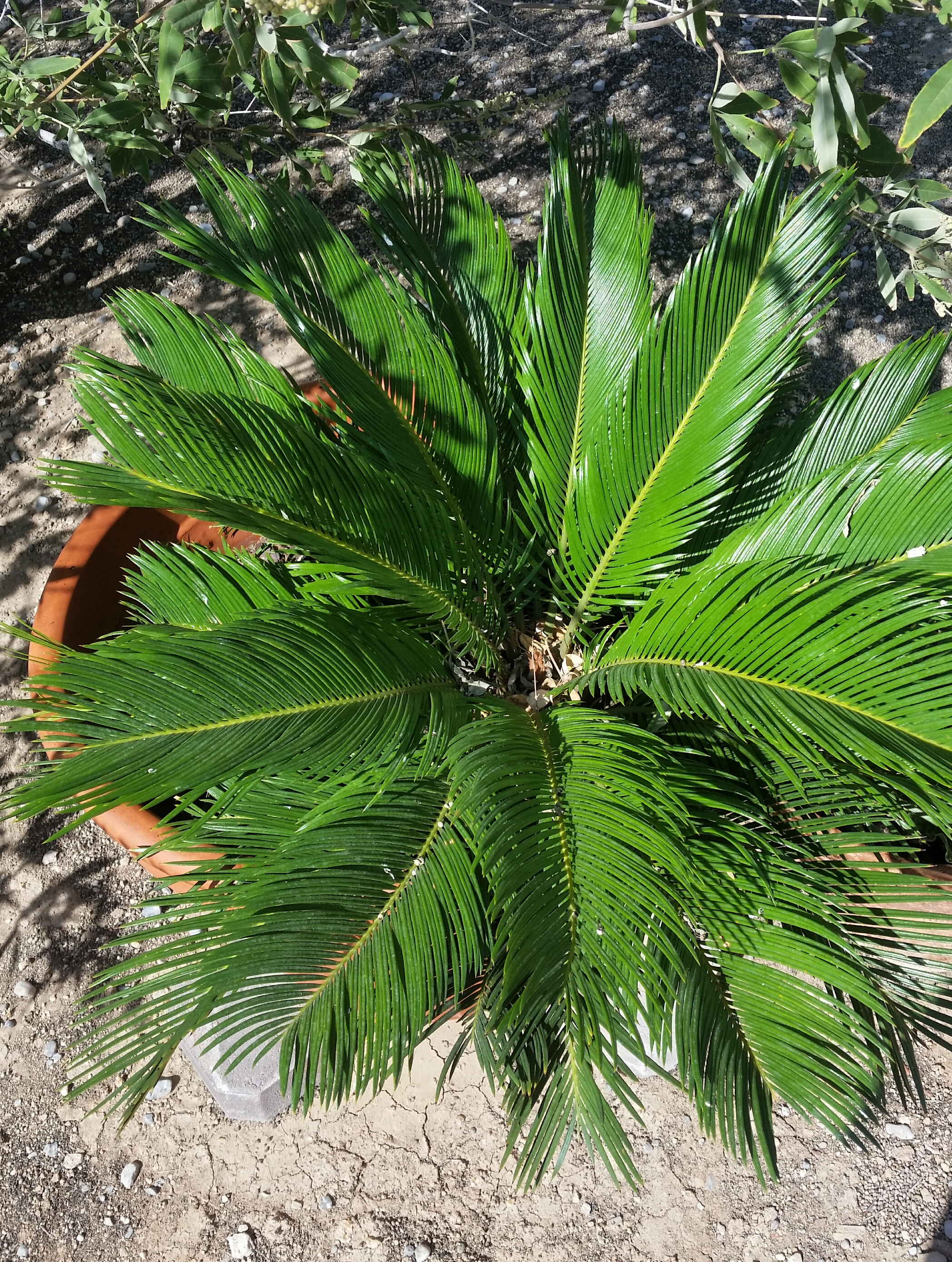
How to Water Sago Palm (Cycad) Once Each Week in the Winter

Q. Now that our irrigation is only allowed for 1 day, I was wondering if once a week is sufficient watering for my small sago palm. Should I hand water it on other days?

Not the readers sago palm (cycad) but it is small! It is in a container so it is more difficult to water than one planted in the ground. The soil in the container is more limited in size than one planted in the ground.

A. Hard to say. Depends on how much water your soil around the sago palm holds, where the drip emitters for it are located and the side of the house it’s on.

Hard to believe this cycad, or sago palm, is growing in Las Vegas. It was situated in the right location with the right care.


           Ideally the drip emitters are located between 12 to 18 inches from the trunk. For large sago palms I would suggest three emitters spaced in a triangle. Run the irrigation system long enough to water 12 to 18 inches deep. you can measure that with something long skinny and hard like a piece of rebar. If the sago palm is smaller, it may need only two emitters to wet the soil to the same depth. Smaller plants don't use as much water, but the system needs to run just as long.

Hard to accept this is the same plant as the one above. But this one is located in the heat of the sun and growing in poor soils.

           Plants on the south and west sides of the house or wall use more water faster than those on the east and north sides. A deep watering once a week should be all that is necessary for them in most soils and locations except the hottest.

Pines and Eucalyptus With no Water Growing in the Desert

Q. I have pines and eucalyptus that are not being irrigated at all. There is no irrigation applied but these trees are tall and healthy. What gives?

This eucalyptus has on applied irrigation in the desert. Sometimes trees can access underground water and survive.

A. Trees need water to survive. And large trees need more water than smaller ones. Some trees like your eucalyptus and many pines can grow deep roots. But trees need a minimum amount of water, or they won’t thrive otherwise deserts would be filled with tall, healthy trees like yours. They are getting water from somewhere.

Large trees use more water than smaller trees. Such is the case when the water was turned off to this mulberry.


           Plants are lazy, like us. Tree roots take up water where its easiest to survive. If they want to reproduce, then they need more than enough to survive. If the deep water is easiest to follow, then it will use it, if their roots can reach it.

           Tree roots don’t “seek” water in dry soil. They chase it. They “sense” water is there (compared to dry soil surrounding their roots) and grow best where water (and air) are abundant. If it can get lots of shallow water, like growing in a lawn, then that’s where tree roots grow abundantly as long as they can get air as well. If the water is deep, then that’s where roots grow if the soil is moist often enough to attract tree roots and they can “breathe”.

           Established pine trees grew “without water” at the El Rancho on the Las Vegas Strip after its fire. The property was abandoned, and the irrigation was turned off as well. Pine trees had to survive on only the deep salty water that their roots could get several feet below the Strip. This available water used to be considered a “nuisance” until developers saw its value in the desert. As Mark Twain used to say, “Whiskey is for drinking; water is for fighting over.”

           Both established pine trees and many eucalyptus have the potential to develop deep roots if given a chance and find a deep source of water.

Wednesday, August 31, 2022

Estimating How Much Water Landscapes Use

 When you estimate a plant’s water use, the plant must be growing all by itself. When plants are grown together the roots intermingle, their branches might intermingle creating shade and wind diversions, not only that but its water use is confused with any neighboring plants close by! When you estimate a landscape water use, use the total sum of all your plants. It will be a little high because of influences by plants nearby. This can be estimated by someone who knows plants and their water use. For a traditionally sized family of four, landscape water accounts for about 70% of your water bill.

When recording the water use of plants, they must be separated from other plants such as using this weighing lysimeter and hoisting the individual plants.

How many square feet is your total landscape? Your landscape size is your lot size minus the house, patio, driveway, sidewalks, and any other hardscape that would be difficult to remove. The problem is your monthly water bill comes, at best, in gallons of water. Landscapes vary in size. The size of your landscape is in square feet.

Water bills, like this one from Henderson, NV, lists the water use of an entire home lot. You must multiply this by  approximately 0.7 to get the actual water use of a landscape.


You must convert the gallons of water used by your landscape to the size of your landscape in square feet. The multiplier you needed is to convert a landscape from cubic feet to gallons. The magic number that does that is multiplying the square footage by 7.8. That is, 7.8 gallons fits into a one cubic foot spot. Two cubic feet contains (7.8 gallons x 2 cubic feet) 15.6 gallons for every 2 cubic feet.

The front landscape size is calculate from the total landscaped area, not including the driveway, sidewalk, or any so-called hardscaped area.

Any time your annual gallonage represents less than two feet of water covering your entire landscape, you are doing a very good job! That is less than two feet of water needed to water your landscape each year! When the landscape gallon totals less than 4 feet deep, you are doing an acceptable job. Six feet or more is unacceptable for desert landscapes.

For instance, let’s say your landscape area totals 2000 square feet. 

This size includes every possible spot a plant can be planted. Two feet of water covering this landscape area = 2000 x 2 x 7.8 = 31,200 gallons of irrigation water per year. That is very good.

Four feet of water covering your total landscape area = 2000 x 4 x 7.8 = 62,400 gallons of irrigation water per year. That is acceptable.

Six feet of water or more covering the total landscape area (2000 x 6 x 7.8 = 93,600 gallons of irrigation water per year) is unacceptable.


Friday, August 5, 2022

Homeowner Forced to Water With a Hose

Q. I have emailed you before about having only one watering zone. Our lemon tree seems to be doing worse every year. With only one irrigation zone unfortunately I am forced to water every day in the summer.  We decided we should water these citrus trees by hand. So, we have two questions please: How much water per watering and how often?

Homeowner Forced to Water with a Hose

A. Looks like fake grass was installed surrounding the tree. It is too perfect. This may be a problem in future years due to numerous soil problems, primarily air reaching the tree roots and compaction from people walking near it. Pull the fake grass away from the tree to the size of the canopy. It is important that plant roots breathe air. Some types of fake grass are better at that than others. Make sure enough air is getting to plant roots.

How To Hand Water Citrus

 Start watering this tree now with about fifteen gallons each time (judging its size from your picture). As the tree increases in size it needs more water; probably about every three or four years the area under the tree canopy will need to become bigger to give it this. The tree will max out at about thirty gallons each time it is watered. When an increase in water is needed, remove more grass, to accommodate the amount of water applied. The easiest way to give the tree more water and keep it from falling over will be to increase the size of the area where water is applied to at least half the area of the canopy.

Use Moat or Donut

This is a basin at the bottom of a fruit tree in North Las Vegas. Both basin and bubbler..which this is..and drip irrigation are both efficient at this.

Use a moat or donut shaped basin around the tree for filling each time with a hose. The basin, and the inside being flat, will hold water long enough to get it deeper in the soil. If the tree does not have a moat or donut around it, it is difficult to put enough water in that spot to wet the soil eighteen inches deep each time. Just putting a hose on it will not work unless you water with a sprinkler or let the hose run slow a long time. Using a moat or donut will fill the basin with water in about ten minutes or less and keep it contained.

Sunday, January 2, 2022

Sweet Bay Tree May Struggle During High Summer Temperatures

Q. Sweet Bay trees (Laurus nobilis) border our property on all 4 sides totaling about 35.  They are now about 15 feet tall with 5" trunks.  We have lost trees in the past from under watering.  How many gallons of water should each of these trees receive on the winter watering day?

Bay Laurel leaves

A. You may know Dr. Devitt from UNLV and I published research articles on water use in the past in numerous research journals. Plants are extremely variable in water use depending on their type, size, where they are planted, and how they are grown. We published a book on irrigation of trees, and it is available on Amazon.

You will get many different responses on plant water use depending on who you talk to. However, we do know this: the more trees present, the more water is needed and the bigger the tree is, typically the more water it uses. Conversely the way to reduce water use is to plant fewer plants, use open spaces in creative ways that don’t require water and use desert trees that mature into a smaller size.


The picture above shows a mesquite tree with a 20 foot diameter canopy (left) and an apple tree with a 20 foot diameter canopy (right). The mesquite annual water use would be about twice that amount (4600 gallons each year) and the apple about twice that amount (13,600 gallons each year) as well. The water savings is in how often water is applied (frequency of irrigation). They both need water applied to wet their roots to the same depth (the minutes are the same in the same soil) but the mesquite water is applied less often. The soil become drier between irrigations. That means they should be on separate irrigation valves (hydrozone). 
https://leafnetworkaz.org/Water-Resource-Strategy

To roughly estimate tree water use, assume trees are divided into three categories; very low water use (e.g., foothills palo verde @ 0 to 2 feet of water), medium water use (e.g., vitex and bay laurel @ 2 to 4), and high-water use (e.g., mulberry and poplars @ 4 to 6). Moderate water use means it uses from 2 to 4 feet of water (applied under its canopy) each very year. FYI, tall fescue lawns use between 7 to 8 feet of water in this location and soil. It has shallow roots and NOT a desert plant to look good.

I recommend applying this amount of water to at least half the area under its canopy every year. (The reason I say half of that area is because I am realistic when it comes to home watering and know that people will not apply water to a the 20 foot diameter area needed by trees with a 20 foot diameter canopy!) When water is applied each time, apply it so that the soil becomes wet to a depth of 18 to 24 inches. If water is applied to half the area under a bay laurel tree (20 feet tall) so that half of this area is wet, one tree will require from 9000 to 10000 gallons of water each year. The same area covered by a lawn requires about double that.

Desert trees like the mesquite will be watered again just before the leaves will drop or as the tree canopy begins to thin out. That's your signal to water! During summer heat with desert trees like mesquite that might be once a week or once every two weeks. During the winter that might be once a month or once every two months. The deep roots will take over water uptake when the upper soil gets too dry.

Monday, May 24, 2021

Minimize Water Use and Increase Comfort in Desert Landscapes

Minimize the total number of big plants in a landscape

This tree is out of scale with the house. It doesn't need to be that big. It only needs to shade the walls and windows. The bigger the tree, the more water it uses.

Water is a scarce resource in the desert. Its price will always increase. Lowering landscape temperatures and irrigation go hand in hand. If water is used wisely, temperatures will decrease where water is applied. Plants always require water when growing in the desert. Wherever plants are planted in the landscape, water is needed. Large mature sized plants require more and more water as they grow bigger and bigger.

Do three things to your landscape to become efficient in its water use; preserve only the plants that provide you and your home the most cooling and pleasure, improve the irrigation system, and learn how to water. The last one, “learn how to water”, should be first. Learning how to water landscape plants enlightens the others.

Shade the south and west sides, walls and windows of your home and outside sitting areas

Create sitting areas with shade from plants or nonplants. Nonplants don't use water.

This type of irrigation creates “oasis landscapes”, perfect for the desert. Plan to apply the most water to “oasis” areas. Trees and shrubs provide the most cooling for homes and sitting areas. There is nothing wrong with open areas, but they will be hotter. Make these open areas interesting to look at.

Shade doesn’t have to come from plants

Shade also comes from man-made structures. Concrete and steel structures are the best choices for desert climates and don’t use water. There is nothing wrong with artwork in landscapes. Consider man-made structures in combination with vines or smaller plants instead of trees. Small plants use less water than big plants. Where are large plants found in the desert?

Concrete and steel structures are more durable in the desert.


Drip irrigation is among the most efficient ways of irrigating plants

But if you don’t know how to use it, it’s no better than flooding the landscape with water. Plants growing above 3 feet tall should be watered less frequently. Roots of tall plants will find water applied to the smaller plants and adjust their root growth to where water is applied in these areas.

Bubbler and basin irrigation can be just as efficient and easier to install for large trees as drip. Just keep the basins repaired and enlarged as the trees grow.


A well-designed irrigation system and the knowledge how to use it puts you in charge of watering rather than the landscape telling you when it needs water.

Sunday, January 13, 2019

Fertilizer and Water Improves Nut Yield in Stone Pines

Mineral fertilization and irrigation effects on fruiting and growth in stone pine (Pinus pinea L.) crop
V. Loewe
A. Alvarez
M. Balzarini
C. Delard
R. Navarro-Cerrillo3

Subscribe to ResearchGate and read the entire text here

What is already known on this subject?
This is the first study on fertilization and irrigation in an adult intensive P. pinea plantation, providing a first management proposal for the species.

What are the new findings?
Fertilization enhanced fruit production (›82.3%) and vegetative growth while irrigation enhanced only fruiting. Best fruit production was recorded in fertilized and irrigated plots (›60%).

What is the expected impact on horticulture?
Pine nuts can be produced in orchards applying horticulture techniques as in other fruit crops, improving production quality and quantity, overcoming the traditional view as a non-timber forest product (NTFP).

Summary

Introduction  - Stone pine (Pinus pinea L.) is a species of economic interest for its pine nuts. Despite this market, cones are harvested mostly from natural forests. Advances in semi-intensive or intensive management for cultivating it as a fruit tree have been scarce. Fruit development is characterized by a 3-year cycle since pollination to harvesting, making nutritional and hydric management highly challenging.

Materials and methods – We studied the main and interaction effects of fertilization and irrigation on growth and fruiting by a factorial design laid out in an adult stone pine plantation located in central Chile.

Results and discussion – Mineral fertilization had an effect one year later on height growth (+23.5% increase) and one-year-old conelet production (+82.3% increase). After two consecutive years of mineral fertilization, significant positive impacts on diameter growth, height growth and one-year-old conelet production were observed. Irrigation enhanced fruiting but did not impact growth significantly. The highest conelet number was observed in the fertilized and irrigated experimental plots.

Conclusion 

Both cultural practices, applied either individually or combined, are efficient techniques to enhance fruit production of the stone pine.
ve).

This research accessed from North Carolina State University's AgriFoodGateway

Tuesday, December 11, 2018

Acacia Dropping Its Leaves

Q. My young acacia tree has abundant growth but only on the top half of the branches. Each of these branches are losing many leaves half way up the branch. There is a lot of growth at the top of the tree but not much below. Am I watering too much, too little? I water every five days during the summer.

A. Acacia trees are desert plants. Most desert plants are opportunists when it comes to using water. In other words, when water is present they grow like crazy. When water is absent, their growth slows and they then try to use as little water as possible. Desert plants may even stop their growth and drop their leaves when water is not available!
This is not Acacia but Palo Verde. Boring insects, or borers, may feed on a variety of trees and shrubs or very specific ones. Borers, like the flat headed apple tree borer, has a variety of trees they attack including the desert trees. Sometimes they attack trees with sun damage and other times they seem to attack trees without any cause at all.
            All plants are tremendous competitors for water, nutrients and light. They want to be “top dog” in their plant community by taking as much water, nutrients and light as possible when it’s available. By doing this, they take away these building blocks of growth from other plants.
            When water is present, trees try to get as tall as possible as rapidly as they can before they start to fill out. They grow upward first and then put energy into horizontal growth once they’ve established some height. This growth in height takes away light and shades competitors. This early growth in height, when there is a plenty of water and nutrients, oftentimes is at the expense of putting on lower growth .
We commonly see borers attack fruit trees and many different landscape plants. This flat headed Appletree borer infested a young Apple tree recently after was planted. The tree was so young that extensive damage was done by a single borer found feeding in the tree.

            Watering schedules take two different forms; how much water is applied and how often water is applied. It’s difficult to say with certainty without seeing the tree, but it sounds like it is receiving water too often.
            Watering every five days means nothing to me. I can take a sip of water hourly and someone might think I am drinking plenty of water. But another person might ask, how big are your “sips”? One teaspoon or 1 pint?
            How much water to apply? When watering trees, give them enough. Apply enough water to wet the soil at least 24 inches deep. Apply this water to at least half the area under the canopy of the tree. Once it enters the soil, the water spreads horizontally further than this.
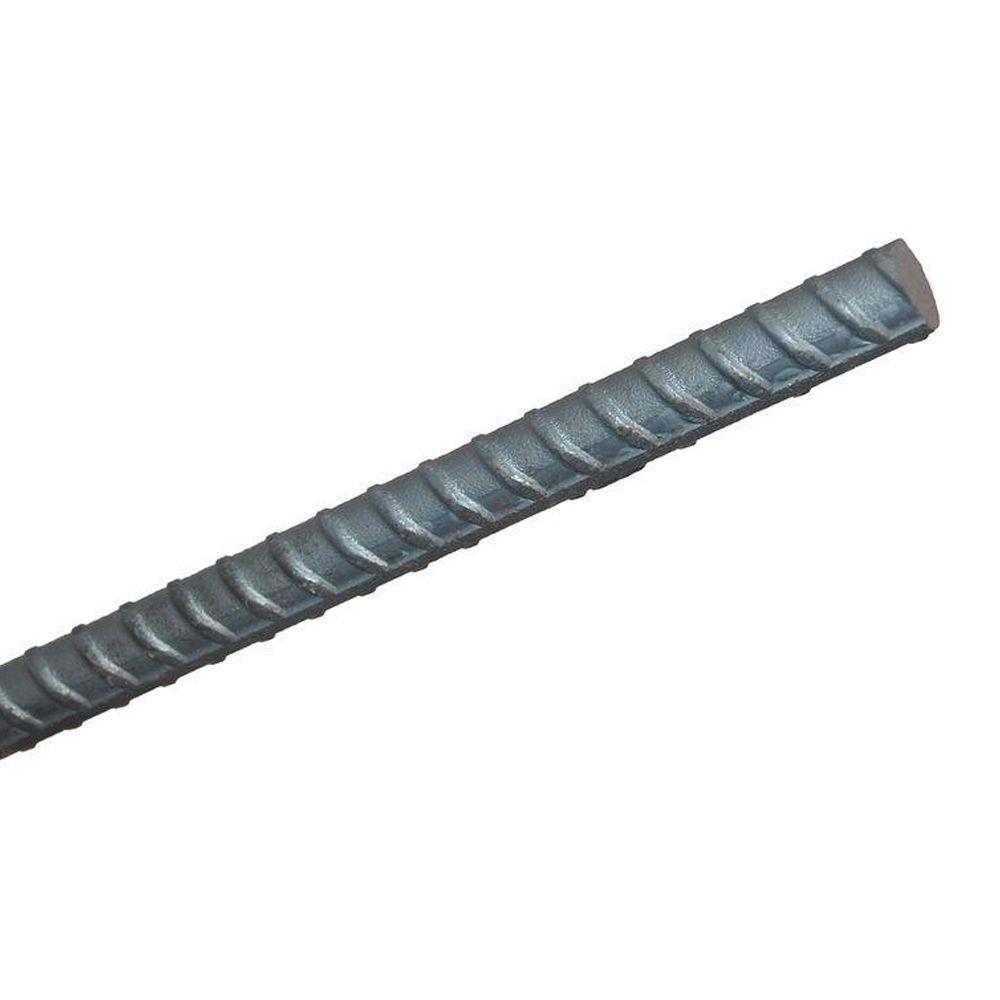
Use 3 eighths inch rebar to estimate how deeply water has penetrated into the soil after an irrigation. Check the soil in 3 or 4 locations.
            Use 3/8-inch diameter rebar that is three feet long. After irrigating, push this rebar in the soil in three or four locations to check the watering depth. Wet soil allows the rebar to slip in easily to the same depth as the wet soil. Dry soil makes it hard to push further.
            It should slip into the soil at least 24 inches deep. Once you know how many minutes this takes, the amount of time you water won’t change. Each irrigation will be 24 inches deep.
            If using drip irrigation, space emitters about 2 feet apart. If using a basin or moat under the tree, the basin should be as wide as half the area under the canopy. Trees grow. This means the basin must expanded every three years. If using drip emitters, add more emitters every three years.
Basin under a tree used to capture the water for irrigation. If using a hose or some other delivery method that releases a large quantity of water rapidly, a basin is required to keep the water from going everywhere else but around the tree.
            How often to apply water? Look at the tree canopy. It will tell you. When the canopy of the tree starts to thin out, it’s time to irrigate! Desert trees tell you when to water when their canopies begin to thin out.

Wednesday, December 5, 2018

Moisture Meters and Rebar Tell You When to Water and How Much to Apply


Q. Our water bill gets high in the summertime. I suspect we're overwatering but don’t know. What strategy can we go through to determine when plants are getting just enough water. More than enough is hard to determine.

A. There are 2 pieces of information you need when irrigating: how many minutes to run the irrigation timer and how often. This is the basic information that's entered into an irrigation controller in a variety of methods. Irrigation controllers have all sorts of whistles and bells but that 2 pieces of information is what is needed.

This requires a small investment on your part in the beginning. The two questions that need answering are when to water and how long (minutes) to water. 

How often to water

You will need some sort of moisture meter that measures soil moisture and a steel rod for determining how long to water.
This is an inexpensive moisture meter you can buy for under $10 at any hardware store for nursery. They are made for use with houseplants and so they probably won't last very long when you try to push them in our soils. But they are fairly accurate. Most houseplants should be watered when the meter shows a "6". For houseplants use distilled or RO (reverse osmosis) water. 

           
There are two types of soil moisture meters available. One is inexpensive you can buy at box stores for houseplants for less than $10. A better one can be bought online for $40 – $75, can be pushed into more difficult soil and lasts longer. I have purchased both the Reotemp and Lincoln soil moisture meters and the Lincoln lasted. The Reotemp fell apart after a few tries.

This is the Lincoln soil moisture sensor and has had a solid workout for two years in tough Las Vegas soils.

/The Reotemp soil moisture sensor broke after a few tries. The tip came off. Same problem was reported by another person to me. The tip was not secured to the sesnsor rod and it fell off.

All of them have the same scale for moisture readings, 1 – 10. After calibration, recently watered soil will read 10 on this scale. Irrigate days later when the scale reads six. The expensive one lasts longer and can be used in more difficult soils, but it gives you about the same reading as the inexpensive one.

How much to water

How much water to apply or how many minutes on an irrigation controller requires a steel rod about three feet long. Use a 3/8-inch diameter steel rebar that is 3 feet long. They can be purchased at the major box stores for about one dollar. Shortly after the irrigation, push the steel rod into the wet soil in several spots.
Image result for steel rebar home depot
This is what the steel rebar looks like if you go looking for it in the store. You can get it at any box store/hardware store. Get the 3 eighths inch diameter rebar and select one that's about 3 feet long. They will have them in various lengths. If you want to get fancy you can sharpen the end of it into a point on a grinder and bend the top over into a handle. But using it as is works just fine. Pushing this into the wet soil will tell you how deep the water has penetrated. It slips into wet soil easily but when it hits the dry stuff it's hard to push. Lawns and flowerbeds should be irrigated to a depth of 8 to 12 inches. Large trees should be irrigated to a depth of about 2 feet. https://www.homedepot.com/p/1-2-in-x-20-ft-Rebar-REB-4-615G4-20/202532809

           
Steel bars slide easily through wet soil until they hit dry soil. Trees and large shrubs should have wet soil down to at least 24 inches. 12 inches is usually enough for most other plants including lawns and vegetables.
            Water long enough, or apply enough gallons, to make the soil wet to the desired depth for all the plants on that circuit or valve. If some plants aren’t getting enough water while others are, add more emitters to those that aren’t.
            The first two seasons you might have to measure soil moisture and use the steel bar five or six times to get a “feel” for when to water. But after the second year you will start recognizing a seasonal pattern to irrigating plants in your landscape and you will not need them as often.

I bought both the Lincoln and Reotemp moisture meters on Amazon. The rebar I bought at Home Depot.

Monday, July 2, 2018

Brown Spots in Lawn Probably "Frogeye" Disease


Q. I have some large dead areas in my lawn. I don’t think it’s an insect problem. Watering is at 2 AM and 7 AM. This was my first lawn problem in 16 years!
Unusual pattern for dead grass. Too random for irrigation I think.


This picture you start to see the "frogeye" disease pattern. Looks like it could be a chemical spill.

Here is where "frogeye" starts to make an impression. But its over. 

A. I looked at the pictures you sent, but the last picture was the most “telling” to me. I think your lawn had a disease problem that is now finished. Don’t do anything now! Let me tell you why I came to that conclusion.
            Insect problems here are not like those “rolling back like a carpet” problems described in books and online. Those descriptions apply to Kentucky bluegrass damaged by white grubs. We have grubs, but we don’t have much bluegrass anymore. Our lawns are 95% tall fescue and tall fescue reacts differently to insect damage. It pulls out like loose hair from an old animal skin. Plus, the pattern of dying grass does not resemble insect damage.


            I first thought the brown spots were an irrigation problem, but the pattern doesn't fit an irrigation problem. With irrigation problems, dead or damaged areas are in a pattern that relates to the location of sprinkler heads. I didn’t know where the sprinkler heads were, but the damage was irregular, so I ruled out irrigation.

Irrigation problems are nearly always easy to see how they connect to the sprinklers.

 
           The pattern does, however, resemble a chemical spill flowing downhill and damaging the grass in its path. It was a possibility, but the last picture looked like advanced stages of a disease problem. We used to call this disease Fusarium blight or “frogeye”. This disease has since been renamed Necrotic Ring Spot. I thought “frogeye” was much more descriptive.

Seldom will you see it this obvious but this is frogeye. See how it got its name? In advanced stages these dead areas can become one but you still look for little patches of green grass that would still be there. Sometimes its hard to see them.

            What led me in the direction toward disease were the small patches of green grass still alive but surrounded by dead grass. These small green patches of grass are how “frogeye”, now Necrotic Ring Spot, got its name.
            From the pictures, it looks like the disease has run its course and the grass that’s alive is healthy. I say this because the grass surrounding the dead areas appears healthy. This is the way lawn diseases usually work. They have a window of opportunity, when the weather is right for the disease to spread, and it takes off. The weather changes and the disease stops.
            You would be wasting your money to apply a fungicide now that it’s over. But, don’t disturb the brown, dead grass and leave it alone until fall. If you remove it now, it opens the soil to invasion by Bermudagrass. Bermudagrass loves sunshine, bare soil and water. It hates shade. Wait until the weather cools in late September or October, remove the dead grass and either seed or sod these areas.