Type your question here!

Showing posts with label watering. Show all posts

Wednesday, August 2, 2023

Fruit Trees Like Hot Weather if Prepared for It

Q. Now that it has gotten hot, my fruit trees (some new, some established) don’t look so good.

When fruit trees are fist planted, if they are not planted right they will look a bit rough. Their looks will improve with time if these deficiencies are corrected. If their size (and increased water use) and soil improvement is accounted for when watering they will look better and better.

A. When fruit trees are first planted, they may look good. That is because they are watered correctly for the first three or four years. After that fruit trees get bigger, and need more water applied wider and to the same depth. This means more water! Don’t change how often they are watered. When they are watered, they need to be watered to the same depth, to a wider area (which means more water) and with an increasing amount of water each time they are watered. This is because they are bigger, and water should be applied to a wider area.

When fruit trees are first planted (when the weather is cooler) they need water every other day, improved soil and soil put in a flat and level moat around the tree to capture it.

            What I find to be effective is to apply water to the area under a mature fruit tree (seven years in the ground and longer) that is about six to seven feet wide. Much of the area watered depends on the soil you have but most soils are (even though they are hard when dry) a sandy loam when irrigated. I prune fruit trees (in the winter) at seven feet and let them grow during the year to close to 8 or 9 feet tall, not their full size. This pruning allows for ladder-less fruit harvesting.

When the fruit tree is three or four years in the ground the tree is pruned to establish the major fruit bearing limbs

            To do this I water the fruit trees to about 18-24 inches deep in the soil. The area I want to apply water is about half the area under the fruit trees. This usually requires about 8 drip emitters (or two concentric rings of drip tubing with emitters placed 18 inches apart) when the fruit trees have been in the ground 5 to 6 years. The rings are spaced18 inches apart, too! The fruit trees are planted about ten feet apart in all directions. I prune them so they fit into this area, and you can walk around them to harvest, fertilize, and prune.

Limbs are only removed at the bottom if they touch the ground. Otherwise picking fruit starts at the lowest limb!!!!

            Figs are good to have in the orchard because, in my experience, they grow but will not fruit if they come up short on water. Fruit is the first to go, not growth. If you have fruit on your fig trees in July and August, then the other trees are getting the right amount of water too. Figs are a “water indicator” fruit tree for me.

Fig trees, as all fruit trees, are big solar collectors. If you cant reach the fruit it is wasted. If the fruit is too low it is wasted. If the fruit is too close together it is wasted.


Friday, February 17, 2023

Yellow Leaves on Potted Myer Lemon

Q.  I have a Myers lemon tree in a pot on a south facing patio. The wall near it faces east and there was a large pine tree out front so it receives shade in the afternoon. There are quite a few yellow leaves that just appeared. All the new fruit has turned black. It seems to me that maybe I just need to replace this tree. The lime tree is doing very well in a similar location.


A. The picture you sent to me shows a Myer lemon with ready to harvest fruit being grown in a small container with smaller plants growing around its base. Meyer lemon typically flowers sometime in January and February. The fruit can be harvested starting about now (December) with this harvest, finished by January, encourages new flower development for next year’s production.

Producing flowers and then fruit in midfall is early for Meyer lemon. Early flower development can be a sign that it is under some sort of stress. Certainly it's not normal for this type of tree at this time of year.

            All fruit trees and vegetables need a minimum of six hours of full direct sunlight. 8 hours is even better. In home landscapes the best sunlight for it in our hot climate in the summer months is during the cooler morning hours. Partial shade may be pleasant for people sitting on the patio but not for many plants that produce fruit or vegetables.

If shade is present during most sunlight hours, then I would recommend an ornamental plant for that spot with variegated or colorful leaves, not a flowering or a fruit-producing plant. A non-flowering ornamental handles shade better than a flowering plant, whether those flowers produce fruit or not.

Don't Plant Annuals at the Base of Perennial Trees

            Secondly, and perhaps more importantly, are the smaller plants demand for frequent watering compared to the tree. Growing a shallow-rooted plant or plants at the base of a deeper-rooted plant is a big “no-no” regarding how often water is applied. Shallow-rooted plants “signal” they need water applied more often than deeper-rooted plants, so they get water applied more often than the watering frequency needed for deeper-rooted plant needs.

This type of watering can suffocate the roots of a deeper-rooted plant. Watering a deeper-rooted plant too often can produce leaf drop, flower drop, fruit blackening, and a tree that's “loose in the soil”. Trees that develop “collar rot disease need to be staked after just a few years of growth. Does that sound like your fruit tree?

            I would replace this tree with a plant that requires moderate to low levels of sunlight. If you want to grow other plants along with it, select plants with a similar rooting depth and need for applied water.

Thursday, November 24, 2022

Watering Yucca in Winter

Q. Should I turn off the water to my yuccas during the winter?

Yucca rigida with golden barrel cacti beneath it. Y. rigida is a native to the southwest and, along with golden barrel another native cacti to the southwestern deserts, can be watered less often than yucca not native to our deserts. Examples of Yucca not native to the soutwest include Y. gloriosa and Y. filamentosa.

A. It depends on the yucca and where it came from. Some yucca come from dry regions and others come from wetter regions. I would not irrigate as often yucca native to the southwestern US. Examples include Yucca rostrata sometimes called Adams Yucca or Beaked Yucca, Y. schidigera and Y. elata as well as others.  I would water them once during the winter months of December and January. These are xeric in their water needs. That is the time to give them a good soaking. Confused yet? Ask your nurseryman which yucca it is before you buy it. Put Yucca native to the deserts of the southwest together so you can irrigate them at the same time. 

Yucca elata, soaptree yucca, is also native to the deserts of our area. Plants surrounding it, golden barrels, are also native to this area. The landscaper did a good job of grouping plants together with similar watering needs.

But yucca native to the southeastern US (such as Yucca gloriosa sometimes called Spanish Dagger and Y. filamentosa sometimes called Adams Needle as well as others) should be irrigated once every two or three weeks during the winter. Water these as you would any other landscape plant. They are mesic in their water needs. Put non desert yucca together so it is easier to irrigate them because they should get watered more often.

Probably Yucca rigida, a desert native. Probably watered too often.


Wednesday, April 13, 2022

What Does Light, Medium and Heavy Mean?

Q. I am confused by the terms, “light, medium, and heavy”?

Desert soils can be confusing. Even though this soil may be difficult to dig, it is a sandy loam soil; a mixture of sand silt and clay but the clay is not present in high enough amounts for it to be considered "a clay soil".

A. These terms usually describe soils, but could also be used to describe watering, such as a “light watering”. A light soil is a sandy soil. A medium soil is a soil has a mixture of sand, silt and clay but still drains water in a few hours to overnight. A heavy soil is a soil that is dominated by clay. It drains very poorly. These “heavy” clay or sticky soils hold water and don’t drain well. Oftentimes planting in these soils is a disaster for xeric plants because of the amount of clay and they hold water for a long time. 

This soil has a fair amount of clay in it. The type of clay makes it "expansive" or not. Expansive soils like this one are considered to have a higher than normal "shrink/swell potential" and cause problems when building or construction. Montmorillonite clay is an example of an expansive clay. Some clays are not as expansive as others.

To make a heavy soil “lighter”, about 90% more sand (v/v) is needed. The other option is to grow plants higher than the surrounding soil so their roots can “breathe”. Small plants need about a foot of soil higher (about 12 inches in diameter) than the surrounding soil. Large trees may need two or three feet tall mounds that are 6 to 10 feet in diameter.

What is a light watering?

            A “light” watering is an irrigation that wets the soil only 3 or 4 inches deep. It might be good for very small plants. This type of watering encourages lots of shallow roots to flourish and makes this plant less tolerant of hot summers. Shallow rooting oftentimes happens with “hose” watering; watering with a hose or a “breaker” at the end of a hose. 


Hose irrigation of corn in raised bed. Water not penetrating deep enough.

Hose watering raised beds and apparent adequate water until examined closely. Water was applied so quickly that it was only getting three or four inches deep but appearing wet, enough for shallow rooted crops but not deep enough for deeper rooted crops like corn. Drip irrigation is a better choice.


To water deeper (a.k.a. medium or moderate) requires watering the same soil about 10 to 20 minutes later but while it’s still wet. This drives the irrigation deeper in the soil and can wet the soil to a depth of 6 to 8 inches. A “deep” watering usually requires some sort of “moat” or “donut” around the plant to capture the water and cause it to go deeper. A third watering like this frequently doesn’t work but requires a “moat” or “donut” instead. Drip irrigation can release the water slowly, so it travels deeper. That’s one of the reasons why single emitter, nonadjustable drip irrigation is preferred in home landscapes and raised vegetable beds.


Wednesday, December 5, 2018

Moisture Meters and Rebar Tell You When to Water and How Much to Apply


Q. Our water bill gets high in the summertime. I suspect we're overwatering but don’t know. What strategy can we go through to determine when plants are getting just enough water. More than enough is hard to determine.

A. There are 2 pieces of information you need when irrigating: how many minutes to run the irrigation timer and how often. This is the basic information that's entered into an irrigation controller in a variety of methods. Irrigation controllers have all sorts of whistles and bells but that 2 pieces of information is what is needed.

This requires a small investment on your part in the beginning. The two questions that need answering are when to water and how long (minutes) to water. 

How often to water

You will need some sort of moisture meter that measures soil moisture and a steel rod for determining how long to water.
This is an inexpensive moisture meter you can buy for under $10 at any hardware store for nursery. They are made for use with houseplants and so they probably won't last very long when you try to push them in our soils. But they are fairly accurate. Most houseplants should be watered when the meter shows a "6". For houseplants use distilled or RO (reverse osmosis) water. 

           
There are two types of soil moisture meters available. One is inexpensive you can buy at box stores for houseplants for less than $10. A better one can be bought online for $40 – $75, can be pushed into more difficult soil and lasts longer. I have purchased both the Reotemp and Lincoln soil moisture meters and the Lincoln lasted. The Reotemp fell apart after a few tries.

This is the Lincoln soil moisture sensor and has had a solid workout for two years in tough Las Vegas soils.

/The Reotemp soil moisture sensor broke after a few tries. The tip came off. Same problem was reported by another person to me. The tip was not secured to the sesnsor rod and it fell off.

All of them have the same scale for moisture readings, 1 – 10. After calibration, recently watered soil will read 10 on this scale. Irrigate days later when the scale reads six. The expensive one lasts longer and can be used in more difficult soils, but it gives you about the same reading as the inexpensive one.

How much to water

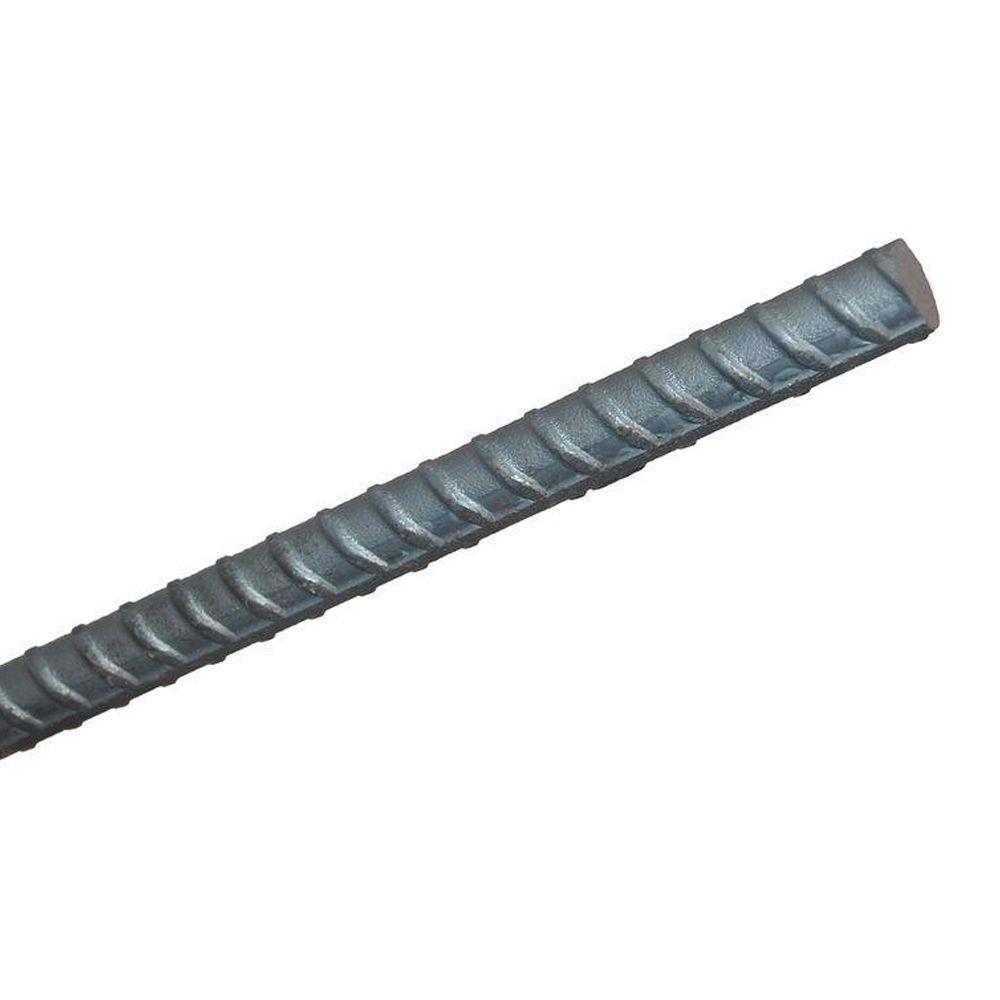
How much water to apply or how many minutes on an irrigation controller requires a steel rod about three feet long. Use a 3/8-inch diameter steel rebar that is 3 feet long. They can be purchased at the major box stores for about one dollar. Shortly after the irrigation, push the steel rod into the wet soil in several spots.
Image result for steel rebar home depot
This is what the steel rebar looks like if you go looking for it in the store. You can get it at any box store/hardware store. Get the 3 eighths inch diameter rebar and select one that's about 3 feet long. They will have them in various lengths. If you want to get fancy you can sharpen the end of it into a point on a grinder and bend the top over into a handle. But using it as is works just fine. Pushing this into the wet soil will tell you how deep the water has penetrated. It slips into wet soil easily but when it hits the dry stuff it's hard to push. Lawns and flowerbeds should be irrigated to a depth of 8 to 12 inches. Large trees should be irrigated to a depth of about 2 feet. https://www.homedepot.com/p/1-2-in-x-20-ft-Rebar-REB-4-615G4-20/202532809

           
Steel bars slide easily through wet soil until they hit dry soil. Trees and large shrubs should have wet soil down to at least 24 inches. 12 inches is usually enough for most other plants including lawns and vegetables.
            Water long enough, or apply enough gallons, to make the soil wet to the desired depth for all the plants on that circuit or valve. If some plants aren’t getting enough water while others are, add more emitters to those that aren’t.
            The first two seasons you might have to measure soil moisture and use the steel bar five or six times to get a “feel” for when to water. But after the second year you will start recognizing a seasonal pattern to irrigating plants in your landscape and you will not need them as often.

I bought both the Lincoln and Reotemp moisture meters on Amazon. The rebar I bought at Home Depot.

Sunday, November 26, 2017

Pine Tree Recovery from the Heat


Q. I have fifteen-year-old, 20 to 30 foot pines on a half-acre. They suffered during the heat this past summer. After your advice, I am doubling the amount of water and hosing off the needles once a week. How long is the recovery time using vitamins? 
 
Too much water? Probably not. But they don't need it as often as a lawn does. When you look at the amount of water that pine trees need, the total amount of water is not far from what an efficient lawn would need. The difference is in frequency of application. Trees, this includes pine trees, should be watered much less often than a shallow rooted lawn.
A. I am not a big fan of applying vitamins like Super Thrive. Some people swear by them, It can be cheap insurance though if you're not sure. Your call on that one.
Who can argue with success? The research doesn't support it but the use of products like these (and other "me too" products) are not supported by research. However, some landscape professionals and homeowners disagree. In the long run, it's cheap insurance to use it.
            Washing the needles of pines is not necessary. It is true of Italian cypress because they tend to get spider mites. Pines do not.
            They might need more water than 15 gallons. Play that by ear by watching the new growth next spring and early summer. You should get at least 12 inches of new growth every year and not experience severe needle drop during the hot months. Those are indicators the tree is not getting enough water.
When you see this in a pine tree growing in the desert, it usually means a lack of water. The amount of water pine trees need is grossly underestimated by most homeowners and landscape professionals. They need a lot of water all at once but they don't need it that often.
            Once you find the right amount of water (minutes and gallons), keep it consistent through the year. The amount of water they are given should not change much throughout the year. It's like filling a gas tank. Instead, change how often they receive the water. Summer months water more often. Winter months, water less often.
One of the best ways to irrigate large trees is to "basin irrigate". This is a modification of an irrigation technique called "flooding". Rather than drip irrigation, a landscape bubbler (not a drip bubbler) is used to fill a flat basin. The basin around the tree, doughnut if you will or moat, must be flat! This basin is increased in size every few years to accommodate a larger tree. The bubbler emits water at one or 2 gallons per minute. The basin is full in 10 to 15 minutes.
            As plants get bigger, they require more applied water, not watering more often. Watering frequently with small amounts of water produces shallow roots and trees that blow over in strong winds.
            You should see an improvement in the first half of next year. Nothing this year.

Tuesday, December 10, 2013

Mesquite Bushes Can Be Trained to a Tree


Q. I grew up in a part of Texas where mesquites were bushes not trees.  We have a small backyard here in Vegas with two mesquite trees in it; one large one and one slender one. There is little or no green on them, just wood. There are so many woody branches I am wondering if they will ever give us shade.  Would you please educate me on this?

Native honey mesquite growing in the Mojave Desert just outside of Las Vegas, NV
A. The Texas mesquite or honey mesquite is a shrub that we prune into a tree form. The plant grows well here but is usually not a preferred type of mesquite because of its long thorns. There are improved types of mesquites that are usually preferred.
            With a little bit of care when they are young they can be trained into a tree form.
            In our climate many mesquites drop their leaves in winter and so are considered deciduous to semi evergreen due to winter cold. In warmer climates they tend to stay evergreen during the winter unless there is a cold spell. 

One of the ornamental mesquites in the nursery trade, claimed to be thornless, showing dense canopy and shade, a sign of abundant water.
            We consider our local mesquite to be a riparian species of plant. In other words it puts on growth when water is available and slows down when water is not. When mesquite trees are watered frequently they can put on large amounts of spindly growth, perhaps 8 feet or more each year.
            Mesquite are normally very deep rooted plants in the wild. Being deep-rooted gives them the capability of avoiding long periods of time without water. For this reason they can be very drought tolerant if they have rooted deeply.

Native mesquite growing in the Sonoran Desert near Jerez, Mex, demonstrating sinker roots tapping into deep water from a nearby river.
             If mesquite trees are watered too often, their roots will tend to be shallow and not deep-rooted, a frequent problem in over-irrigated landscapes. They also tend to put on a lot of wood because of frequent irrigations.
            Mesquite trees handle pruning very well and their growth is very adaptable to landscape management. They do well with light fertilizer applications annually. They should be grouped with other desert plants for irrigation purposes.
            After training these plants into a tree form they do not require a lot of pruning. In fact heavy pruning just encourages a lot of new growth. I would remove lower branches just high enough to allow traffic to pass under them.
            Frequent irrigations will cause these plants to be lush and provide dense shade. Watering less often will cause them to become more open and provide lighter shade. Remove branches that are crossing or growing too close together.
            Limbs would be removed at their point of origin, not by hedging or simply cutting them back.