Type your question here!

Thursday, December 6, 2018

Pruning Plum and Pluot Is Similar

Most plums and pluots produce their fruit on short, compressed stems called spurs. Sometimes these spurs can be long and thin and other times short and stout and everything in between. The spurs don't always look the same.In foreign countries I have been confused more than once among the plums.

Please take a look at my fruit tree pruning classes each December and January in Las Vegas. Sign up for them at Eventbrite

https://www.eventbrite.com/d/nv--las-vegas/fruit-tree-pruning

These are fruiting spurs of one particular variety of plum. Don't prune these off unless you know what you're doing.
These are flowers opening on fruiting spurs of a particular type of pluot. Likewise, don't prune these off unless you know what you are doing. Once fruiting spurs are gone, that limb will never grow them back.

Pluots are made by humans that cross plums with apricots, hence the name pluot. Because they have more genetics that are from plums then apricots, the fruit looks more like plums. They range in color from green, to yellow, to orange, to red and dark purple.
This is a donut pluot that, I believe, was never released.


Open center versus modified central leader

Because they are so similar, producing their fruit on spurs, they are pruned similarly. They can be pruned either open center or as modified central leader. This structure of the tree is pruned the same as any other fruit tree with the same structure.Fruit trees that are more bushy are pruned as an open center.

Fruit trees that are more upright with a strong central leader are pruned as a modified central leader.But where the fruit is produced is a totally different matter and this is where pruning differs among fruit trees.

Videos released on My channel on YouTube

Watch these 2 videos that I made in the last few days that talk about pruning plums and pluots. I don't let these trees get more than about 10 feet tall through active pruning. This facilitates spraying if needed, pruning, management and harvesting. These trees are planted 10 feet apart in rows oriented north to south. They are irrigated with drip tubing and the soil is covered in woodchips, pruned from local trees.


Earthworm Castings (Vermicompost) Suppresses Insects and Disease

Q. I was reading your blog about worm castings, the chitinase enzyme produced by worms and its ability to control insects. Chitinase has been proven to degrade the chitin that holds insect skeletons together. Chitin is necessary for strong insect exoskeletons. So, using worm castings in garden soils will control insects.
Homemade worm castings from red wigglers in an earthworm bin.

A. Scientists think this may be true about worm castings are vermicompost, but the research hasn’t linked everything together yet. Chitinase occurs in the soil because of earthworms but does this chitinase control insects? Is the soil transferring this chitinase to the plants? Some preliminary research claims it can. The research is going on right now to find out how much value chitinase has controlling problem insects in the garden.

Insect pests controlled

           Studies report that Vermicompost application suppressed 20 – 40% pest problems arising from aphids, mealybugs, cabbage white caterpillars on pepper, cabbage and tomato.
            Gardens are filled with insects. There are good insects and there are bad insects. Can the effects from earthworms only kill the “bad bugs” or will it also kill the “good bugs”? This is why more research is needed.
            This is a similar problem with some of the “organic” insect control chemicals. Soap sprays and oils don’t differentiate between “good bugs” and “bad bugs”. They kill them both. We have to rely on our knowledge about “good bugs” and “bad bugs” and how it might be applied to control only the “bad guys”. 

Plant disease controlled

            There is some evidence worm castings or Vermicompost inhibited some fungal diseases as well as some nematodes in field trials with pepper, tomatoes, strawberries and grapes. It is believed the reason is microbial antagonism. The same effects have been found in manure and compost applications. Sterilizing both of Verma compost, manure and compost removed these effects.
             When only one plant disease was studied, the disease suppression was not as good when the Vermicompost was made from sewage sludge.


Wednesday, December 5, 2018

Push-Pull Method of Controlling Insects - Research

Note: It has been known for a long time that some plants attract some insects while others do not. An integrated approach to control insect pests has used "trap crops" as either early indicators that problems might occur or lure them away from more important crops. It is also well known that some crops repel insects while others do not. There is alot of information being circulated on the net. Some of it is true and others of it are not. Research can be used to confirm or deny it happens and identify what chemicals are responsible for this very important concept.

You might not recognize this beetle because it's so small and here it is pictured large. But if you have walked in the mountains among the pine trees and noticed that some of them are dying or dead, then you may know of Ambrosio Beetle damage. Brown ponderosa pine may show the BB sized holes in the bark and the galleries in the trunk produced under it.

Ambrosia beetle is more a problem in the tropics than in the temperate climates like the US and in particular the Mojave Desert but the push-pull concept is still interesting.

 Comparison of different methods to assess the seasonal and diurnal activity of ambrosia beetles (Coleoptera: Scolytinae)


  • Jason B Oliver, Christopher Ranger, Michael E Reding, Samuel Ochieng


  • Journal of Applied Entomology
    November 2018

    ABSTRACT
    Non‐native ambrosia beetles (Coleoptera: Curculionidae), especially Xylosandrus compactus (Eichhoff), Xylosandrus crassiusculus (Motschulsky) and Xylosandrus germanus (Blandford), are destructive wood‐boring pests of trees in ornamental nurseries and tree fruit orchards. Previous studies have demonstrated the adults are repelled by verbenone and strongly attracted to ethanol. We tested a “push–pull” semiochemical strategy in Ohio, Virginia and Mississippi using verbenone emitters to “push” beetles away from vulnerable trees and ethanol lures to “pull” them into annihilative traps. Container‐grown trees were flood‐stressed to induce ambrosia beetle attacks and then deployed in the presence or absence of verbenone emitters and a perimeter of ethanol‐baited interception traps to achieve the following treatment combinations: (a) untreated control, (b) verbenone only, (c) ethanol only, and (d) verbenone plus ethanol. Verbenone and ethanol did not interact to reduce attacks on the flooded trees, nor did verbenone alone reduce attacks. The ethanol‐baited traps intercepted enough beetles to reduce attacks on trees deployed in Virginia and Mississippi in 2016, but not in 2017, or in Ohio in 2016. Xylosandrus germanus, X. crassiusculus and both Hypothenemus dissimilis Zimmermann and X. crassiusculus were among the predominant species collected in ethanol‐baited traps deployed in Ohio, Virginia and Mississippi, respectively. Xylosandrus germanus and X. crassiusculus were also the predominant species dissected from trees deployed in Ohio and Virginia, respectively. While the ethanol‐baited traps showed promise for helping to protect trees by intercepting ambrosia beetles, the repellent “push” component (i.e., verbenone) and attractant “pull” component (i.e., ethanol) will need to be further optimized in order to implement a “push–pull” semiochemical strategy.

    Take home lesson:  The push pull method of controlling damage from insects is an important concept in natural pest control but it has a ways to go before it can be easily implemented in integrated pest control.

    Oleander with Yellow Bug Infestation


    Q. I have oleanders in my backyard and noticed some yellow bugs on the flower stems. What are they and how do I get rid of them?


    A. These are highly specialized yellow aphids simply called “oleander aphids” because they have adapted to feed on the toxic plant juices of this plant. They might be poisonous themselves because they drink so much of the oleander fluids.
    Oleander aphid is not as common in the Mojave Desert as it is in wetter places like Florida or Louisiana. There are different aphids for different plants and they don't necessarily switch plants. There are some aphids that are general feeders and other aphids that have developed a tolerance for toxic plants juices like oleander. http://entnemdept.ufl.edu/creatures/orn/shrubs/oleander_aphid.htm

    Different strokes for different aphids

                Aphids can be red in color, green, brown, black and in your case yellow.  Some aphids are general feeders like the green peach aphid and can be found sucking plant juices on a variety of plants while most are very specific, like yours, only feeding on oleander.
                Control is the same for all aphids. The products with the least impact on human health are soaps and oils like Safer’s Insecticidal Soap and Neem Oil. 
    This is my picture of Neem Oil produced by Monterey. You might be interested to know that there are different qualities of Neem Oil out there. Some neem oil is coldpressed for extraction, some is hot pressed and some is extracted with chemicals.

    More information on neem oil

    The National Pesticide Information Center has developed an information sheet on Neem Oil you might find interesting to read.


    Other more potent and specific chemical controls are the general garden insecticides like pyrethrin products. These products last longer after you spray so they give long lasting control while the soaps and oils must be sprayed more often and only when the problem occurs.

    Moisture Meters and Rebar Tell You When to Water and How Much to Apply


    Q. Our water bill gets high in the summertime. I suspect we're overwatering but don’t know. What strategy can we go through to determine when plants are getting just enough water. More than enough is hard to determine.

    A. There are 2 pieces of information you need when irrigating: how many minutes to run the irrigation timer and how often. This is the basic information that's entered into an irrigation controller in a variety of methods. Irrigation controllers have all sorts of whistles and bells but that 2 pieces of information is what is needed.

    This requires a small investment on your part in the beginning. The two questions that need answering are when to water and how long (minutes) to water. 

    How often to water

    You will need some sort of moisture meter that measures soil moisture and a steel rod for determining how long to water.
    This is an inexpensive moisture meter you can buy for under $10 at any hardware store for nursery. They are made for use with houseplants and so they probably won't last very long when you try to push them in our soils. But they are fairly accurate. Most houseplants should be watered when the meter shows a "6". For houseplants use distilled or RO (reverse osmosis) water. 

               
    There are two types of soil moisture meters available. One is inexpensive you can buy at box stores for houseplants for less than $10. A better one can be bought online for $40 – $75, can be pushed into more difficult soil and lasts longer. I have purchased both the Reotemp and Lincoln soil moisture meters and the Lincoln lasted. The Reotemp fell apart after a few tries.

    This is the Lincoln soil moisture sensor and has had a solid workout for two years in tough Las Vegas soils.

    /The Reotemp soil moisture sensor broke after a few tries. The tip came off. Same problem was reported by another person to me. The tip was not secured to the sesnsor rod and it fell off.

    All of them have the same scale for moisture readings, 1 – 10. After calibration, recently watered soil will read 10 on this scale. Irrigate days later when the scale reads six. The expensive one lasts longer and can be used in more difficult soils, but it gives you about the same reading as the inexpensive one.

    How much to water

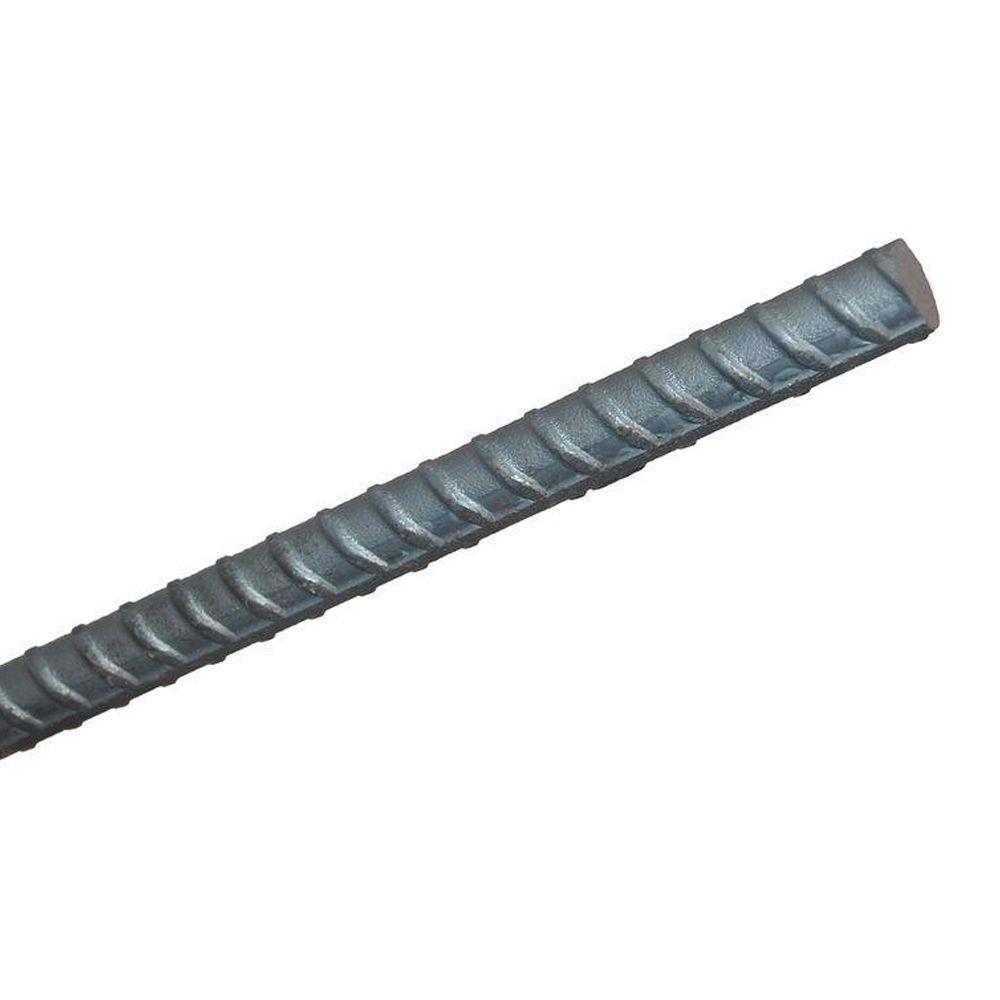
    How much water to apply or how many minutes on an irrigation controller requires a steel rod about three feet long. Use a 3/8-inch diameter steel rebar that is 3 feet long. They can be purchased at the major box stores for about one dollar. Shortly after the irrigation, push the steel rod into the wet soil in several spots.
    Image result for steel rebar home depot
    This is what the steel rebar looks like if you go looking for it in the store. You can get it at any box store/hardware store. Get the 3 eighths inch diameter rebar and select one that's about 3 feet long. They will have them in various lengths. If you want to get fancy you can sharpen the end of it into a point on a grinder and bend the top over into a handle. But using it as is works just fine. Pushing this into the wet soil will tell you how deep the water has penetrated. It slips into wet soil easily but when it hits the dry stuff it's hard to push. Lawns and flowerbeds should be irrigated to a depth of 8 to 12 inches. Large trees should be irrigated to a depth of about 2 feet. https://www.homedepot.com/p/1-2-in-x-20-ft-Rebar-REB-4-615G4-20/202532809

               
    Steel bars slide easily through wet soil until they hit dry soil. Trees and large shrubs should have wet soil down to at least 24 inches. 12 inches is usually enough for most other plants including lawns and vegetables.
                Water long enough, or apply enough gallons, to make the soil wet to the desired depth for all the plants on that circuit or valve. If some plants aren’t getting enough water while others are, add more emitters to those that aren’t.
                The first two seasons you might have to measure soil moisture and use the steel bar five or six times to get a “feel” for when to water. But after the second year you will start recognizing a seasonal pattern to irrigating plants in your landscape and you will not need them as often.

    I bought both the Lincoln and Reotemp moisture meters on Amazon. The rebar I bought at Home Depot.

    Bagging Apple Decreases Nutritional Quality of the Fruit

    Effect of bagging and time of harvest on fruit quality of 'Red Fuji' apple in high altitude area in China

    Baihong Chen, Juan Mao, Baona Huang, Baoqin Mi, Yulian Liu, Zijing Hu and Zonghuan Ma
    College of Horticulture, Gansu Agricultural University, Lanzhou, Gansu, 730070, PR China


    What is already known on this subject?
    The positive impact of bagging apple during its development on the appearance quality of the fruit has been extensively published.

    What are the new findings?
    Bagging 'Fuji' fruits during their development reduced the nutritional quality attributes measured.

    What is the expected impact on horticulture?
    Our findings provide a basis for strategies to improve the nutritional quality attributes of bagged 'Fuji' apples in order to maintain both the appearance and nutritional qualities.

    SUMMARY
    Introduction – The appearance quality of horticultural produce including fruits is a major factor influencing consumer acceptability. Two-year field experiments were conducted from May to September in 2013 and 2014 to determine the effect of bagging and number of days at harvest on apple fruit quality.

    Materials and methods – 'Red Fuji' (Malus domestica Borkh. 'Nagafu No. 2') apple was used. Two levels of bagging (i.e., bagged fruits and un-bagged fruits) and five levels of time of harvest including 170, 175, 180, 185 and 190 days after full bloom (DAFB) were studied in a randomized complete block design with three replications. The bags were applied at 35 days when most of the flowers were observed to have opened and then removed at 131 days after the bagging. The external and internal qualities of the fruits were assessed by physical and chemical analysis.

    Results and discussion – Bagging improved most of the appearance quality parameters including longitudinal and vertical lengths, skin color, cleanness and firmness of fruits. Spot sizes and spot densities decreased in bagged fruits. Soluble solids, soluble sugar, titratable acidity and vitamin C content were, however, high in the un-bagged fruits. The soluble solids and soluble sugar in both bagged and un-bagged fruits increased after 100 days storage. Titratable acidity in both bagged and un-bagged fruits, however, decreased after storage. Harvesting either 185 or 190 DAFB was more appropriate for maintaining the quality of both bagged and un-bagged fruits.

    Conclusion – In the high altitude area of China, bagging improved the appearance quality of the 'Red Fuji' apples. Better internal quality was, however, obtained from the un-bagged fruits. Harvesting 185 or 190 DAFB was most appropriate for improved quality of the apples in this area.


    Monday, November 5, 2018

    Use Orchid Tree in Mojave Desert Landscapes

    Q. I bought an Anacacho Orchid Tree at the Springs Preserve plant sale. Everyone tells me it needs rapidly drained soil, so I will use cactus soil. Should I put a couple inches of compost on top to enrich it? 

    A. Interesting plant you bought. Not used much in the Las Vegas area because it’s not available but more popular in Arizona and Texas. Native to the Chihuahuan Desert. It’s a good choice for a desert landscape here.I don't have a picture of one but you can look at it if you click on the post below.


                It’s a small tree, roundish up to about 12 feet but can get 20 feet tall if well-managed and planted in rich, moist soils.
                Drainage is correct. The soil must have good drainage so with no drainage problems in your soils it should be fine. Avoid layering soil. This impedes drainage. A cactus soil is not necessary but amended soil throughout the planting hole will provide enough good drainage.
                Mix maybe 20% compost with the soil used for backfilling around the roots or use a ready-made soil mix. It is native to the Chihuahuan Desert which has more organics in the soil than soils in the Mojave Desert. Compost amendments improve drainage through the soil. Rich compost provides fertilizer. With a rich compost, no need to fertilize for about two years.
                Make sure the soil at the bottom of the planting hole drains water. That’s important. The hole should drain water overnight or sooner after filling it. If not, plant it on a mound.
                Avoid extremely hot locations in the landscape such as South facing exposures near hot, radiating walls. The southern exposure is okay but don’t put it close to a hot wall. This plant grows in desert canyons in the wild. What does that tell you? Deep watering, open spaces surrounded by desert soils and rock and possible protection from late afternoon sun.  
                Most cold winters it should be deciduous in Las Vegas unlike places with warmer winters. Not terribly pretty during the winter months but it should give you good floral displays if pruned during the winter and not during the months.

    Lawn Grasses That Grow in the Las Vegas Valley

    Q. Are there other lawn grasses besides tall fescue and Bermudagrass that will grow here?
    I took this picture many years ago to show the difference in leaf texture between some of the old-fashioned tall fescue and Kentucky bluegrass. The newer tall fescue lawn grasses have a much finer texture than the older ones but they are still a little bit itchy compared to the soft touch of Kentucky bluegrass and perennial rye.

    A. Many different lawn grasses will grow in Las Vegas, but the problems are availability and which cultivars or varieties to use. Most people want what’s available currently in the Las Vegas markets because they are in a hurry and that narrows your selection to mostly tall fescue, sometimes called “fescue” by some.
    This is St. Augustine grass growing in the Las Vegas Valley. It was substituted for Bermuda grass when shade was a problem. Like Bermuda grass, it is a warm season grass which means it turns brown in the winter. The major reason most folks don't use warm season grasses in the Las Vegas Valley is because it turns brown in the winter. But they can use considerably less water than cool season lawn grasses.

                Las Vegas sits in, using landscape lingo, the “Transition” zone for growing lawn grasses. There are three identified zones in the United States for lawn grasses; cool season in the northern states and warm season in the southern states. Just like onions.


                We sit in a third zone between them both called, you guessed it, the “Transition zone”. We can grow both cool season and warm season grasses. It’s the same with onions. In our location we grow both northern and southern onions. The same is true of our lawn grass. That can be an advantage, it can also be a problem. Our climate is not clearly cool season and not clearly warm season and so we have problems with both.
    For identification of cool season grasses I use a combination of things but one is the leaf veination as you see in this picture. Both tall fescue and annual ryegrass have identical veins that run the length of the leaf blade. Perennial ryegrass, in the center, has that strong midvein.

                The major limiting factor is winter low temperatures that can kill some lawn grasses.
                The warm season grasses include all the different varieties of Bermudagrass but also zoysia, St. Augustine, Buffalo, centipedegrass and others. The cool season grasses include tall fescues but also Kentucky bluegrasses and perennial ryegrass. All warm season and all cool season grasses grow here but heat tolerance is very important with bluegrass and ryegrass lawns because of our high summer temperatures.
                Cool season lawns can stay green 12 months of the year here. Warm season lawns turn brown during the late fall and winter months. Some can handle overseeding in the fall with ryegrass if  a green lawn is wanted through the winter, but some do not.
                The predominant lawns in Las Vegas during the 1980s and earlier were Kentucky bluegrass for high-end lawns and common Bermudagrass for low-end lawns. Heat tolerant perennial ryegrass started making appearances in the late 1980s. Annual ryegrass was used for overseeding common Bermuda during the winter while managed back to common Bermuda in mid spring.
                The variety of a plant chosen, whether it’s a lawn grass or a vegetable, can be just as important as the kind selected. This is an important concept to learn.

    Too Many Flies


    Q. I have houseflies all over my lantana and roses! I find little black dots, which I guess to be eggs, on the leaves of those plants. I have sprayed with neem oil and Ortho Home Defense to get rid of them, but they keep coming. I don’t see damage to the plants, but I don’t want to have a fly breeding grounds in my garden. 
    Flies are there for a reason. What do they need? Food and a place to breed. Flies usually indicate a manure problem and/or accessible food. Clean them up and the flies are gone.

    A. Sounds like these flies are using your lantana and roses as a bordello. I don’t think the black spots are eggs. I think it is insect poop. Their poop from the sound of it.
                We will have to follow the KISS principle on this one. This means they are probably attracted to something to eat nearby such as dog food, animal poop, garbage cans, etc. Find the source of their food, control it and the flies will move on. That’s the only way I know to achieve long lasting, sustainable control. If you relied on sprays or traps it would be a never-ending battle.

    Italian Cypress Gets Droopy from Watering Too Often


    Q. I read your article in the newspaper regarding the effects on limbs from overwatering of Italian Cypress. I have 15 mature Cypress along a back wall. They are about 18 years old and 30 feet in height with 7 to 9-inch diameter trunks. They are watered 3 to 4 days a week in the summer, three cycles per day and 5 to 8 minutes per cycle. They each have three drip emitters with 10 gallons per hour. I’m afraid to change the watering cycle for fear the trees are used to more frequent watering.  I just don’t know.
    When Italian Cypress has a droopy branches like this one, it is usually an indicator that it's getting watered too often. These are Mediterranean plants. They respond to water by growing more, similar to desert plants. When they grow more, this growth is frequently weak and can't support itself so it becomes "floppy". Notice this Italian Cypress is close to a lawn that requires frequent irrigation.

     A. Don’t argue with success if there are no problems. If the trees are healthy and you are happy with their appearance I would not change anything. Tree roots adjust to the location and number of emitters that are used. Once you begin changing this it requires the tree to adapt to the change.
                You are right. If you do change the watering pattern, do it in increments and don’t do it all at once. Do it gradually.
    Italian Cypress should grow upright without floppy branches. It helps if they are surrounded by dry soil. Dry soil "pulls" water from the wet areas and helps them to dry out faster.

                But you should be aware of several things about watering trees. First, it is best if trees are watered less often but with more water. I think a saving grace for you is that you give one day of “rest”, without water, between irrigations. This gives the soil a chance to drain and the roots a chance to “breathe”.
                If soils around the roots of Italian Cypress are kept constantly wet, the tree can grow very rapidly. This is good, and this is bad. If Italian Cypress grows very rapidly then the limbs can become very long and weak. Limbs may begin to droop and not give the tree its characteristic rocket like shape.
                Secondly, the roots will grow near the surface of the soil, shallow, because they can’t get a good mixture of air and water to grow deeper. The soil is too wet. This may not help the tree anchor itself in the soil during strong winds. It might blow over easier. Perhaps the saving grace in all this has been a lack of applied fertilizer. I’m not sure.
                Thirdly, as trees get larger they need water applied further and further from the trunk. These additional drip emitters give the roots a chance to grow further from the trunk and provide better anchorage in the soil.
                Perhaps there are other plants growing close enough, or even a lawn, where the Italian Cypress can take on water. But only three emitters per tree, watering trees of this size, does not spread the water out far enough to give them strong support to keep them upright in strong winds.

    Rosemary Dies When the Soil Is Kept Wet

    Q. Last January we had our yard professionally landscaped which included 4 rosemary bushes near a west facing block wall. The bushes were thriving, doubling in size until the middle of summer. Unfortunately, three have died and the fourth nearly gone. Can you offer some suggestion as to how I can stop this problem from spreading?

    Rosemary is a tough plant. It can handle some very tough locations. But it cannot handle soil that is constantly wet. The roots of this plant suffocate easily in wet soils, particularly during the heat of the summer.

    A. Rosemary is susceptible to root rot diseases if the soil is kept wet. This can happen if it is watered too often, planted in soil that does not drain water easily or covered in rock so it never dries out. Plant death from root rot is frequently seen during the heat of the summer. This is not a problem that should spread beyond the rosemary.
    This picture of Rosemary was taken in the middle of winter. It's one of those plants that blooms a lot and attracts honeybees when there isn't much else around that's flowering. It's a good plant to have near fruit trees that are early bloomers in the spring. It will handle about the same frequency of irrigation as fruit trees.
                Landscapers set the irrigation clock to water frequently after planting. This can be important during the first two or three weeks while plants get established in their new location, but irrigations should be less often once the plants begin growing. They assume that someone will adjust the irrigations later and not let them run daily.
    This is what Rosemary will start doing when it's getting watered too often. First you see a small stem start to die, and then the center starts to die and then the whole plant dies. You drowned it. It's dead.

                Some soils do not drain water easily. In these soils it is best to plant on raised mounds or mounded soil so plant roots can grow into the surrounding dry soil in these raised areas. Use a similar soil to the existing one, just amend it with planting mix or compost.
                It is common for landscape soils to be covered with 2 inches of rock. Because the surface is covered in rock they are called “desert landscapes” which is arguably not true. Keep rock or any kind of surface mulch at least 6 inches from the base of the plant when it's young. Surface mulch will keep the soil from drying out and may contribute to the loss of plants if they are watered frequently.
                What to do now? You will probably plant again. Don’t plant in the same holes because the soil in these holes have a buildup of disease organisms. Plant at least 12 inches from these locations and reroute the irrigation. Water them daily the first week to get them established and then begin watering less often. In this case too much applied water is not important as how often it is applied. Water less often but give  them a generous amount when you do.

    Consider Miniature or Genetic Dwarf Fruit Trees for Small Size


    Q. I am interested in planting a fruit tree in my yard. After reading your blog, I was thinking of a fig tree, however I have been told that they can get very large. I wanted to stay under 8 feet tall and not difficult to grow. When should I plant it and where?
    Fig trees like this one can be cut very short when they are older and they will still sucker and sprout, regrowing again.

    A. Fig trees will grow very large but they can be severely cut back near the ground, if needed, and they will grow again. But I don’t think you want that kind of work and maintenance. There are some smaller fig trees like Black Jack fig but generally figs are large trees.
                Fruit trees that fit your description are called miniatures or genetic dwarf fruit trees. They stay very small but produce a lot of fruit of normal size. In my opinion, fruit produced by miniature fruit trees do not taste not as good as some fruit from regular fruit trees but pretty good for the casual backyard producer.
    Genetic dwarf fruit trees, sometimes called correctly miniatures, stay small without a great deal of pruning but there are not hundreds of varieties to pick from. This is Apple Babe, a miniature apple tree growing in the Las Vegas Valley.

                The problem is terminology; the terms used to describe these types of fruit trees. The terms thrown around in nurseries casually are “dwarf”, “semi dwarf”, “miniature” and “genetic dwarf”. I just looked online and these terms are confused in most, if not all the online fruit tree nurseries. I’m assuming they’re confused in local nurseries as well.
    This is a genetic dwarf or miniature peach tree growing in the Las Vegas Valley. There aren't as many varieties to pick from but they offer a fruit tree that stays small but still requires pruning for good production.

                A dwarf or semi dwarf fruit tree can be created by grafting a dwarfing rootstock onto a normal fruit tree. This could be called a “dwarf” or “semi dwarf” fruit tree. They will not meet your eight-foot tall criterion in most cases. The possible exception could be apple trees.
    This is Gold Kist apricot on a semi-dwarfing rootstock. Many apricots are not large trees anyway but when put on some rootstocks they stay relatively small. This apricot did not need pruning for four years and was still very productive. An excellent landscape tree.

                Miniatures are sometimes the same as semi dwarf. Miniatures are sometimes genetic dwarfs. It depends on the nursery and their definitions of these terms. Sometimes nurseries create these names for marketing purposes and, in my opinion, cause a great deal of confusion.
    When considering fruit trees for containers you might want to look closely at genetic dwarf fruit trees as a possibility.

                In most cases you are looking for what is called a “genetic dwarf”. But like I said, sometimes these are called miniatures. The only real way to know is to find out their true mature size. Nurseries think that small size can be a big selling advantage.
                If the term “dwarf”, “semi dwarf”, “miniature” or “genetic dwarf” is used in its description, check its mature size. It may not be exactly what you think it is. If the mature size is not listed, don’t get sucked in by the marketing. Assume it is larger than you think.
                The very small sized fruit trees that I refer to as miniature or genetic dwarf can be found in almond, peach, nectarine, and apple and vary in height from 6 to 12 feet tall.

    Tuesday, October 16, 2018

    Fruit of Flowering Plum is Edible

    Q. I have an ornamental, purple leaf plum that’s producing fruit. My dog has been eating the fruit. Is it safe to eat?
    Purple leaf or flowering plum in a rock landscape

    A. The purple leaf plum used in landscaping was selected as a variant of a plum used in the orchard industry for many years. A similar plum that produces more fruit, Cherry Plum or Myrobalan plum, is grown for its tart fruit with a very high sugar content. Two varieties of this plum, Sprite and Delight, are personal favorites of mine. Another variant of this fruit tree is used as a rootstock for other plums. A very versatile plum!
    Cherry  plum or Myrobolan plum fruit tree
    Cherry plum fruit
                The purple leaf plums (there are several different types) were selected for their leaf color and low fruit production but ornamental beauty. However, occasionally they do produce a fair amount of edible fruit. This fruit is good for making jams and jellies, adding to pies and pastries and flavoring gelato and juices but tart when eating fresh.

    Monday, October 15, 2018

    Where to Buy Good Roses

    Q. Can you please advise me: where I can buy GOOD Roses to plant in my garden, in Las Vegas.
    All my roses are ab out 30 or so years old and I got them from Jackson+Perkins when they were still in Oregon! The one I bought 2 or so years ago from them, WERE DEAD ON ARRIVAL!
    And what I see in the nurseries her in Vegas, do not look good enough for all the work to plant them.
    Nevada Rose

    A. I know which roses are better roses and usually J&P are good ones. I like Weeks Roses but they are hard to find now I think since Plant World is no longer in business.
    Yes, you can have roses like this in the Mojave Desert. These are growing in Las Vegas!

    Maybe some Rosatians who read this post can answer. Jackson Perkins in the past had very good roses. They had award winners up until 2013 or so. They had a very good breeding program. The company has gone through several change of hands in the last decade plus so I don't know anymore. 

    Please Don't Do These Things to Roses

    Do more than sprinkle compost on top of rock around roses


    Don't plant them surrounded by rock.
    Don't prune and care for them like this.

    Weeks Roses

    Personally, I have always liked Weeks Roses. They are wholesalers so you cant buy directly from them but they sell to nurseries. They are higher priced so they are not common in the boxed stores but good nurseries that have a following from locals can afford to sell them. That group of loyal good gardeners is disappearing and the numbers dont support buying local anymore. Plant World Nursery on Charleston, used to carry them because the Las Vegas Valley Rose Society asked them to. Plant World Nursery is replaced now and that association is gone.Their website has lots of good information or general rose care. There is a list of roses they update for different climates. In the Mojave Desert we would select from the Hot and Dry List that you can find below:


    I don't know where to tell you to go locally. Just buy one that has good form. Watch a video I uploaded from Weeks Roses home page for those of you not terribly computer savvy. Otherwise, please visit them and browse their catalog online. 

    Remember, roses do well for 8 months of the year in the Mojave Desert. Be sure to plant them properly and cover the soil around them with woodchip mulch. Watch this video on Weeks Roses Home Page but for those of you not terribly computer savvy here it is. Thanks Weeks Roses!


    What to do About Dieback on Mesquite

    Q. Can you help me identify what is causing Mesquite trees to stress? I have attached photos here on this email. There’s sap releasing from previous cuttings, but there has been more die back from the top (side of the south) at a faster rate, any clue what is happening?

    Mesquite tree dieback mentioned in the question. See how helpful good pics can be?

    A. Thanks for the detailed pictures. That helps. The second picture you sent clearly shows where the mesquite tree was pruned (actually it was a very bad pruning job called “topping”). The tree grew vigorously from these cuts and then this new growth died.

    Nothing Common

    Nothing I could find has been observed in mesquite like this in the past. We are going to have to start making some educated guesses. Because it is in the new growth and seems to be very closely associated with growth from previous pruning cuts, I would guess it is what we call “a vascular disease” that plugs up the water carrying vessels from the roots that travel up the trunk and through the limbs. 

    Maybe Unsanitized Pruning Tools

    My second guess is that it MIGHT have been carried to this tree through the pruning tools. This could be particularly true if the pruning tools were not sanitized before pruning. The most common reasons trees are pruned is to remove dead or dying limbs. If these limbs were infected with a disease, it is possible to take them from an infected tree and pass them off to an uninfected tree. Development of the disease takes time. But if it was an aggressive disease this could happen in a season. If not terribly aggressive, two or more seasons.

    This kind of problem sometimes causes sap “bubbles” to form on limbs. I call it "stress related".


    What to do? 

    Cut the infected plant parts out of the tree using a sanitized chainsaw. Remove at least 12 inches of wood below where the infection started. Disinfect after every cut so that it is not spread to other locations.

    Another possibility is borer damage. Less likely but possible. If this is the case, do the same and disinfect just in case.

    Sunday, October 14, 2018

    Viragrow: Better Mulch Than Woodchips around Vegetables Is A...

    Viragrow: Better Mulch Than Woodchips around Vegetables Is A...: Q. I use woodchips around my vegetables, fruit trees and landscape plants. When I turn it over after the first freeze, what should I add ...

    Control Nutgrass in Lawns with Sledgehammer

    Q. We have a serious nutgrass problem. You recommended Sledgehammer herbicide to control it. I've been online looking to purchase it but I keep getting directed to "Sedgehammer" products. Are they one in the same and did you just get the name wrong?
    This is a young not dress plant. It looks like a grass but it's not. It's a sedge and very difficult to control. It's missing the nut which was dislodged in the soil when it was pulled from the ground

    A. Nutgrass is not really a grass at all but a sedge. Sedge usually has a way of regenerating itself when it dies and nutgrass was no exception. It’s called “nutgrass” because of the underground “nut” that remains in the soil if the top was pulled off or killed.
    This is nutgrass found growing in the tropics, Philippines

                Hold on. I will get to your question in a second.
                Killing the top of the plant is easy. It could be killed with several types of weed killers, burned off with a fire weeder or removed with a hoe. But the underground nut causes a new plant to grow in its place.
                Usually not just one plant but two would regenerate from the nut to replace the one that was killed. With only those methods available, the only thing that works is to continually destroy the tops repeatedly until the nut is starved and gone.
    This is the nut attached to nutgrass that causes all the problems of regrowth when it is pulled from the ground orders burned back with fire or chemicals.
                This works but required diligence. If you let the top grow back it would rebuild the nut and you have to start all over. But nutgrass in lawns was still a huge problem because these methods also damage lawn grasses.
                I worked with a chemical weed killer found to control nutgrass in lawns, without damaging lawn grasses, during the 1990’s. This weedkiller was different than others because it killed the nut but had no effect on lawn grasses. It was given the name “Manage” by the manufacturer. The rights were later sold to a different company but the name changed to “Sledghammer”. Same product but a different name.


                Repeat applications are needed when using Sledgehammer herbicide because not all the nuts are killed. The tops die but a few of the nuts survive and send up a new plant. Reapplication timing of the chemical is critical or the nut will re-establish.
                You MUST reapply it when the new growth from nuts is young, about the four-leaf stage, or it will re-establish. If diligent, slowly you will extinguish the nuts and keep them from re-growing.
                I see it is available from Walmart and Domyown Pest Control online. Try entering sledgehammer AND nutgrass AND weed killer in your online search engine.

    Heavenly Bamboo Performs Better When Soil Is Amended

    Q. I have several heavenly bamboo that are well established in my yard. I recently noticed a lack of robust growth and signs of disease or pests or maybe both. I sent you some pictures. What do you think?
    Leaf discoloration, marginal burning of heavenly bamboo aka Nandina, not a true bamboo.

    This damage looks more like nutrient related but it could also be from water, too much or too little, or possibly salts. But this plan likes richer soils so I would dump some compost around the base of it and work it in.

    This is different from the other pictures. It is probably not related to plant nutrients but it looks more like damage from thrips.

    A. Heavenly bamboo, aka Nandina, is not a bamboo and not even closely related to it. It sort-of looks like a bamboo, hence its name. It comes from places where the soils have organics in them naturally. Not from deserts and it does not grow well in desert soils.
                In warmer climates it may keep its leaves during the winter. Usually not in Las Vegas. It drops its leaves due to leaf damage from winter cold.
    When heavenly bamboo is surrounded by rock it usually turns yellow due to iron chlorosis. Heavenly bamboo does not come from soils like this so the problem is the rock mulch around them.
                Heavenly bamboo DOES NOT like desert soils unless organics like compost is added to it and the soil kept moist. So rock mulch and planting in a desert landscape with cacti is a no-no. Might work for the first couple of years and then they slowly turn yellow, scorch, decline in health, drop their leaves and look bad.
                The discoloration of the leaves, brown edges and yellowing, is probably related to the soil degrading and losing its organics over time. My guess, it has gotten progressively worse over the years.
    The primary problem with this Nandina is a lack of soil improvement and in proper pruning. If this plant were pruned correctly and organics were added to the soil such as compost it would not be in its current condition
                Heavenly bamboo comes from Eastern Asia where soils are rich and not “deserty”. When surrounded by rock, Nandina declines in appearance and its health takes a dive over time. Nandina looks good after planting because of stored food supplies inside the plant and amendments added to the soil. But these both disappear in a few years.
                There does seem to be insect damage to the leaves, possibly by thrips. Thrips are very tiny insects that can fly only well enough to travel a few inches. Flower thrips like to feed on soft flower petals and other thrips on new, emerging leaves.
                Leaf damage to Nandina by thrips is a first for me in the desert so I had to do some digging in references. Fresh damage appears as “water soaked” areas. Later on these areas dry out and scarring or obvious surface damage appears as tiny brown or white spots on leaves.
    Western flower thrips, even though they are very tiny, cause problems like this scarring from their feeding on young nectarine fruit.
                If there is rock surrounding them, rake it back and work some compost into the soil surface as deep as you can and water it in. Replace the rock on the soil surface with woodchips. Water enough in one day so you can skip at least s day in the summer and more when its cooler.
                Organic sprays such as Spinosad do a good job controlling thrips. Read the label.