This question was posted to the Desert Horticulture Yahoo discussion group! Come join our desert horticulture discussions and ask to be a member.
Q. Well they are back and so the
battle begins. I’m just starting to see a stinkbug or 2 and a few leaves
on my squash has eggs on them. I know just how fast those hungry buggers
can suck the life out of cukes, squash, melons or whatever sounds good to
them.
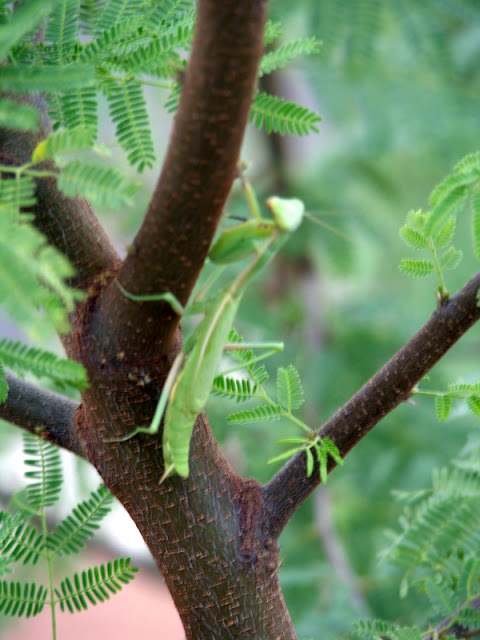
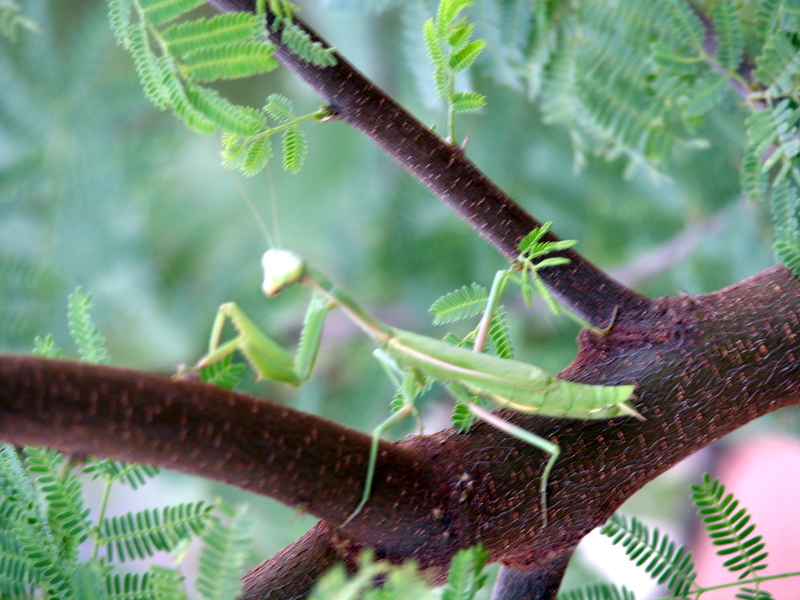
This year I bought some praying mantis eggs/nest. It’s impossible to see when they hatch and leave home so I just thought they died. Imagine my surprise to now be finding baby mantis’s in my front and back yard....on the very same plants the squash bugs are hitting.
So here’s my question. To spray for the bugs or hope the praying mantis’ will feast on the squash bug buffet?
Thoughts, ideas or opinions? All are very much appreciated!
-Sue
 This
idea works great with some pesticides approved for organic production and it
does not work well for others. For instance if we use a pesticide allowed in
organic production that targets a certain pest while not harming others it can
work fine. An example is using Bt that kills only the larva or worms of moths
and butterflies but we want to protect the praying mantis. It is totally safe
for the praying mantis since it targets only the worms or larva of moths and
butterflies. However, if we are realistic, it also kills the larva of
butterflies which are not plant pests for our gardens.
This
idea works great with some pesticides approved for organic production and it
does not work well for others. For instance if we use a pesticide allowed in
organic production that targets a certain pest while not harming others it can
work fine. An example is using Bt that kills only the larva or worms of moths
and butterflies but we want to protect the praying mantis. It is totally safe
for the praying mantis since it targets only the worms or larva of moths and
butterflies. However, if we are realistic, it also kills the larva of
butterflies which are not plant pests for our gardens.
 When
we choose to use an "indiscriminate killers" but want to keep
beneficials, like praying mantis, from getting harmed, then we must direct the
spray on the insects we want to kill and avoid spraying the ones we do not want
to harm. This requires a lot of plant inspection on your part; looking for,
identifying and targeting the "bad bugs" with the spray.
When
we choose to use an "indiscriminate killers" but want to keep
beneficials, like praying mantis, from getting harmed, then we must direct the
spray on the insects we want to kill and avoid spraying the ones we do not want
to harm. This requires a lot of plant inspection on your part; looking for,
identifying and targeting the "bad bugs" with the spray.
 |
| Mantid egg casing on a tree. |
This year I bought some praying mantis eggs/nest. It’s impossible to see when they hatch and leave home so I just thought they died. Imagine my surprise to now be finding baby mantis’s in my front and back yard....on the very same plants the squash bugs are hitting.
So here’s my question. To spray for the bugs or hope the praying mantis’ will feast on the squash bug buffet?
Thoughts, ideas or opinions? All are very much appreciated!
-Sue
A.
Sue, that’s a really good question and it is one of the major difficulties we face
when we try to manage our garden and fruit trees organically or as organically
as possible. You have introduced an insect predator into your garden to help
keep some of the "bad bugs" under control rather than to use
pesticides. It is one of the cornerstones of integrated pest management or IPM.
We should also be realistic about what praying mantis can and cannot do. They
are not focusing on "bad guys" to help you, they are just looking for
a meal. Their meals include "good bugs" and "bad bugs".

 This
idea works great with some pesticides approved for organic production and it
does not work well for others. For instance if we use a pesticide allowed in
organic production that targets a certain pest while not harming others it can
work fine. An example is using Bt that kills only the larva or worms of moths
and butterflies but we want to protect the praying mantis. It is totally safe
for the praying mantis since it targets only the worms or larva of moths and
butterflies. However, if we are realistic, it also kills the larva of
butterflies which are not plant pests for our gardens.
This
idea works great with some pesticides approved for organic production and it
does not work well for others. For instance if we use a pesticide allowed in
organic production that targets a certain pest while not harming others it can
work fine. An example is using Bt that kills only the larva or worms of moths
and butterflies but we want to protect the praying mantis. It is totally safe
for the praying mantis since it targets only the worms or larva of moths and
butterflies. However, if we are realistic, it also kills the larva of
butterflies which are not plant pests for our gardens.
However,
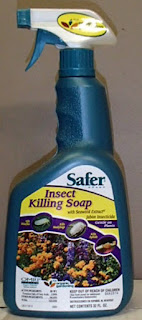
if we use insecticidal soap, which is also recommended in organic production,
and apply it to our vegetables or fruit trees, we are applying it is an
"indiscriminate killer"; it will kill any insect on contact, squash
bugs, leaf footed plant bugs, aphids, honeybees as well as praying mantis.
 When
we choose to use an "indiscriminate killers" but want to keep
beneficials, like praying mantis, from getting harmed, then we must direct the
spray on the insects we want to kill and avoid spraying the ones we do not want
to harm. This requires a lot of plant inspection on your part; looking for,
identifying and targeting the "bad bugs" with the spray.
When
we choose to use an "indiscriminate killers" but want to keep
beneficials, like praying mantis, from getting harmed, then we must direct the
spray on the insects we want to kill and avoid spraying the ones we do not want
to harm. This requires a lot of plant inspection on your part; looking for,
identifying and targeting the "bad bugs" with the spray.
Focusing on
the use of beneficial insects as your primary method of controlling "bad
bugs" limits your ability to use pesticides. You must either not use
pesticides or select pesticides which will not harm the beneficial insects or
direct any pesticide sprays so that they come in contact only with "bad
bugs".
Another
approach is to use these indiscriminate killers, such as insecticidal soaps, to
keep bad insects under control and realize you will have "collateral
damage". The "collateral damage" which occurs is the killing of
good bugs and bad bugs with the hope that the good bugs will recover after the
spraying is over.
You also select "organic" pesticides that do as
little damage to the general insect population as possible. This type of spray
program limits the use of beneficial insects for any long-term control. It is
really a "spray and pray" program.


Enjoy
your praying mantids. They will migrate to other parts of your landscape as
well as your neighbors. Visit and inspect your garden and fruit trees often.
Use plants sprays when "bad bugs" are getting out of control and
target your sprays on these "bad bugs".


