Type your question here!

Wednesday, March 17, 2021

Drawback to Woodchips: They do attract vermin

Q. My backyard has several planting beds containing roses, rosemary, mock orange, euonymus, pyracantha, lantana, sago palms, and other plants. I added rock to the soil surface eight years ago and these plants started to decline in about five years. I decided to remove the rock and put woodchips down instead but afraid of roaches entering the house from the woodchips.
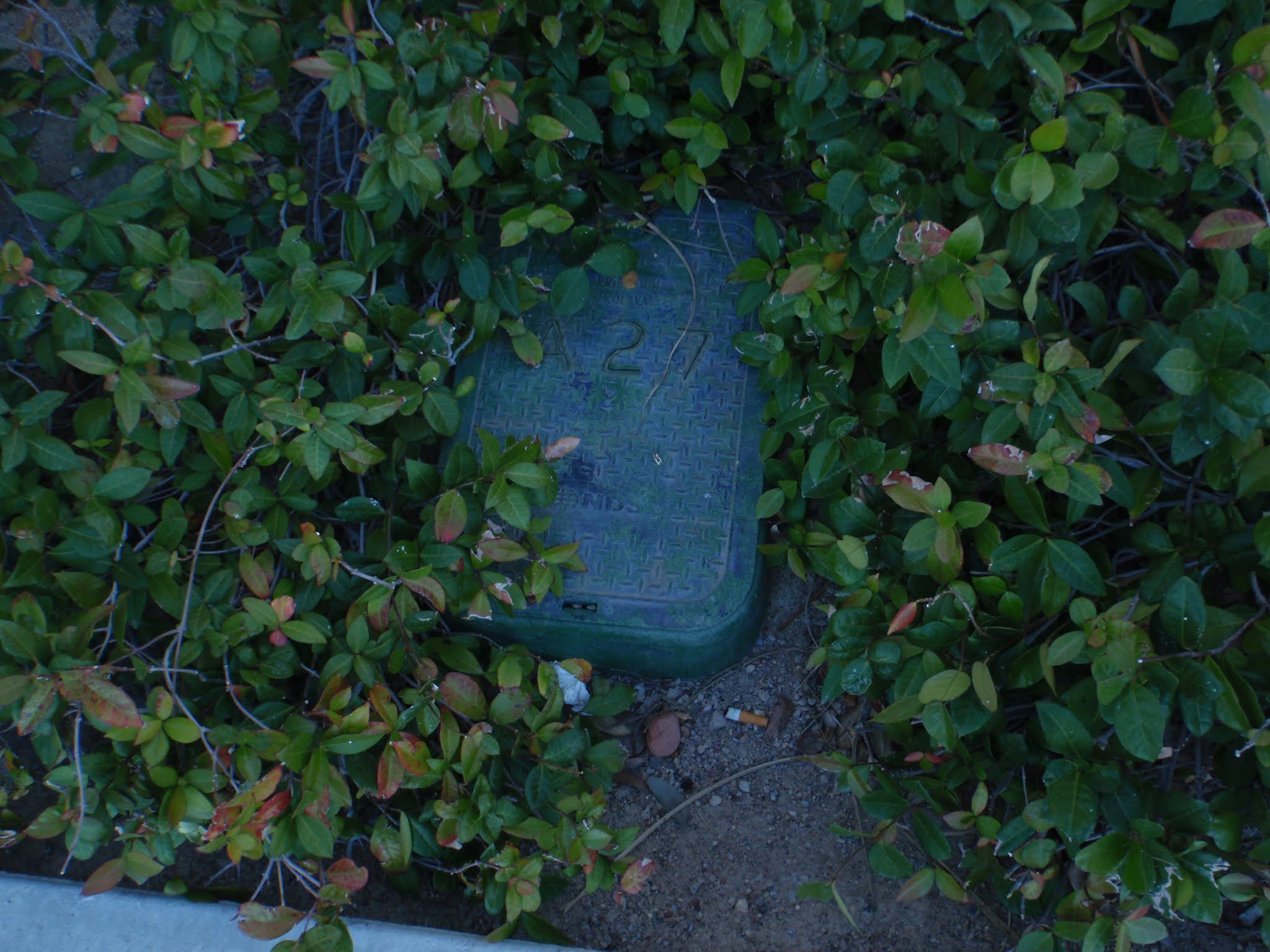
Irrigation valve box amongst plants receiving water. When you combine woodchips, water and a valve box it is normal for cockroaches and spiders to live and enter there. Spray the inside of these boxes with an insecticide once a year to help reduce these numbers. But this will not stop them from helping to decompose the woodhips.

A. Insects such as cockroaches like water and something to eat. They live in the woodchips exposed to water because they help break down debris from the wood chips. Cockroaches, unpleasant as they are, are decomposers. Their favorite place to congregate in the landscape is in irrigation boxes where it stays wet. They are attracted to these wet areas and warmth of your home when it gets cold so they may come inside as their populations get larger.

Keep landscape areas close to the home dry. Apply water to landscape plants no closer than 3 feet from your house exterior walls. There isn’t a good reason to apply water closer than this. In a desert climate where there is limited rainfall, plant roots follow irrigation water. Irrigating foundation plants on the side away from the home causes their roots to grow in that direction. Keeping the soil dry surrounding your home also reduces water damage to the cement as well as reducing insect problems inside the home.

After removing the rock and before you apply woodchips, sprinkle the wet areas around plants with a rich compost to help feed the plants, enrich the soil, and start the decomposition process.

Pittman Area of Las Vegas and Managing its Soil

Q. I am a young gardener (25) in Henderson, specifically Green Valley, near the Pittman Wash. I am interested in the cultivation of plants not only for their aesthetic value, but their benefit to wildlife as well. This has steered my interests to pedology and edaphology as well as horticulture and botany.

From what I have gathered from the USDA soil survey of the Las Vegas Valley (published in 1985), my residence (and therefore garden) lies near a boundary between the ‘McCarran’ and ‘Jean-arizo’ soil series. 

From direct observation, it seems I am situated more so in the McCarran series area. With massive soil in the lower C horizon, and sticky and plastic qualities throughout, how does this effect irrigation protocols and amendments types and amounts? The reason I ask is I recently purchased some premium compost from Viragrow (thanks for the rec), and want to make sure I use the correct ratio of compost to native soil to prevent reinforcing any drainage issues associated with clay soils. The bare, native soil I am about to cultivate drains moderately slowly (some areas 15 minutes, other areas up to an hour). The only plants that have ever been in there were some poorly pruned Texas Sage (Silver and Green Cloud varieties) which have been removed. This area was not irrigated for many years, with the plants subsisting on incidental precipitation and irrigation diffusion from neighbors’ lots. The irrigation to this area has been repaired, and a large ornamental and small productive garden is now planned to be planted there. Are there any good resources, preferably more up to date than 1985, that can provide more information on local soil series and how to mitigate the inhospitable qualities of such?

A. You live in the Pittman area of Las Vegas and Henderson. 

Description of the Pittman soil series in Las Vegas and Henderson, NV.

Most native soils in that area are classified usually as “heavy” which means they have quite a bit of clay and smaller silt particles. Water drainage can be a problem in these soils if the soil is irrigated too often. For this reason, I tell people that if all the water in a hole on the property drains overnight, it’s okay. If this were Wisconsin or Iowa then it would be different. Those soils are beautiful compared to the Mojave Desert soils.

The soils for subdivisions oftentimes are imported or man-made and may not represent the native soils in those areas. If you have in imported soil on your property, then it may not be representative of the soils map. I am very familiar with NRCS soils maps for Southern Nevada and Northern Arizona, and I know the McCarran soil series quite well. It represents a huge area. So, make sure you are actually dealing with the native soil and not one that’s imported. You should be able to see that from the soil horizons. But overnight drainage for landscape soil would be okay for most landscape plants. This may not be true of Mojave native plants. If you are growing Mojave natives then I would suggest either not using an irrigation controller or using it only to water manually and not leave it on a schedule.

As far as more information is concerned, Dr. Dale Devitt (soil science researcher) and I are in the process of publishing a book that you might take a look at. It’s available on Amazon in digital form. If you want a hard copy or digital it is also available from the publisher. Dr. Devitt teaches in the biology department at UNLV. Dr. Devitt is a “hard” scientist and I consider myself a “soft” scientist who focuses mostly on transferring difficult information in terms more easily understood. Together we have published about 40 peer-reviewed scientific research articles in various journals. 

Dr. Devitt is the local soils expert and knows more than anyone about soils and water movement and plant use in the Mojave Desert. But honestly the book takes much of this difficult information from an urban tree perspective and tries to simplify it as much as possible. It’s really rehashing a lot of the same information but puts it into one book.

Any of the Cloud series of native plants (Green Cloud, Silver Cloud, etc.) will be sensitive to soils that drain poorly. Their roots will tend to die due to poor drainage. In soils like that, consider planting them on a hill or berm about a foot tall and perhaps about six feet wide. This will give the roots a chance to grow in a raised soil that will drain better.

Selecting Plants for Shade

Q. What plants can I plant in my front and backyards? I want plants that grow large enough to produce shade.

No shade on this south facing wall of this home. Wow, its hot! Shade the walls of this house to reduce electricity use in the summer. If they are deciduous then the sun can warm this house with sunlight in the winter. Shade the walls and windows. That is all that is needed, Not the roof.

A. Shade only what’s needed. This is usually the West and South windows and walls. A single-story home only needs, at the most, 25 foot-tall trees or shrubs. A two-story home can handle trees to about 35 or 40 feet tall maximum. Selecting trees taller than needed just looks “funny” when they are mature. Big trees need big spaces like parks and malls to look good.

Select Trees by Low Temperature

Winter low temperatures should be the deciding factor for permanent trees and shrubs important to the design of the landscape. There are plants used for “fun”. Fun plants can be selected for any low winter temperature. But expect damage or lose them during cold winters. In the Las Vegas Valley, use a winter temperature around 20°F minimum for the most important trees and shrubs in a landscape.

               To see which plants are available. There are three choices; buying from a local nursery or garden center, taking a road trip to buy plants, or purchasing plants online. Buying online starts around October with shipments beginning in January for spring planting of winter hardy plants. Plants bought online won’t have any soil around the roots so more care at planting time is needed.

            To aid your search for the right plant, use two places online; the plant database from the Southern Nevada water Authority or Arizona State University’s (ASU) plant database by Dr. Chris Martin. To access ASU’s plant database, type in the plants “common name” followed by “ASU”. To access Southern Nevada Water Authority’s database, start by typing in “SNWA” and “searchable database”. Pick 3 to 5 different plants in the case the plant you want is not available.

Interpreting Mojave Desert Soil though Native Plant Growth

Q. If anything, what can the different species of weeds tell someone about the soil conditions they’re found in. For example, do dandelions only grow in certain pH ranges or does puncturevine thrive only in certain sodic concentrations etc. etc.? I want to understand the most about my land via the plants that grow on it unassisted.


I apologize for the lousy picture. I took it from a slide I had made a long time ago. This is Lake Mead and showing the change in native plants (weeds) that occur with a change in soil moisture. Plants are very different closer to the Lake than further away due to less available soil moisture. As soil moisture changes, the plant communities change as well as their numbers (density) and sometimes even their height depending on the plants.

A. Which weeds are growing on native soil or disturb soils can tell you a lot. It can give hints about the chemistry of the soil and it will tell you a lot about its structure, if the soil has been disturbed or not, suitability for different plants and availability of water. 

I look at the type of weeds growing, the number of weeds and how tall they are. Wherever there is subsurface water there are a lot more plants per square meter and they are usually taller. Native soils high in phosphorus tend to favor those plants that flower more and produce seed. Crappy local native soils don’t grow much of anything. 

Dandelions for instance like disturbed soils, high phosphorus soils and they are very good at competition that’s one reason they can survive in lawns while common Bermudagrass does not. How the local plant community and the soil is managed influences which weeds grow. There are plants such as salt cedar which does favor growing in soils high in salinity but I’ve not seen a reference to sodic soils. That could be a question you could pose to Dr. Devitt. 

Some research questions I wanted to ask include different amounts of irrigation applied to a soil and how it influences native plant management and the value of soil amendments such as compost in influencing the management of native and exotic plants. To my knowledge none of those questions have been answered. Our soils typically are not classified as sodic soils but there are pockets (areas) of them in the valley. There are also pockets of high boron (a soil salt).

What Does "Winter-Deciduous" Mean?

 Other terms used besides Winter Deciduous include semi evergreen. It just means when it gets cold enough, it might drop its leaves because they get damaged by freezing weather, In warmer climates than Las Vegas, or if Las Vegas gets a winter with little to no freezing temperatures, then the leaves aren't damaged by the cold and they don't get damaged or may not drop. 

A change in leaf color to a "bronzing" yellowish brown can also occur. This is also a signal that it got cold. 

To reduce the chance of freezing damage, stop applying fertilizers to plants by around July 1.

This winter air temperature became so cold in this North Las Vegas location that this mesquite tree leaves were damaged, but not the tree, and they dropped. This tree, sometimes also called semi-evergreen, became deciduous.

If it gets cold enough, plants like this Star Jasmine will get yellow or bronze leaves and may even get deciduous.

Sago palm can also get cold damage during the winter if temperatures get low enough.

Bottlebrush can also get damaged from cold if winter temperatures are low enough.

Cold or freezing damage can also occur to some plants like this myoporum (locally called Australian Racer). It depends on how cold it got and for how long.

Monday, March 15, 2021

Part Time Vegetable and Herb Gardener Wanted in Las Vegas


Orchard at Ahern in Las Vegas

The Orchard at Ahern, located 1 ½ miles from Las Vegas Boulevard near the Center of Las Vegas, is looking for a responsible, experienced gardener, part time, to care for its vegetable and herb growing area. Ahern also owns and operates the Ahern Hotel in Las Vegas. The successful candidate would report to a Senior VP at Ahern and be responsible for the planting, growing, harvesting, and distribution of vegetables and herbs from its garden. Hours are flexible and the salary is negotiable. Interested individuals should contact Bob Morris at Extremehort@aol.com with their contact information and experience.

Thursday, March 11, 2021

How To Save Potting Soils for Future Use

Q. Should I be saving potting soils from seasonal purchase plants? I have been saving soils for years. Should the soil be thrown away at some po
int.


Garden Gourmet potting soil from Viragrow. It is made lighter in weight for containers or pots. Soil amendments like perlite, peat moss and even compost can be lighter in weight and hold water or nutrients.

A. Potting soils can be saved and reused for years. They can be valuable when added to our soils because of the “organics” they contain. These never go bad. But these “organics” don’t contain any plant nutrients and they can harbor diseases if used during their first few months after saving.

Rid this aggregated potting soil of any diseases it might contain by moistening and then placing it inside a clear plastic bag. Place this clear plastic bag full of potting soil in the summer sun for a few days. When it reaches a temperature of 180°F for 30 minutes or more, it will be sanitized of any diseases. Once sanitized, they are ready to reuse.

Rapid Summer Death of Shrubs - Collar Rot

Q. We have two 12-year-old Texas Sage shrubs concealing the street mailboxes. Within a month this past summer, they were dying back rapidly. The dieback spread over both plants. The irrigation hasn’t changed. Any idea what could be causing this? 


Not readers plant. Showing collar rot. The top dies because its choked....rotten.

A. My explanation follows the KISS principle. Texas Sage, a Chihuahuan desert native, has roots that die if watered too often. If the main stem or trunk of this shrub stays wet, this could cause it to die. My guess this is a trunk/root disease caused by watering too often. This disease moves with irrigation water and can spread easily between nearby plants.

Put Emitters Close When First Planted

When first planted, the drip emitters must be close to the plant. I like to put them up to about 12 inches during the first year. They should be moved, and more drip emitters added, as the plant gets larger in the second or third year. They are moved to about 12 to 18 inches away from the trunk at this time. This practice does not change the irrigation frequency but changes how much water is applied and where it is applied. A larger area under the plant is watered to compensate for its increased size.

            Move the drip emitters away from the trunk or main stem to a distance of 12 to 18 inches from its trunk. This should be done when the shrub is 2 to 4 years in the ground. At the same time, add more drip emitters and redistribute the emitters so that they irrigate half the area under the enlarged plant canopy. This gives the plant more water, distributes the water to a larger area because it’s larger and reduces the chance of trunk/root diseases of susceptible plants.

Mistakes Made When Planting in Desert Soils

The major mistakes made when planting are not making the planting hole wide enough, digging the hole extra deep when it’s not needed, planting too deeply, and watering the plants too often after planting.

The amount of "organics" in a soil can be "eyeballed" in many of our soils by its color. When a soil is darker in color, it means it has more "organics" in it. The Mojave Desert soils in Las Vegas have generally have no organics in them at all. This is why we add organics to the soil, oftentimes in the form of compost, to raise the level or its content. This is Garden Soil Mix from Viragrow and used for planting.

I like deals

Buying a large tree in a box and getting it planted for free is a good deal! Just have it done right. Beware. Numerous people have complained the “planting crews” dug the hole only wide enough to fit the box in the planting hole. After that a little bit of mulch is mixed with the soil, watered in, and called good. That’s no deal. The tree will decline and maybe die in a couple of years because of these poor planting techniques.

Yellowing leaves like in this bottlebrush can be a sign that the organics in the soil is running out due to its mineralization in a few years by rock mulch. Some plants dont like rock mulch but want a soil that has at least 2% organics in the soil. This soil under the rock probably has less than 1%.

Planting Right

If these deals are too good to pass up, then make sure the planting hole is at least three times the width of the box. Pay planting crews extra to do it the right way if you must. The hole doesn’t have to be dug extra deep, but it should be dug wide. It’s okay to use the soil taken from the hole for planting, but first mix it with about one third by volume of compost. If a normal compost is used, make sure to mix in some fertilizer with the soil used for the planting hole. “Rich” composts don’t need extra fertilizer in the soil mix.

Use this soil mixture for filling the planting hole around the rootball and then water it in with lots of water. Water it like this for two days in a row. Make sure the tree is watered thoroughly at planting time., To force the water deep in the planting hole, construct a “well” or “moat” 4 inches tall just above the planting hole and fill it with water.

Deep Holes - No, No, No

The planting holes shouldn’t be super deep. (unless there is a problem with drainage which is more rare than you might think). If a hole dug in the soil drains water overnight, there is no drainage problem. However, if the water is still in this hole by morning, then there is a drainage problem and other planting methods are needed. But poor drainage is not frequent in most of our landscapes.

The soil around the tree in the box or container should be “milk chocolate” in color when wet and the same level as the rest of the landscape soil when everything is finished. The tree should not be below or above the surrounding soil when finished. Make sure the soil is wet when planting.

Why Stake

Staking trees and shrubs can be very important in getting the roots established during the first year. The stakes that come with 5 and 15-gallon plants are usually good enough to reuse if cut free from the plant and pounded into the solid soil at the bottom of the planting hole so the plant roots can’t move. The purpose of staking is to keep the plant roots from moving, not necessarily the top of the plant. The top of the plant should be free to move in the wind.

Watering Shrubs Daily a Mistake. Why?

Q. I live in a climate very similar to Las Vegas; USDA Zone 8B. I planted a 1-gallon Texas ranger shrub two weeks ago in sandy/stony soil, watered them with about 2 gallons daily for 10 days. After, I put a 1-inch deep, bark mulch on the soil surface. Now, three weeks later, the leaves are yellow, brittle and crunchy on the lower stems with curling leaves on the top. I think I overwatered, but I’m not sure.

Honeysuckle crown or collar rot. A disease of plants that are watered too often.

A. Yes, sounds like they were watered too often and now probably “root dead”. Watering too often has caused the leaves to yellow, brown, and get crunchy. After the initial watering, let the soil drain water and give the plant roots air.

The plant roots drowned because the plant was continuously watered. Watering the plant with 2 gallons is about the right amount after planting. It could even be more than that. But after that, schedule the irrigations to skip at least one day so the water drains from the soil in the roots can “breathe”.

This time of year in early spring, probably once or twice a week watering is enough, even for a sandy/rocky soil! The soil around the roots was amended so it will hold water. The bark mulch on top of the soil gives you about a day extra between irrigations.

The bad news is that the soil surrounding the overwatered dead roots is probably “contaminated” with root disease problems. It could be replaced I suppose but I suggest digging a new hole for planting, at least 2 or 3 feet away from the old, contaminated hole.

Dig the hole 2 to 3 feet in diameter for a 1-gallon plant. It doesn’t have to be deep, but wide. Next, mix the soil taken from the hole with about one third compost. Wait till the last minute and finally remove the plant from the container. To do this, turn the container over and let the plant slide onto your hand. Lower the plant into the hole, holding it by its rootball, and place it so it’s resting at the bottom of the hole.

            As you are pushing this mixed soil back into the planting hole, everything is wet. Make this planting soil a “slurry” by adding water slowly to the whole with a hose so this “slurry” flows and fills all the gaps around the rootball. You should see air bubbles surfacing from this slurry. Build a moat, 2 foot wide, around the plant to force excess water down and not run off the soil surface. Fill this moat with water. Do this twice. No more than twice.

            If the plant came with a nursery stake, push it into the wet, solid soil at the bottom of the hole next to the plant and re-tie the plant to the stake with stretchable, green nursery tape. This immobilizes the plant until the roots have anchored it into the soil. Remove this stake at the end of the growing season.

            If you buy 5-gallon plants, use around five gallons of water when irrigating with the timer. If you buy 15-gallon plants, plan on around 15 gallons of applied water when irrigating. What killed the plants is watering too often, not the amount applied.

Apple -- Crown and Collar Rot

From http://plant-disease.ippc.orst.edu/disease.cfm?RecordID=40

Vegetables like beans can have crown rot (collar rot) when planted in cold soils. Different varieties of beans will show different tolerances to cold soils and collar rot development.


Cause: Phytophthora cactorum and other species, a soilborne fungus-like microorganism. Crown rot is a disease of the rootstock portion of the tree; collar rot is a disease of the scion portion. Both are serious diseases of apple and other orchard trees in British Columbia, Washington, and Idaho, and have become a problem in Oregon orchards with clonal rootstocks, principally Malling Merton 106. Crabapple can also be infected.

The fungus survives primarily as oospores in soil, organic debris, or infected tissues. Oospores produce a swimming spore stage (zoospores) when soils are at or near saturation. Zoospores swim to and infect roots. Movement within roots to the root crown is greatest between pink bud and shoot elongation.

Apple crown rot in Lebanon


Symptoms: In early fall, an affected tree shows bronzing, purpling, or yellowing foliage of one or more limbs, accompanied by bark reddening. There is a reduction in the size of leaves and terminal growth. Examination at the root crown or collar after scraping away the soil reveals dead bark. The cambium will be orange-brown to red-brown, eventually becoming dark brown instead of white. A distinct margin may separate healthy from infected tissues. In many cases, the tree may be completely girdled before its condition is noticed. Fire blight symptoms may be similar when confined to the rootstock.

'Antonovka', 'McIntosh', and 'Wealthy' apple seedlings and M9 clonal rootstocks have shown high resistance to collar rot. Moderately resistant: MM111, M2, M7, M26, 'Golden Delicious', 'Delicious', and 'Rome Beauty'. Susceptible: MM104 and MM106.A


Cultural control:

  1. Plant on a raised bed to help keep water away from trunks.
  2. Avoid overirrigation.
  3. During summer, examine root crowns of trees for collar rot and scrape off diseased tissues. Leave root crowns exposed to the air until late fall.
  4. Avoid wounding root crowns. If a wound is made, keep it uncovered and open to the air for the remainder of the season.

Chemical control: Apply before symptoms appear, especially in orchards favorable for disease development. No chemical will revitalize trees showing moderate to severe crown rot symptoms. Although resistance has not been reported, alternate materials so resistant fungi do not develop quickly.

  1. Agri-Fos at 1.25 to 2.5 qt/A. Do not combine with a copper-spray program for control of other diseases. 4-hour reentry.
  2. Aliette WDG at 2.5 to 5 lb/A. Spray foliage to run off. Follow manufacturer's directions for timing of spray. Do not apply within 14 days of harvest or more than 20 lb/A per season. Do not combine with a copper spray program for control of other diseases. Phytotoxicity may result if applied within 1 week of a copper spray. 12-hr reentry.
  3. Fixed copper products. Use 4 gal solution as a drench on the lower trunk of each tree in early spring or after harvest. Do not use if soil pH is below 5.5. Not considered organic since application is to the soil.
    1. Champ Formula 2 at 2.75 pints/100 gal water. 24-hr reentry.
    2. Copper-Count-N at 4 qt/100 gal water. 12-hr reentry.
    3. Cuprofix Disperss at 5 lb/100 gal water. 24-hr reentry.
    4. Kocide DF at 4 lb/100 gal water. 48-hr reentry.
    5. Nordox 75 WG at 2.5 lb/100 gal water. 24-hr reentry.
  4. Fosphite at 1 to 3 quarts/A. Do not use copper products within 20 days of treatment and do not use spray adjuvants. May also be injected into trunk. 4-hr reentry.
  5. Phostrol at 2.5 to 5 pt/A. 4-hr reentry.
  6. Ridomil Gold SL at 0.5 pint/100 gal water. Apply diluted mixture (based on trunk size measured at 12 inches above the soil line) around each tree trunk. Apply once at planting or in spring before growth starts. Apply again in fall after harvest. 48-hr reentry.

References:
Jones, A.L. and H.S. Aldwinkle. 1990. Compendium of Apple and Pear Diseases. 1990. St. Paul, MN: APS Press.

Content edited by: Jay W. Pscheidt on January 1, 2008

Vegetables like beans can have crown rot (collar rot) when planted in cold soils. Different varieties of beans will show different tolerances to cold soils and collar rot development.


Cause: Phytophthora cactorum and other species, a soilborne fungus-like microorganism. Crown rot is a disease of the rootstock portion of the tree; collar rot is a disease of the scion portion. Both are serious diseases of apple and other orchard trees in British Columbia, Washington, and Idaho, and have become a problem in Oregon orchards with clonal rootstocks, principally Malling Merton 106. Crabapple can also be infected.

The fungus survives primarily as oospores in soil, organic debris, or infected tissues. Oospores produce a swimming spore stage (zoospores) when soils are at or near saturation. Zoospores swim to and infect roots. Movement within roots to the root crown is greatest between pink bud and shoot elongation.


Symptoms: In early fall, an affected tree shows bronzing, purpling, or yellowing foliage of one or more limbs, accompanied by bark reddening. There is a reduction in the size of leaves and terminal growth. Examination at the root crown or collar after scraping away the soil reveals dead bark. The cambium will be orange-brown to red-brown, eventually becoming dark brown instead of white. A distinct margin may separate healthy from infected tissues. In many cases, the tree may be completely girdled before its condition is noticed. Fire blight symptoms may be similar when confined to the rootstock.

'Antonovka', 'McIntosh', and 'Wealthy' apple seedlings and M9 clonal rootstocks have shown high resistance to collar rot. Moderately resistant: MM111, M2, M7, M26, 'Golden Delicious', 'Delicious', and 'Rome Beauty'. Susceptible: MM104 and MM106.A


Cultural control:

  1. Plant on a raised bed to help keep water away from trunks.
  2. Avoid overirrigation.
  3. During summer, examine root crowns of trees for collar rot and scrape off diseased tissues. Leave root crowns exposed to the air until late fall.
  4. Avoid wounding root crowns. If a wound is made, keep it uncovered and open to the air for the remainder of the season.

Chemical control: Apply before symptoms appear, especially in orchards favorable for disease development. No chemical will revitalize trees showing moderate to severe crown rot symptoms. Although resistance has not been reported, alternate materials so resistant fungi do not develop quickly.

  1. Agri-Fos at 1.25 to 2.5 qt/A. Do not combine with a copper-spray program for control of other diseases. 4-hour reentry.
  2. Aliette WDG at 2.5 to 5 lb/A. Spray foliage to run off. Follow manufacturer's directions for timing of spray. Do not apply within 14 days of harvest or more than 20 lb/A per season. Do not combine with a copper spray program for control of other diseases. Phytotoxicity may result if applied within 1 week of a copper spray. 12-hr reentry.
  3. Fixed copper products. Use 4 gal solution as a drench on the lower trunk of each tree in early spring or after harvest. Do not use if soil pH is below 5.5. Not considered organic since application is to the soil.
    1. Champ Formula 2 at 2.75 pints/100 gal water. 24-hr reentry.
    2. Copper-Count-N at 4 qt/100 gal water. 12-hr reentry.
    3. Cuprofix Disperss at 5 lb/100 gal water. 24-hr reentry.
    4. Kocide DF at 4 lb/100 gal water. 48-hr reentry.
    5. Nordox 75 WG at 2.5 lb/100 gal water. 24-hr reentry.
  4. Fosphite at 1 to 3 quarts/A. Do not use copper products within 20 days of treatment and do not use spray adjuvants. May also be injected into trunk. 4-hr reentry.
  5. Phostrol at 2.5 to 5 pt/A. 4-hr reentry.
  6. Ridomil Gold SL at 0.5 pint/100 gal water. Apply diluted mixture (based on trunk size measured at 12 inches above the soil line) around each tree trunk. Apply once at planting or in spring before growth starts. Apply again in fall after harvest. 48-hr reentry.

References:
Jones, A.L. and H.S. Aldwinkle. 1990. Compendium of Apple and Pear Diseases. 1990. St. Paul, MN: APS Press.

Content edited by: Jay W. Pscheidt on January 1, 2008


Cause: Phytophthora cactorum and other species, a soilborne fungus-like microorganism. Crown rot is a disease of the rootstock portion of the tree; collar rot is a disease of the scion portion. Both are serious diseases of apple and other orchard trees in British Columbia, Washington, and Idaho, and have become a problem in Oregon orchards with clonal rootstocks, principally Malling Merton 106. Crabapple can also be infected.

The fungus survives primarily as oospores in soil, organic debris, or infected tissues. Oospores produce a swimming spore stage (zoospores) when soils are at or near saturation. Zoospores swim to and infect roots. Movement within roots to the root crown is greatest between pink bud and shoot elongation.


Symptoms: In early fall, an affected tree shows bronzing, purpling, or yellowing foliage of one or more limbs, accompanied by bark reddening. There is a reduction in the size of leaves and terminal growth. Examination at the root crown or collar after scraping away the soil reveals dead bark. The cambium will be orange-brown to red-brown, eventually becoming dark brown instead of white. A distinct margin may separate healthy from infected tissues. In many cases, the tree may be completely girdled before its condition is noticed. Fire blight symptoms may be similar when confined to the rootstock.

'Antonovka', 'McIntosh', and 'Wealthy' apple seedlings and M9 clonal rootstocks have shown high resistance to collar rot. Moderately resistant: MM111, M2, M7, M26, 'Golden Delicious', 'Delicious', and 'Rome Beauty'. Susceptible: MM104 and MM106.A


Cultural control:

  1. Plant on a raised bed to help keep water away from trunks.
  1. Avoid overirrigation.
  1. During summer, examine root crowns of trees for collar rot and scrape off diseased tissues. Leave root crowns exposed to the air until late fall.
  1. Avoid wounding root crowns. If a wound is made, keep it uncovered and open to the air for the remainder of the season.

Chemical control: Apply before symptoms appear, especially in orchards favorable for disease development. No chemical will revitalize trees showing moderate to severe crown rot symptoms. Although resistance has not been reported, alternate materials so resistant fungi do not develop quickly.

  1. Agri-Fos at 1.25 to 2.5 qt/A. Do not combine with a copper-spray program for control of other diseases. 4-hour reentry.
  1. Aliette WDG at 2.5 to 5 lb/A. Spray foliage to run off. Follow manufacturer's directions for timing of spray. Do not apply within 14 days of harvest or more than 20 lb/A per season. Do not combine with a copper spray program for control of other diseases. Phytotoxicity may result if applied within 1 week of a copper spray. 12-hr reentry.
  1. Fixed copper products. Use 4 gal solution as a drench on the lower trunk of each tree in early spring or after harvest. Do not use if soil pH is below 5.5. Not considered organic since application is to the soil.
  1. Champ Formula 2 at 2.75 pints/100 gal water. 24-hr reentry.
  1. Copper-Count-N at 4 qt/100 gal water. 12-hr reentry.
  1. Cuprofix Disperss at 5 lb/100 gal water. 24-hr reentry.
  1. Kocide DF at 4 lb/100 gal water. 48-hr reentry.
  1. Nordox 75 WG at 2.5 lb/100 gal water. 24-hr reentry.
  1. Fosphite at 1 to 3 quarts/A. Do not use copper products within 20 days of treatment and do not use spray adjuvants. May also be injected into trunk. 4-hr reentry.
  1. Phostrol at 2.5 to 5 pt/A. 4-hr reentry.
  1. Ridomil Gold SL at 0.5 pint/100 gal water. Apply diluted mixture (based on trunk size measured at 12 inches above the soil line) around each tree trunk. Apply once at planting or in spring before growth starts. Apply again in fall after harvest. 48-hr reentry.

References:

Jones, A.L. and H.S. Aldwinkle. 1990. Compendium of Apple and Pear Diseases. 1990. St. Paul, MN: APS Press.

Content edited by: Jay W. Pscheidt on January 1, 2008

Wednesday, February 17, 2021

Most Landscape Plants are Fertilized Once a Year

Q.  I live in the Anthem community in Henderson NV at 2900 feet and have a large variety of plants watered with drip emitters. I typically fertilize three time a year with a local nursery product. I also apply EDDHA iron chelate as needed if a shrub shows signs of yellowing. Comments?

One fertilizer application in the spring of each year is enough for most landscape plants. Some exceptions are lawns, vegetables, annual flowers and specialty shrubs like roses.

A.  Mineral fertilizers for home landscapes are all the same, whether you get them from a local nursery or not. I select a mineral fertilizer based upon price and the three numbers on the outside of the bag.

This is called a "starter fertilizer". Why? Because the middle number, phosphorus, responsible for helping new roots to grow is highest. Phosphorus also helps promote flowering so it is also used as a rose fertilizer and tomato fertilizer.

The last of the three numbers, potassium, should always be high. The first number, nitrogen, encourages growth and greening of the plant and disappears with watering. The middle number, phosphorus, encourages flowering, rooting and sticks around in the soil longer after an application. If there is any fertilizer needed by plants later in the year it’s the first number, nitrogen.

Blood meal, fertilizer made from the blood of animals, is high in nitrogen; usually 12%. It also has iron in it but the numbers quoted for this fertilizer when sold as a mineral fertilizer is 12-0-0.  It is not "organic" unless it carries the organic label. Even though it is made from blood, it is not considered an "organic" fertilizer.

One application of fertilizer in the early spring of each year is all that is required for most landscape plants. Exceptions are lawns, vegetables, and “show plants”, like roses that produce a show of flowers to enjoy. Even fruit trees grow well with one application of fertilizer in the spring of each year. Winter tender plants, like most citrus and bougainvillea, are fertilized only once in the early spring, avoiding fertilizer applications after the middle of summer.

All that being said, it’s always best to repeat applications of fertilizer in small amounts all through the growing season. It’s not necessary, but according to research it’s best. this is the selling point made for fertilizer injectors like EZ Flo.

EZ Flo fertilizer injectors are not really fertilizer vernri type fertilizer injectors rather than the very expensive but very exact fertilizer injectors. Theas types of injectors are exact enough for most homeowners but may not be exact enough for commercial greenhouse growers who need more precise application of chemicals to the irrigation water.

For plants that like continuous feeding such as vegetables and “show plants”, I like to use rich compost as a fertilizer in the beginning of the year and then follow up with very light nitrogen applications the remainder of the year when needed.

Palms are "Oasis" Lovers: What to Plant in Las Vegas

Q. I moved here a year ago and have yet to figure out what my palm tree needs to thrive.  It gets plenty of water. I located and uncovered the drippers to make sure it was getting enough water and even moved some plants away from it so it got more water.


Palms endure the heat. Some not so much the wind but they love the heat. They also love water. I consider palms to be "oasis" plants. When you find fan palms growing in the desert they are near surface water like here in Warm Springs, Nevada, or near an oasis. Mark my words. When you see palms growing in the desert I will bet you $10 you will also find water.

A. Palm trees growing in the desert are “oasis plants”; they need to grow near water but not in it. They like to be surrounded by other plants that also need water. A big mistake to make with palm trees is to grow them alone, out in the middle of nowhere, and surround them with rock. Growing them alone, in full sun, and surrounding them with rock is asking for a multitude of different problems.

Many palms are quite large. They may be cute when they are small but when they get larger...watch out!


A second problem with most palms is their mature size. They are cute to look at when small, but all the palms get larger as they get older. Their growing size forces homeowners to pay more for pruning, and possibly removal, as these trees get larger.

Mediterranean fan palm and Windmill palm look similar except the Windmill palm is much slower growing and doesn't get wider like the MFP does. This is because it "suckers" from its base. It can get quite wide if it is not controlled as this one is.

Probably the two palms that are the best choices for smaller residential lands 

capes are the Windmill Palm and Mediterranean Fan Palm. The Mediterranean Fan Palm can be put into hot windy locations but requires pruning as it gets older. The pruning mostly focuses on keeping it from getting wider. The second choice is the slow-growing Windmill Palm. Windmill Palm should be placed on the East or north side of a landscape out of the wind. Both should be surrounded by other plants and woodchips rather than rock.
This is a windmill palm. Lets see it in five years when the organics in the soil are gone and the rock has impacted the landscape of this "oasis" plant.