Type your question here!

Friday, June 26, 2020

Avocados are for Advanced Gardeners in the Desert


Q. We would like to plant fruit trees but don’t have much gardening experience. Can we plant during the summer months? Are there types of fruit with a tougher skin so birds can’t get them? My wife loves avocados, so is that a possibility for someone without a green thumb here?
Avocados come in all shapes and many different colors. These avocados were from Zimbabwe where it is warmer than Las Vegas. Las Vegas and the Mojave Desert is a bit cold for avocados so pick a variety that stays small and known for winter cold tolerance.

A. I would not plant anything but palm trees, Bermudagrass, cacti and succulents from May through mid-September. Even good gardeners prefer not to plant during the hot summer months if they have a choice. Nurseries are pretty dead compared to spring.

Good Gardeners Plant in Spring and Fall

            Why? Anything you plant now is slow recovering from planting because of the late planting date, heat, and low humidity. If you see something you just can’t say “No” to, then buy it, put it in the shade and plant it as soon as possible. Plant in the morning when temperatures are cooler. After removing it from the container, transfer it to a wet, prepared planting hole as quickly as possible. Have a hose ready and plant everything wet, wet, wet.

Plant in the spring and fall. fall months it is harder to find fruit trees you want but patience is good.


Start Slow with Fruit Trees and Avoid Birds, Don't Fight With Them

            If you are new to gardening and fruit trees, start with a single fruit tree. Purchase a 5-gallon container tree or larger. Apricot is a good choice and harvest the fruit when they start turning a color and you see the first signs of a bird nibbles.

This is a fresh bird peck in peach. Harvesting the fruit a bit earlier would forgo most bird damage when birds are not interested in your fruit yet.

            You have 2 to 3 weeks to harvest everything from the tree so don’t take it all at once! Fruit will ripen first in the hottest part of the tree and work toward the coolest. So pick the fruit first that is farthest along. Picked fruit will ripen on your kitchen counter (or garage, or back patio and covered so the birds can’t get them) and still taste the same. The fruit doesn’t need light anymore to ripen and taste good. Apricots don’t have to be soft on the tree (which by the way is a little later than when birds first start pecking them) to be “tree ripened”.

Avocado is 'Advanced Gardening' in the Desert

            Don’t start with an avocado tree unless you are an experienced gardener. I am not going to get into the “why” here, but I will guarantee you failure if you don’t know what you’re doing. Search my blog for answers. Apricot or plum is much easier to grow here than avocado.

Rose Bush Calendar of Maintenance in the Desert


Q. I planted a rose bush facing south as a memorial for my Dad and I want to know how to help it along. It has holes in some of its leaves and a few yellow leaves. I saw one grub and I got some stuff to get rid of grubs. 

A. Roses in a southern exposure have not had many problems provided they stay healthy. 

Select a Good Variety First-Off

Varieties of roses suited for desert environments handle hot locations well and may bloom throughout the entire winter if planted in the right microclimate. Like all roses, they don’t flower well during the heat which may start a month early (May) in southern exposure is like yours. List of desert roses.

Aphids heavily feed on roses in the spring during cool weather before the flowers open. They start early and are aided in their transport from rose to rose by ants.


Look at Your Rose Often

            Look at the color of the leaves and the quality of its new growth to judge its general health. New growth should be vigorous and the leaves dark green. These are two signs the plant is healthy and growing. Hopefully, you amended the soil at planting, then use organic mulch on the surface of the soil surrounding them, fertilize them three times a year and water when they need it to keep them healthy.

Even though leaf cutter bees damage rose leaves and petals, I like them. You can encourage leaf cutters with 1/4 to 3/8 inch holes drilled in 4x4's. The females use the holes for laying eggs. They are solitary bees, not social bees like honeybees so they don't need a hive.

Disease and Insects

            In dry environments like ours, roses have few disease problems and insect problems are rare, mostly occurring in the spring. We may see aphids and flower thrips in the spring and occasionally cane borer but it’s nothing to be alarmed about. You will handle these problems when you see them. Grubs feeding on the roots in the spring may occur and a systemic insecticide drench applied around the roots once a year will take care of them, and aphids, at the same time.

This isnt rose but it doesn't matter with leaf cutter damage. They always make the same size and shape holes in soft leaves and flower petals.

            The size, shape, and position of holes in the leaves tell you a lot about which insect may be causing this. Most commonly it is leaf cutter bees. We may see the same damage on vegetables, basil, and other plants with soft, tender leaves. The strategy is the same. We leave these insects alone. They are good pollinators and so we choose to live with that kind of plant damage and understand its meaning.

This isnt rose but iron chlorosis looks the same. Its always on the newest leaf growth and gets worse the newer the leaf. The available iron has been limited for awhile. In the spring, soil applications of iron work. In summer and fall you will have to spray iron on the leaves multiple times to get it to work. So get your precautionary iron soil application done early.

Nutritional Problems

            As far as yellow leaves go if they appear on older, bigger stems, ignore it. If these yellow leaves occur and new growth in full sunlight then we may need to look a little deeper on why.

When to Fertilize Roses


Q. Now that it's getting hot, my roses have stopped blooming. Should I keep feeding them or wait until the weather cools and they start blooming again? Can it hurt them when feeding in temps over 100?

A. Roses are typically fertilized three times a year and avoiding months when it’s hot in Las Vegas, (June, July, and August). For convenience I suggest fertilizing on three holidays when cooler: Valentine’s Day, Memorial Day, and Labor Day.

Rose fertilizers are typically high in phosphorus (middle number which in this case is 12). You can use any high phosphorus fertilizer as long as it has some nitrogen and potassium in it. Continued use of high phosphorus fertilizers are not the best idea, So substitute high nitrogen and high potassium fertilizers in the spring and fall months to push growth and keep it healthy.

            On the Valentine’s Day soil application, include your favorite iron fertilizer as well. If you apply iron to the soil, only one application is needed. Generally, do not fertilize any plants during the hot months. If fertilizer must be applied during these months, apply it at half strength.

Reminder About USDA Organic Standards


This is not a condemnation or anything bad about Indian products, just showing you that USDA is trying to protect the integrity of its organic branding. 90% of the time or better, the US organic label means the product was grown compatible with the USDA organic standards.

Organic Standards | OTA


Reminder to Certifiers and Importers:

India Requires a Certificate of Inspection
for Exports to the United States

The National Organic Program (NOP) reminds certifiers and importers that India requires a Certificate of Inspection for the export of organic products to the United States. The Certificate is to be issued by a government-accredited certification agent via India’s TraceNet system. This final export transaction certificate is provided to the U.S. importer to validate the organic status and volume of the exported products.
All certified operations receiving organic products exported from India are to obtain the Certificate of Inspection to verify organic status, in accordance with 7 CFR § 205.103, Recordkeeping for Certified Operations. U.S. organic regulations require certified operations to maintain records concerning the production, harvesting, and handling of organic agricultural products; and to make such records available to their certifying agent. 
The NOP considers these Certificate of Inspection an essential record to demonstrate good control processes for businesses importing organic products from India.
Additional information about this requirement is available on the NOP webpage for organic trade with India: www.ams.usda.gov/services/organic-certification/international-trade/India.

Tuesday, June 23, 2020

Small Farms Near LV Supplying Meat and Meat Products

This is a link to a KNPR facilitated article regarding small farm supplying of meat products in lieu of closure of the large suppliers like JBS,  Tyson Foods, Hormel, and Smithfield.

Local Meat Producers article

This is a list of "local" farms near the Las Vegas area. Some of these raise their own animals and process them.

Article by USDA on small scale producers locally.

Know the Nevada laws on buying meat from local suppliers (NRS 583).

Opinion piece on the broken supply chain for meat during the pandemic.

In Las Vegas, don't forget Larrys Great Western Meats, although they are not a producer they will cut and wrap meat. Like your old fashioned butcher.

We live in a state that has lots of "cow/calf" operations. These animals are shipped out of state to "fatten them up" for processing. Usually with corn. In Nevada they are mostly range cattle. Know the difference between "corn fed" and other types of feeding operations.


Apricot Bark Lifting and Healing after Borer Removal

Q. With the leaves off, I got a good look at our apricot tree and found two limbs with bark severely damaged. It looks like the bark is completely gone down to the wood underneath.  What, if anything, can be done to salvage these limbs? 

A. Bark easily lifted from tree limbs or the trunk no longer protect anything that’s alive. Plant parts below this bark is dead, whether killed by borers or intense sunlight. Dead is dead. Unlike how animals heal, the living wood surrounding this dead area must “roll” back on top this dead area and cover it.
Limbs were removed from this peach tree due to borer damage and the trunk is healing by "rolling over" where limbs were removed.

            If the damaged area is more than half of the way around the limb then considers removing it. If the damaged area is half or less, remove the loose bark and encourage it to heal properly through irrigation and fertilizers.
            Removing loose bark covering this dead wood helps the plant heal faster and new growth to roll over it. Healing is a waiting game. Healing is faster if the tree is getting adequate amounts of fertilizer and water. You won’t get it to heal faster by giving it excessive amounts of water and fertilizer.
This purple leaf plum had borer damage, heavy, in a major limb facing the sun. That limb died but the tree is still alive. To get it to heal fast, make sure it has adequate water, remove weeds (and grass) growing near it and fertilize twice a year (half in the spring and half in the fall). Make it healthy and encourage it to heal.

            Take a sharp, sanitized knife and remove all loose bark down to fresh wood. Remove all the loose bark and slightly cut into the living wood surrounding this dead area. You will not harm the tree by cutting into the living wood if the knife is sanitized and it will heal faster.
Borer damaged areas are "skinned down" to living wood with a sharp, sanitized knife and then let it heal. 

            Sanitizing the knife, just like the surgeon’s scalpel, will keep serious disease problems from entering the tree that might slow down the healing or worsen the tree. The tree will heal quickly if it is healthy. But this knife must be sanitized with alcohol or a good household sanitizer before cutting away at it.
            It is possible that apricot, unlike many peach and nectarine, will sucker or show new growth below this damaged area. If the limb must be removed, select a sucker growing in a good direction to fill the vacancy left by removing the limb. If the limb remains, remove the suckers and let the wound heal.

Sunday, June 21, 2020

Where Can I Get a Moringa Tree?

Q. Can you tell me where I can purchase a Moringa tree to grow in Vegas?

This is one of our Moringa (Mallinggay) trees at our farm in the Philippines. It is harvested for its leaves for use in cooking some local dishes. It is now cut back and suckering profusely.

A. Moringa is a tropical tree that freezes to the ground during the winters we get below freezing temperatures. Most of the attention given to growing Moringa is on leaf production. Winter freezing for this tree in our climate is not critical because it can sucker from its base each spring.
Moringa or Malunggay leaves used for cooking.

Note: there is a growing interest in many places in "food forests" and the health benefits of Moringa. At our Moca Farm in the Philippines we have about 20 Moringa trees, called locally Mallunggay. We use the leaves as a condiment and cooking ingredient for many local dishes.
Moringa cut back for harvesting leaves. This tree suckers nicely from cut stumps making harvesting easier.

           I don’t know any place locally where you can buy one. There are several people in Las Vegas with success growing Moringa in their yards. The tree is easy to propagate from stem cuttings if you know someone who will permit you to take cuttings. We use 2 and 3-inch diameter stem cuttings from our existing Moringa trees (Malunggay in Tagalog) on our farm in the Philippines. The seed is also sold online from nurseries located in subtropical and tropical climates.
           In Las Vegas, I would use thumb diameter cuttings taken in spring and grow them in a protected location in containers until leaves are seen. The following year replant them into their final location. Otherwise, start the tree from seed which can be purchased online.

Note: After this was published in the local newspaper, one reader sent me a note and said she would get seed from her Moringa tree and provide it to whoever wants it. If you are interested. Let me know and I will get you in touch with her.

Desert Horticulture Podcast: Growing Roses in the Desert

Roses are relatively easy to grow in the desert and provide lots of flowers IF you pick the right variety, plant them in a good spot and care for them correctly. Learn how in this podcast.


Saturday, June 20, 2020

Desert Horticulture Podcast: What HOA's Need to Know to Lower Community Costs

HOA's have a presiding Board that looks after community costs and instigates rules. If you want to lower community costs, here is what to do.


Roses Don't Like Las Vegas' "Winter"

Roses Hate Las Vegas Summers
            It's summer. This is the time of year when garden roses struggle. Summer is their "winter". As the temperatures get hot, roses stop flowering and the leaf edges turn brown and scorch. The month and week it stops flowering depends on their “landscape exposure” (which magnetic direction they are facing in the landscape), how the soil was amended where it was planted, the variety planted and its overall health.

If roses are not taken care of properly they will look pretty scraggly during the summer months in Las Vegas. This rose has some salt issues due to a lack of water to flush the salts from the soil and a lack of good soil preparation for good drainage.

Rose Family Plants Don't Like Rock

            Some plants don’t grow well in rock and roses are one of them. Nearly all landscape plants in the Rose Family (think Photinia, pyracantha, strawberry, Carolina cherry laurel, and most of our favorite fruit trees) like soil improvement and a moist environment when planted in desert soils. The number of native Mojave Desert plants in the Rose Family is very limited. That tells you something about the desert environment and the Rose Family.
This landscape photinia lost its leaves during the winter mostly because of its poor health. Plants in the Rose Family need soil improvement at the time of planting and surrounded by organic mulch, not rock. 

Roses Like Amended Soil

 The most favorable environment for garden roses in the desert is soil amended with compost at planting, six hours or more of morning sun, organic mulch on the soil surface (like woodchips) and moist soil. Garden roses will NOT do well the first year after planting if put in the wrong location, the soil is amended poorly and not watered correctly. They will begin failing in 3 to 5 years if surrounded by rock.

Apply Fertilizers to Roses

            Applying the right kind of fertilizer at the right time is only part of the success equation. Applying a rose fertilizer once in the spring is adequate, three times during the growing season is better and it can get complicated from there with fertilizer favorites and soil amendments if you are a rose enthusiast.

Select Roses that Like the Desert

            Some roses perform better in the hot desert than others. Consult Cooperative Extension or the Weeks Roses wholesale website for suggested recommendedvarieties for the desert when buying or replacing. Roses last 20 years or more if properly selected, planted and maintained.

Coconut Palm Not for Las Vegas Permanently


Q. My son gave me a small coconut tree in a pot for Mother’s Day. I waited about 2 weeks before I planted it in a bigger pot. I’ve put it on the patio that faces west so it’s hot in that location. How can I help this coconut thrive in the desert?
A palm is a nice Mothers Day gift but you cant keep it unless you are in south Florida or live in the tropics.

A. You can’t. This isn’t the tropics. It can handle our heat but not our cold temperatures.  It can’t thrive here even if it survives the freezing temperatures of our winter. The biggest problem it faces, besides surviving the winter, are the cool spring and fall months. Extended periods of cold below 45° F causes permanent damage to a coconut palm.
This coconut fell from a palm into this water in the Philippines. It germinates easily if temps are warm enough.

            Coconut palm is truly one of the tropical palm trees. You will find coconut palms in Hawaii and southern Florida but it’s even too cool for coconut palms in Southern California so we seldom see them there.

Keep Dry Fertilizer Dry


Q. I have 50-pound sacks of 16-16-16 fertilizer in plastic bags. Somehow moisture got in the bags and the granules are wet enough that the fertilizer doesn’t drop through the spreader anymore. I live in a wet climate. What can I do to dry this fertilizer out?
Granular fertilizers like this Arizonas Best Citrus Fertilizer will last for years as long as it stays dry.

A. All sorts of scenarios are dancing through my head. Dry fertilizers in bags are meant to stay dry. If dry granular fertilizers stay dry, they are never hard to use. Getting wet is the one thing that can ruin a dry fertilizer specifically designed for use in spreaders that rely on some sort of a hopper (where you pour the dry fertilizer) for spreading it.
Fertilizer spreaders like this rotary spreader can handle a little bit of moisture in granular fertilizers, at least better than a drop spreader can. Its not as precise as a drop sgreader but can get the job done well if you are careful how you apply it.

Drop Spreaders are for Lawns

            Drop spreaders rely on specifically sized granules so it’s settings can be adjusted properly for a precise application rate. They are usually used for applying fertilizers to lawns. You have lost the drop spreader application option for that fertilizer. Chalk it up to “lessons learned” and buy a different bag of lawn fertilizer. This time get a “true” lawn fertilizer like a 21-7-14 and not 16-16-16. The “ideal” lawn fertilizer contains less phosphorus like 21–7–14 with half of its nitrogen (the first number) available in a slow release form.
Sometimes granular fertilizers are blended together with other fertilizers to get a fertilizer with the right numbers on the bag. Here is 21-0-0, aka, ammonium sulfate, which is 100% soluble in water. It has 21% nitrogen in the fertilizer bag. The rest is sulfur, hydrogen and oxygen (79%).

No Weed n Feed and Chunks

            As long as this fertilizer was not a “Weed N Feed”,  use it for other landscape plants, as a compost starter or even in a raised vegetable garden. In desert climates, spread the moist fertilizer out and use the sun to dry it. After drying, the fertilizer will dry into “chunks” that must be broken small enough to be used. Breaking it apart also creates some powder. You could still use a rotary spreader provided the fertilizer granules are dried and broken small enough to use its hopper or even apply it by hand. 
This 16-16-16 is a complete, all-purpose fertilizer with nitrogen, phosphorus and potassium. Use it once a season but no more than that because of the high phosphorus content.

Soluble Fertilizers Dissolve Quickly

            Fertilizers like 16–16–16 are made by mixing two or three fertilizers, with similar sized granules, together. The nitrogen granules in this fertilizer is probably the first to dissolve when it becomes moist . The dissolving of these nitrogen granules “glues” the other granules together into “chunks”. Breaking these chunks apart creates a white powder. You can use this powder to make a liquid fertilizer.
Another example of a lawn fertilizer because it has a low phosphorus content (middle number). It would be better if the last number, potassium, was a bit higher.

            Use no more than 1 to 1½ tablespoons of this powder dissolved in each gallon of water. This solution of water and fertilizer can be used to spray the leaves. This “liquid fertilizer” can also be poured safely on the soil very close to the plants. The remaining granular fertilizer can be used just like any 16-16-16 fertilizer. It won’t be 16-16-16 anymore but it will be a fertilizer probably high in phosphorus and potassium.
Traditionally water soluble fertilizers (intended to dissolve in water first) are made to be put in water but they should still be dry until they are used. This water soluble fertilizer made by Grow More is called "Super Bloomer" because it has a large amount of phosphorus (middle number) to promote flowering and rooting.

            Don’t throw this bag out. Use the fertilizer in it. It’s just going to take a little bit of work to get into a usable form.

Best Branch Angles are 45 Degrees from Horizontal (or vertical)


Q. This is the second year for my Santa Rosa plum.  I attached some garden trowels to some of the main branches to open – up the tree to a vase shape.  Is this a good idea?
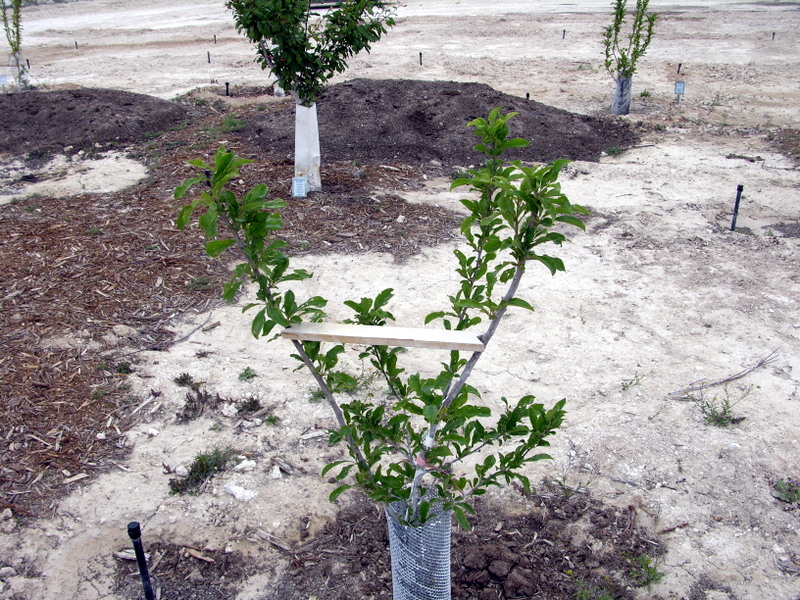
Weights work good for opening up or spreading open a fruit tree like this Santa Rosa plum growing in Las Vegas. Limb spreaders are faster.


A. Somehow I feel like this was a setup. Yes! If you follow me long enough you know I like to see flower and fruiting plants without their branches growing at 45° above horizontal.  Many types of plum have  narrow crotch angles and their canopy needs to grow more openly.
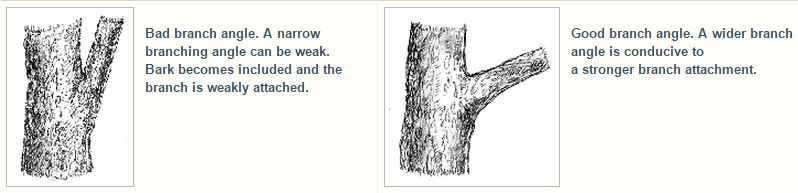
Some trees grow upright even if they aren't supposed to like pears, many plums, Asian pears and their ornamental counterparts. Good crotch angles form a "U" when they are strongly attached to a limb or trunk. Weak crotch angels form a "V" when the angle is too weak and the limb will split when it gets some weight on it. The branch in the back is growing straight up. No, no, no. Get rid of it now! (and that little one in front, too!)

            Branches growing at 45° angles produce an optimum balance between growth and flower or fruit production. Branches growing horizontally or downward may flower well but don’t grow fast. Branches growing nearly upright (vertical) grow very rapidly but they are slow to flower. The tree intends for this type of growth to give it height. Some trees grow extremely upright (most pears for instance) and the limbs should be spread apart and pruned to outward growth in mid to late spring to slow it down and improve flowering or fruiting.
When young trees or young growth grows too close together and upright, use a limb spreader to push the branches apart for one season of growth.

            Plants don’t care if their limbs are spread to 45° by weights or another method. I prefer to use “limb spreaders” of different lengths (4, 8, 12 and 18 inches). They are faster and less adjustment is needed. You can make them with forked ends out of  one-inch wood lath and even wooden paint stirrers. They should be strong enough to hold branches apart and not break while doing it.
Limb spreaders have a crotch on both ends to help keep the small limb from sliding out. I made this one and it also has a wire brad with the tip cut off to grab the limb better. I now make them without the nail in the crotch. They hold just as well.

            Be careful spreading limbs apart early in the season when they easily split if bent too far. After the new growth in the spring is an inch or two is the perfect time to bend limbs to their proper angle and either a hang weights, use limb spreaders and prune to outside growth to open the canopy wider. After one season of growth in this position they can be removed.

Just Because Its a Cactus Doesn't Mean it Loves it in the Mojave!


Some pictures of "torch" cacti in the yard of one of my readers. Great job!

Several questions were sent to me regarding cacti. In general, the most common reason for failure of cactus is watering too often. The second most common reason for cactus problems is because it was put in a hot, bright location when it should be located in a protected part of the yard. The third reason is because the cactus was damaged during our winter cold temperatures and prefers being planted in a warmer climate.
Argentine Giant Cactus (Not yet!)


Automatic Irrigation

            Be careful when putting cacti on an automatic water or irrigation timer. They are watered so infrequently that it sometimes makes sense to water these plants manually with a hose rather than automate it. When cacti begin to shrivel, it’s time to water. When they look plump and firm, they don’t need water.
            If you’ve got lots of cacti and you are using an automatic timer, then run that station or valve when they need water but make sure they have good drainage if you water them automatically (without looking at them). A hose, manual timer and sprinkler also makes sense for larger desert plants.
Watch for winter low temperature damage. Know your cactus!

Water Cacti 12 inches deep

            Medium-sized and small cacti should be watered about 12 inches deep. Large desert plants like a saguaro or Joshua tree should be watered 18 inches deep and have water applied to an area underneath them equal to at least half of their height. Watering a large area under large plants helps keep them stable and keeps them from falling over when the tops get large and heavy. Watering any of these plants too often can cause disease or unsightly growth problems.
Cactus from the Sonoran Desert, like this nopal, may require warmer temperatures when planted in the Mojave.

Your Cactus Has a Name

            Find out the scientific name for your cactus and Google it. Learn where it originated from. Some cacti are native to the southeastern US or higher elevations in other countries. In these locations it was cooler so they will need protection from late afternoon sun in the Mojave Desert. Cacti native to our Southwestern deserts do not. They can handle hot and dry locations. Learn if your cactus should be planted in a gentler landscape location or can handle the harsh ones.
Watering only at the base of most cacti results in blowover with wind and if they get tall like this one in Parker, AZ.


Know Where it Comes From

            Some cacti are tropical or subtropical and get damaged because of our low winter temperatures in the Mojave Desert. Cacti which can handle low temperatures of 20° F or lower probably will not need much winter protection in all but the coldest years. Other cacti which are less tolerant of these low temperatures might, depending on your landscape microclimate and location in the valley.

Wednesday, June 3, 2020

Controlling Spurge in Vegetables Without Chemicals

Q. How can I get rid of spurge in my vegetable garden?  I have been hoeing it and hand pulling it just about every day, but it appears to be getting ahead of me this year.  I do not use any chemicals in my garden, so that is not an option.

A. Shade. Spurge hates shade. 

What is Spurge?
Spurge is a pernicious weed; it hugs close to the ground when it grows and germinates rapidly from seed it produces in less than 30 days during summer months. It can also grow new roots if it is hoed and left on top of wet garden soil. It must be removed after hoeing since this plant produces seed continuously.

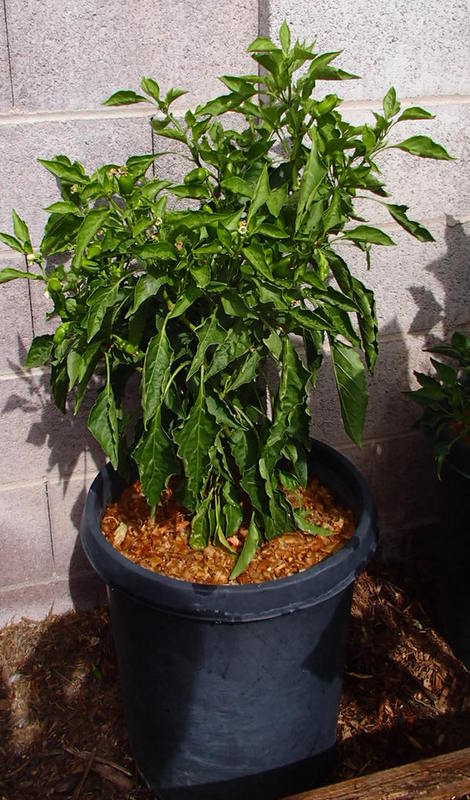
Pepper with horse bedding for mulch.

           Its strengths are how much seed it produces, how fast the seed germinates and its ability to root in moist soil once it’s been hoed. But its big weakness is shade. By that I mean it doesn’t take much to shade it out. If the garden space is full of plants and producing a lot of shade, spurge has a difficult time.
           There are several types of spurge, but I think yours is prostrate or creeping spurge that hugs the ground and makes a tiny drop of white latex when the stem is broken. And of course, lots of seed!
Weeds in onions controlled with horse bedding as mulch

Control Most Weeds with Mulch
           Weeds rob watered light. That’s also their weakness. So, use a surface mulch (½ inch deep) thick enough to shade the soil to defeat it. The application of anything deep enough to keep light from getting to the seed will keep it from growing. 

Horse bedding is nice as a mulch because it decomposes quickly when its wet.

           Apply this surface mulch after planting or the after the seed is up. Garden mulch includes horse bedding, straw, paper (sheets, strips or shredded), cardboard, or anything else that blocks light from reaching the seed.
           Apply this surface mulch early in the season and hoe the soil surface before you put it down. Spurge seed produced during August and later will not germinate until next year. But any older seed still lying on the soil will germinate if it gets water and light. By the way, most annual weeds like spurge (and many others) hate mulch.

Monday, June 1, 2020

WFT Damage on Nectarine Showing Up Now


Q. The fruit from my nectarine had a lot of “sores”; spots with tiny “bubbles” of hardened fluid. Yesterday, early evening, I sprayed the tree with “soapy water” in hopes of improving the problem.

A. Your nectarine fruit has damage from Western Flower Thrips (WFT). That’s one of the reasons I don’t plant too many of them. WFT are hard to control without spraying frequently and soapy water alone won’t do it.  Spraying with Spinosad insecticides weekly until harvest, starting after the flower petals have dropped, has given the best control for me.
           I alternate Spinosad with Neem oil, and soap and water sprays so WFT don’t build resistance to it so easily. Peaches are easier to grow without spraying as much because of their fuzzy skin.

View my posts on this on my blog
Pyrethrin Doesn't Kill Thrips

Why are People Friendly Weed Killers Hard to Find?


Q. The class-action lawsuits against the weedkiller “Roundup” claims it can cause lymphoma. Nonetheless, nurseries and big box stores still carry it and even promote it. Isn't there a safer weedkiller? I have been using “BurnOut” made by Bonide which is promoted as being pet and people safe. Why is it so hard to find?

Third US jury finds Roundup weed killer likely caused cancer ...
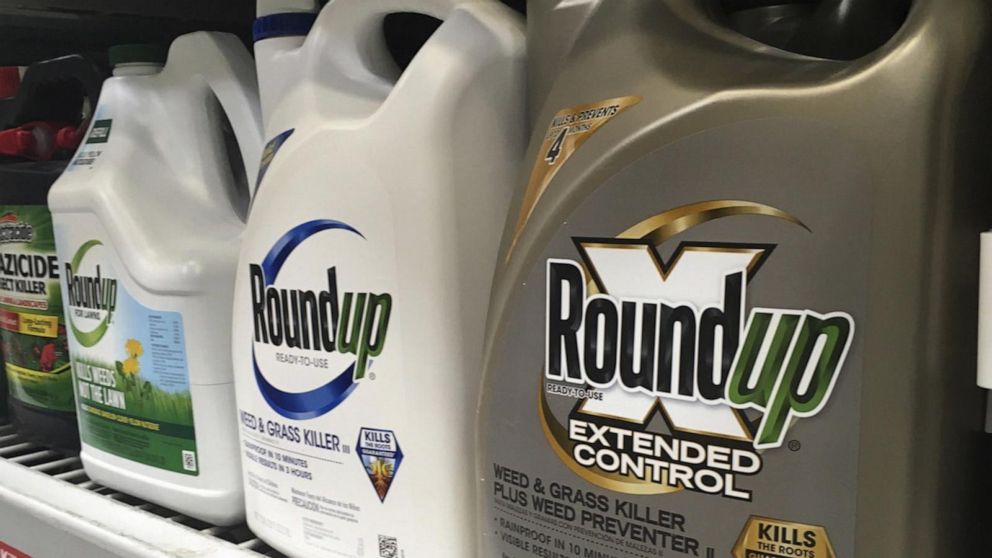
Roundup is carried by many so-called box stores and is still a popular home weed killer. 

A. Products like “BurnOut” are not required to show “efficacy data” before entering the consumer market. “Efficacy data” demonstrates to the regulatory agency that it does what it says it does. It’s a form of consumer protection. There are other companies besides Bonide thatproduce products like these.


           There is a list of ingredients considered “organic” and exempt from regulationby the federal Environmental Protection Agency (EPA).  Each state determines if these products should be sold or not through whatever regulatory agency is responsible. Efficacy data may or may not be required by a state.
           “BurnOut” contains citric acid and clove oil as active ingredients. “Roundup” contains glyphosate as its active ingredient. “BurnOut” is a weedkiller that kills by contact. “Roundup” moves inside the plant and is therefore considered a systemic weedkiller. If you look at both labels, “Roundup” must demonstrate that it does what it says it does. This requires EPA registration. There is a federal registration number on the label showing it has met that requirement.
           Citric acid and clove oil are considered “organic ingredients” and do not require the submission of efficacy data to the federal EPA. There is no federal EPA registration number on the “BurnOut” label. Also, PPE (Personal Protective Equipment such as gloves and eye/nose protection) is not required when using products like “BurnOut”. You must wear PPE when using “Roundup”.
Why Not as Available?
           My guess is that products such as “BurnOut”, as well as homemade weed killerrecipes promoted on the Internet, are “contact weed killers”. Whatever plants with leaves you spray, you kill. “Roundup” is a systemic weedkiller that mostly targets grasses but kills many other plants as well and kills the roots as well (systemic) so there is little to no regrowth of perennial weeds.
           Why products like “BurnOut” are not found more? I think a lot of it has to do with the investment the company makes when developing these products, in many cases millions of dollars. I don't believe Bonide does not have to invest as much money and show “efficacy data” when developing and marketing a product like “BurnOut”. I will handle this in more detail on my blog.


Removing Root Suckers


Q. Is there a simple way of stopping or preventing the volunteer trees, i.e., new tree growth that suddenly starts growing near the base of original tree? 

Root suckers can pop up at any distance from the tree. They can be used for propagation but remember, as in this case, the suckers are clonse of the rootstock and not necessarily the tree on top (scion).

A. Some plants grow “suckers” at the  base of the plant and others produce suckers, or new growth, a distance away from the plant.  If roots of suckering plants find water and it is out in the open with enough sun, they will sucker. 
Oleander suckering from its base (crown).

This is the difference between suckers arising from the stem or trunk (sometimes called the “crown”) and growing from the roots. Plants that can grow as a bush sucker from the crown. Plants that forms “thickets” grow suckers from their roots. Roots suckers are common to some plums and jujube as well as landscape trees like elm.

Jujube suckering several feet away from its trunk. Several trees have root suckers like Jujube when they must survive fires.

           So far, the only practical way to eliminate them is to slice the roots and remove these plants, roots and all. To prevent diseases found in the soil from invading the tree roots, allow these cut surfaces to heal 24 hours before burying them again.

Sunday, May 31, 2020

Recommended Fruit Trees for the Mojave Desert

This list was previously put on my blog years ago and I have been asked about updates. The varieties listed here were tested in North Las Vegas with at least five trees per variety for at least 5 years before they were given a rating and the "green light" for planting. Some didn't make it, either because of winter cold temperatures (citrus, Mexican nopal cactus), possible low humidity problems (sweet cherries and 'Hachiya' persimmon) summer high temperatures (filberts, rhubarb), and poor growing conditions (filberts, rhubarb, blueberries, some blackberries, raspberries). 

Just because they didn't make it in North Las Vegas, try it in your microclimate. They might work and please let me know. Give them at least three growing seasons (preferably 5) before you claim a winner.

 
Citrus does grow in Las Vegas. It just depends on the microclimate of where its growing.
I would like to thank Dave Wilson Nursery (particularly Tom Spellman and Ed Laivo (formerly at Dave Wilson and now at Burchell Nursery) for supporting this project. About 95% of the fruit trees planted were donated. I would also like to thank Tony Valenti , Owner of First Choice Tree Service for believing in my project enough to donate woodchips to use as a soil mulch when local tree companies were against it. They donate woodchips to the University Orchard still in 2020. which is then donated to the community through the Community Mulch Pile.
Community Mulch Pile at the University Orchard in North Las Vegas. There is a second community mulch pile located south of McCarren Intl. Airport. Call 702-257-5555 during the week and get the details.

What is a Microclimate?

Microclimates in landscapes can have different temperatures during the summer or winter (hot walls, shade, freezing temps), humidity (lawn, pool, fountain), sunlight (reflected glass), differences in wind (channeling between buildings) and all these affect plant performance in the desert. Plants do best when everything is still, plenty of sun (but not too much), temperatures
warm, and humidity moist.

Citrus

Citrus include kumquat, lemons, limes, oranges, grapefruit and others. By now you should know that kumquat is probably the most cold hardy of the group, followed by Myers Lemon, Grapefruit, and others. Citrus is not included here because we lost the citrus to low winter temperatures (below freezing weather) before the five years was up. However, in some locations around Las Vegas citrus was thriving. At another location, the same thing happened or they were heavily damaged by the winter cold. So be careful planting citrus here.

The second problem with some citrus are January, February and other late spring freezes. These freezes eliminate some or all of the fruit coming from citrus flowering then.

Low Humidity

Another characteristic of the Mojave Desert is its low humidity. Very low humidity. This is a problem for some fruit trees. Sweet cherries and 'Hachiya' persimmon also were not listed, because they seldom produced much fruit unless there were spring rains. Yet in some locations in Las Vegas sweet cherries produced every year! I think it was because of the low humidity. Residences with lawns or a swimming pool close by produced fruit. Some tropical species also have problems with fruit set at a humidity lower than 30%. It is believed to happen because of the drying of pollen.

Go to my fruit tree list (former blog post)