Type your question here!

Tuesday, January 4, 2022

Can I Use Burlap as a Shadecloth?

Q. Can I use burlap for shade cloth?

Burlap fabric 


A. Don’t use burlap as a solid piece in place of shade cloth for permanent shade. It is fine for creating permanent shade for people or pets but not for plants. Be careful how much heat it traps under it if it is located too close to humans and other animals. Plants are green and need sunlight for photosynthesis. Usually about 60 to 70% sunlight. People and pets don’t need as much.

Use Shade Cloth Instead

It comes in different percentages of shade ranging from about 30% to 100%. Shade cloth for plants ranges from 20 to about 50% shade. Plants that flower and produce fruits like tomatoes, peppers, and eggplant need more light than leafy plants: 20 to 40% shade. Shade more than this interferes with flowering and fruiting.


t
This is 30% shade cloth used on a tunnel for growing sun sensitive vegetables and herbs in the desert sun in Las Vegas

Plants that only grow leaves and no flowers such as lettuce, spinach, Swiss chard, greens can handle shade up to about 50%. After 50% shade, they grow poorly. Too dark. Not enough light. Most burlap I have seen produces much more shade than this and would not be a good choice when growing plants.

 You can make 50% shade out of wooden 1x2's by omitting every other piece of wood. These are called “lathe houses”. Similarly, 30-40% shade can be done the same way but by eliminating 2 and leaving every 3rd 1x2.

Monday, January 3, 2022

Getting Asparagus Ready for Winter

Q. I've been getting e-mails about preparing asparagus ready for winter. They recommend cutting the stems 2" above the ground, then apply compost then mulch.  Is that what I should be doing to get the plants ready for winter?

When temperatures get cold and start to freeze, asparagus will turn brown, the tops die. Sometimes they stay green all winter long if we have a warm winter.

A. That’s not what I liked to do with asparagus. I found that 2 inches of “stubble” created by cutting the stems above ground interfered with my work getting ready for next year’s spring crop. I preferred to cut this woody stem growth about an inch below the soil surface with a thick knife or asparagus knife on about January 1. 


I prefer to cut the spears when I harvest them and sort them in the shed or kitchen. I find that the asparagus stubble scattered in the field interferes with walking and harvesting. https://www.harryepstein.com/asparagus-knife-usa-weeder.html?gclid=Cj0KCQiA2sqOBhCGARIsAPuPK0jTKUY5H9kiydW_sFC5-Nf8fPNb1csto5wpHWzPw97TMJAXE-aI5SoaAjRlEALw_wcB

If we have a cold winter these stems (called fronds) freeze and turn yellow. With a warm winter they stay green.

  • Don’t reapply asparagus stems as a mulch to your old asparagus bed or to any vegetables due to allelopathy. I would burn it instead.
Regardless of how they appear in the winter these ferns still need to be cut back to get ready for next year’s production. After they are cut and in late winter, a fertilizer such as rich compost or regular compost plus a mineral fertilizer high in nitrogen, needs to be applied. Asparagus loves rich soil.

Bare Soil Warms Faster

Bare soil warms up faster than a cold winter soil covered in mulch. A warmer soil means an earlier asparagus spear harvest. If you can keep an eye on your asparagus emergence, then apply the mulch when you first start seeing spears if you want early production and not earlier than this. Next year’s production can start as early as January. If you want production later in the spring, then mulch them immediately after you apply the compost or manure.

How to Make Plants Healthier So They Can Handle More Heat

Q. I wrote to you before about my plants and you said to move them to a cooler location. You also said that if they were healthy, they can take a hotter location. I don’t want to move these plants so can I improve their health and not move them? What about a different irrigation strategy?

Add compost to the native soil so that it has more organics in it
 This raises the organic content of desert soils.

When you are done adding compost  to the soil to raise its organics, lay organic mulch on top of the soil surface to continue to "feed" the soil organics over time.


A. The relationship between plant health and how much heat stress it can take is tricky. The most common reasons for poor plant health is its location in the landscape, soil improvement or lack of it and irrigation. It’s very helpful to know where a plant originates. The plants origin tells you it’s best location in the landscape, how much soil improvement is needed and its irrigation requirement. This prior attention to details reduces your involvement in the landscape.

If the plant originates from cooler climates but can handle the heat, it performs best if it’s planted in the cooler parts of a landscape. It performs best planted on the east side of the landscape so it gets shade from the hotter late afternoon sun.

Add Organics to the Soil Like Compost

All plants benefit from some amount of structural amendment (think compost) added to the soil at planting time. The amount of amendment should vary from 10 to 30% (one in ten shovels full vs. one in three). Desert plants from the Southwest benefit from the 10% soil improvement but plants that originate from non-desert countries benefit from 30%. Throw in a couple handfuls of high phosphorus fertilizer as well.

More Water?

As far as irrigation goes, what size was the container at planting time? Plants bought in 5-gallon containers should receive five or 6 gallons of water at each irrigation. Plants growing in 15-gallon containers should receive 15 or 16 gallons of water. When irrigating new plants larger than this at least half of the volume of its container should be used to judge how much water to apply when first planted. How often to apply this water depends on the time of year or season. This is what is changed seasonally on the irrigation clock.

Interior Plants May Be Beneficial in Reducing the Spread of Covid-19

The interior plants thought to reduce the spread of SARS/COVID-19 due to air purification are the same plants that were previously tested for filtering interior air in research;

Lady Palm, Peace Lily, Alii Fig, Weeping Fig, Peace Lily, Areca Palm, Corn Plant, Dumb Cane, Dracaena ‘Warneckii’, Philodendron, Golden Pothos, Arrowhead Vine, Snake Plant, Croton, Umbrella Grass.

Snake plant or Sanseveria grown as an interior plant.

How Covid-19 Spreads

The virus can stay for a long time in the air, increasing the need for air purification as a mitigation method. Primarily transmission occurs within 5–6 days of the infection. COVID-19 patients show symptoms that vary from dry cough, fever, breathing difficulties, fatigue, headache, diarrhea, sore throat to severe pneumonia.

The virus has been shown to spread via three main routes; small aerosols, large airborne droplets, and close contact with infected surfaces and people.  The latter two can be handled via disinfection of surfaces and the use of proper protective equipment. Small aerosol droplets, however, are harder to contain and considered the main source of spread since they travel in the air and remain viable for around 3 hours. Most respiratory infections are transmitted via respiratory droplets when coughing and sneezing and then deposited onto surfaces.  A recent study was able to detect viral presence in hospital air samples in isolation rooms. Another study revealed that more than 60% of the air samples from COVID-19 patient rooms contained the virus.

Research Done on Interior Plants That May Lower the Spread of Covid-19

For all these reasons, air purification is recommended to be used in all public and private indoor spaces to contain the spread of the virus in areas with poor ventilation. Air purification via filters, UV radiation and ionization could be used to clean the air in large companies and facilities. Homes may be a different matter.

Several studies have shown that indoor plants enhance air quality, remove pollutants, and reduce bacterial and fungal infection spread, none of which were on airborne viruses. The techniques by which plants purify the air are not fully understood, and limited research information is available discussing their role in controlling viral transmission. More research is required in the search for methods of lowering transmission rates as the indoor plants were found to increase human comfort and enhance overall human health.

References

Sunday, January 2, 2022

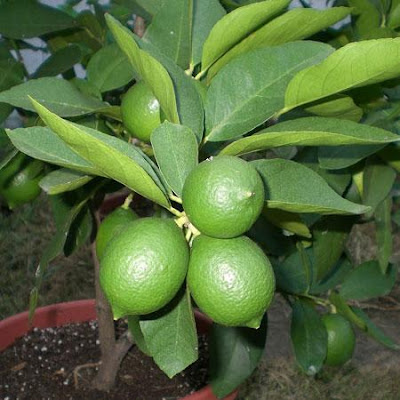
Making Bearss Lime Fruit Larger

Q. I have a Bearss Lime tree that produces small fruit that looks more like lemons than limes. What can I do to make them larger and not yellow but green?

Bearss lime fruit which is a Persian lime.
https://gardencenterpoint.com/persian-bearss-lime-tree-usda-organic/?gclid=Cj0KCQiAt8WOBhDbARIsANQLp97s4-qWtbHVFj7aiuxxXvsfTMjxhAadSA6uqUn-uavMRAA4XQCTFFsaAjbaEALw_wcB

A. Your Bearss lime is classified as a type of Persian lime or sometimes called Tahiti lime. It’s different from other types of limes so make sure you are comparing the same varieties. They make good patio trees if potted and can be moved when it gets too cold. They will freeze any time the air temperature is below freezing. The fruit normally gets between two and 2 ½ inches in diameter. To get large fruit requires removal of about one third of the fruit in about April in a growing operation called thinning.


Thinning is removing of some fruit so the remaining fruit get larger. They wont get any larger than they can anyway so removing lots of fruit does not increase the size of the remaining fruit larger than is genetically possible. In the case of Bearss lime, you will not get much larger fruit than about 2 1/2 inches long. The earlier thinning occurs then the larger the remaining fruit. Remove about one third of the fruit if the crop load is heavy. If the crop load is "light", then you may not have to remove any to get their maximum size.

Limes take 3 to 4 months to become ripe. Because the fruit size is smaller than some other citrus, it is harvested earlier, usually sometime in late summer or fall. But if it flowers and sets fruit later in the spring or early summer then the fruit is ready to pick later as well.

Bearss lime starting to get overripe on the left. Ready to pick on the right.

                                           https://tastylandscape.com/2013/12/26/growing-bearss-lime-tree/

When the fruit is overly ripe it turns yellow like a lemon, and the interior flesh slowly becomes drier and not juicy anymore. The color of the fruit is normally green; dark green when it’s young and turning a lighter green as it nears its harvest time. It’s important to remove it from the tree before it becomes overripe or yellows. If it starts flowering then it is time to finish your fruit removal. Leaving fruit on the tree when it is flowering can interfere with the next fruit cycle.

Check the ingredients of a plant tonic to see how much nitrogen fertilizer is being applied with a normal application. 

You know the risk involved when growing tender, subtropical citrus in Las Vegas? The perfect climate in the United States for growing citrus is found at the lower elevations in Southern California, Salt River Valley and area around Yuma Arizona, lower Rio Grande Valley in Texas, and the bottom half of the state of Florida. I’m not against growing citrus here but realize its limitations when grown in this climate. Don’t blame the nursery. You bought it.


I Cut Down Mesquite Tree. Now What?

Q. I cut down a mesquite tree I thought might lift my walkway leading to my residence. I was worried about waterlines and roots. Will the roots die or will they continue to grow? 

Velvet mesquite, an Arizona native tree, can sucker when younger but many of the mesquite stop suckering from the base when they get older.
https://mswn.com/plants/prosopis-juliflora-arizona-native-mesquite/


A. If the mesquite tree was cut down so that its top was removed (the part of the trunk at the soil surface and a little bit below) the roots should die. I dont see any suckers from this tree when it gets older so it should not sucker once it is cut down.

There are some trees which grow from the roots after they have been cut down but most mesquite trees do not. There can be some genetic differences. Let it grow the following year, give it some water, and see if produces some suckers or not. Roots of most mesquite trees usually do not sucker and continue to live after the tree was cut down. If you see no new growth from the roots after the tree was cut down, then the entire tree is dead and the roots will slowly decompose in the soil in a few years. 

Kill Living Roots

 If a short stump remains after the tree was cut down, consider taking a 1 inch wood bit and an electric drill and drill vertical holes as deep as you can in the remaining stump. Drill them within an inch of the outside bark. Drill as many as you can but put them no further than 1 inch apart. It is not necessary to drill vertical holes in the center of the trunk because that wood is already dead. 

You dont need to drill holes in the center of the tree because that is already dead unless of course it is a palm tree.
https://www.familyhandyman.com/project/how-to-remove-a-tree-stump-painlessly/

The only living part of the trunk is close to the bark. Pour salt down these holes, copper sulfate or anything concentrated to kill the crown or use diluted weedkiller (look at the ingredients for glyphosate, dicamba, triclopyr) if the label permits it.  Some like salt and other homemade remedies are not systemic like glyphosate is and technically are not permitted.  Read the label and it will tell you what the dilution should be but it is usually the same dilution that is recommended for weed control.

Leaves Yellowing on Calamondin Citrus Tree

Q. What causes leaves to yellow and black spots to develop on leaves of my calamondin citrus tree? I had them for seven years and they just now developed these yellow leaves with black spots. Nursery information desk advised picking off all affected leaves (but there are too, too many) then spray with cooper fungicide.

A. Combined with leaf yellowing, it sounds like either a nutrient or watering problem or both, not a disease problem. Copper sprays like Bordeaux Sprays, are usually recommended for disease control but I don't think that is it.


This is photinia but you get the leaf yellow idea from this pisture.

Try this:
    1. Cover the soil with 1/4 inch of rich compost or compost plus some fertilizer high in nitrogen
    2. Then cover the compost or compost/fertilizer with woodchips
    3. Apply a citrus fertilizer in January
    4. Try adding an iron fertilizer (I suggest an iron chelate called 133 or iron EDDHA)

This is the most effective iron treatment (EDDHA chelate) but it is more expensive than other iron chelates. Apply it in the spring (February) or no later t
han early summer (April/May) for best results.

If these citrus trees are in rock mulch, then it's a nutrient and drainage problem. Auger four or five holes into the ground, 2 feet deep and 1 to 2 feet from the trunk, to improve drainage. Fill these holes with soil mixed 50/50 with compost and an iron fertilizer.

Citrus fertilizers contain plant nutrients in higher concentrations than other plant nutrients particularly when these fertilizers are formulated for the desert Southwest like Arizona's Best and Grow Well brands.
            
Mix iron chelate with the compost before using it to fill the augured holes. Water once a week through the augured holes, filling them with a hose. Also, try spraying the leaves with an iron chelate solution four or five times, a few days apart. If this is an iron problem, even though it’s caused by poor drainage, the leaves should begin to get darker in color.

Put about four of these holes about 18 to 24 inches from the tree trunk  and 2 to 3 feet deep to improve drainage. If they are filled with gravel or woodchips they will stay open. They act as drainage sumps (French drains) around trees (vertical mulching).

Nutrient problems can be caused by poor drainage. That's why I'm giving a recommendation to improve the drainage using vertically augured holes and combining it with a compost and iron application at the same time.

How to Kill a Yucca

Q. I had a yucca plant that has been in the ground 15 years, so you can guess how large it was. It was encroaching on the sidewalk, so felt we had to remove it.  We were unable to dig it up, so we took a chain saw and cut if off at the base and turned off the water. Within 3 days, we had 20 new shoots. Can you advise how to kill this plant?
Joshua tree (Yucca brevifolia)  in Sandy Valley. A xeric (watered infrequently) yucca.  Little rain in the Mojave Desert causes a small amount of growth every year.

A. I dont know what kind of yucca this is. There are yucca that are "mesic" and others that are "xeric". In the Mojave Desert climate it will eventually die because of a lack of water unless something is growing a few feet away that needs water. If water from other plants is close enough, the roots will take that water and use it. 
Another type of Yucca (probably Y. gloriosa) which is mesic (watered more often than xeric) and more commonly found planted in the Southeastern US.

When you cut it with a chainsaw you leave behind a small amount of stem attached to the roots. The stem, and not the roots, can provide new growth at certain times of their lives or when they are damaged. In most cases I know of, the roots alone cannot do this. Only if there is some stem (trunk) tissue left behind.

There is a portion of the stem just above the roots which can send rhizomes into the surrounding soil to produce new plants called "pups". Not all yuccas will do this. Evidently, yours is one that does. Some Joshua trees can produce pups while others will not. Conservationists believe it is a trait of Joshua's growing at higher elevations but not lower elevations. Regardless, if you can kill all of the stem tissue down to the roots this should stop any regrowth of the plant. You can try drilling some holes in the remaining stem about half an inch from its perimeter and as deep as you can. Fill these holes with a diluted weedkiller or use copper sulfate. If it's a liquid, fill the holes several times. If it's a solid, fill the holes once. This should kill the stem and prevent any new growth.

Sweet Bay Tree May Struggle During High Summer Temperatures

Q. Sweet Bay trees (Laurus nobilis) border our property on all 4 sides totaling about 35.  They are now about 15 feet tall with 5" trunks.  We have lost trees in the past from under watering.  How many gallons of water should each of these trees receive on the winter watering day?

Bay Laurel leaves

A. You may know Dr. Devitt from UNLV and I published research articles on water use in the past in numerous research journals. Plants are extremely variable in water use depending on their type, size, where they are planted, and how they are grown. We published a book on irrigation of trees, and it is available on Amazon.

You will get many different responses on plant water use depending on who you talk to. However, we do know this: the more trees present, the more water is needed and the bigger the tree is, typically the more water it uses. Conversely the way to reduce water use is to plant fewer plants, use open spaces in creative ways that don’t require water and use desert trees that mature into a smaller size.


The picture above shows a mesquite tree with a 20 foot diameter canopy (left) and an apple tree with a 20 foot diameter canopy (right). The mesquite annual water use would be about twice that amount (4600 gallons each year) and the apple about twice that amount (13,600 gallons each year) as well. The water savings is in how often water is applied (frequency of irrigation). They both need water applied to wet their roots to the same depth (the minutes are the same in the same soil) but the mesquite water is applied less often. The soil become drier between irrigations. That means they should be on separate irrigation valves (hydrozone). 
https://leafnetworkaz.org/Water-Resource-Strategy

To roughly estimate tree water use, assume trees are divided into three categories; very low water use (e.g., foothills palo verde @ 0 to 2 feet of water), medium water use (e.g., vitex and bay laurel @ 2 to 4), and high-water use (e.g., mulberry and poplars @ 4 to 6). Moderate water use means it uses from 2 to 4 feet of water (applied under its canopy) each very year. FYI, tall fescue lawns use between 7 to 8 feet of water in this location and soil. It has shallow roots and NOT a desert plant to look good.

I recommend applying this amount of water to at least half the area under its canopy every year. (The reason I say half of that area is because I am realistic when it comes to home watering and know that people will not apply water to a the 20 foot diameter area needed by trees with a 20 foot diameter canopy!) When water is applied each time, apply it so that the soil becomes wet to a depth of 18 to 24 inches. If water is applied to half the area under a bay laurel tree (20 feet tall) so that half of this area is wet, one tree will require from 9000 to 10000 gallons of water each year. The same area covered by a lawn requires about double that.

Desert trees like the mesquite will be watered again just before the leaves will drop or as the tree canopy begins to thin out. That's your signal to water! During summer heat with desert trees like mesquite that might be once a week or once every two weeks. During the winter that might be once a month or once every two months. The deep roots will take over water uptake when the upper soil gets too dry.

Monday, December 20, 2021

Mexican Fan Palm Removal

Q. We have decided to have our Mexican fan palms removed. Do we need to have all the roots removed or just cut the palms down to the ground, especially the one next to the pool?

One of the "fan palms", most likely favoring California fan palm (because it is "fat" at the base) (W. filifera). Palm trees in general, Washingtonia types in particular, interbreed easily and so the genus can easily be genetically mingled. 

A. If your palm trees do not sucker from the base (date palm, Mediterranean fan palm do produce suckers from the base) then as soon as the top is cut off, the palm will die. Both Mexican and California fan palms have one central bud at the top which is the only place where new growth can occur. Once cut and they die, they will slowly decay if left behind.

            The problem you will have when you leave any kind of stump is the palm trees very slow decay rate. Palm debris decay or rot very slowly. Coir is taken from coconut palms and is used in soil mixes to build soil structure because it resists decay. It is slow to decay and is the main reason I discourage its use in compost piles or use in woodchip mulch. It makes a great semi-permanent component in soil mixes. In both cases you want fertilizer or compost added to circumvent its slow decay. When plants decay, they add to the organic content of the soil and help make it darker.

Remove as much of your palm trunk as possible. The palm roots won’t regrow, but any debris left behind from the trunk will decay very slowly. If you decide to use it in your new soil mix (it is a great addition to soils to improve soil structure), chop it as small as possible and make sure that fertilizer or compost is added to the soil to compensate for the slow breakdown of palm debris.

Remaining Fruit Tree Pruning Classes in January 2022

 
Fruit tree that was pruned to open center

2022

Friday, January 7                9 am        How to Prune and Thin Apple and Pear

Friday, January 14              9 am        How to Prune Pomegranate, Fig and Jujube

Friday, January 21               9 am       How to Prune and Fertilize Wine and Table Grapes

Friday, January 28               9 am       How to Fertilize Fruit Trees (Fertilizer + Iron)


What is covered?
Each type of fruit tree is different when grown in our desert climate. Topics will be discussed for each type of fruit tree and how our climate affects each type of tree.

Selection. Which fruit trees are best for this climate? What tree characteristics should I look for at the nursery?

Planting: Which trees are most wind resistant? How big is the hole? Compost vs soil amendment. How deep should I plant it? Is staking really necessary? How to protect the tree from rabbits?

Growing: How do I know if the tree needs fertilizer? How much fertilizer should I give it? When to fertilize? What fertilizer should I use? Will it grow in rock mulch? Does my tree need iron?

Water: How often to water in the beginning? How much water does my fruit tree need?
Insects: How to control insects that damage the tree? Which insects are the most damaging?
Disease: Which diseases are possible and how to prevent them.

Thursday, December 2, 2021

Is Hopseed Bush Poisonous?

Q I’ve seen mixed comments regarding purple hopseed bushes being toxic to animals. Do you happen to know if they are or not? Any help would be appreciated!

A. Keep in mind that about 60 to 70% of all landscape plants are poisonous in one way or another. Toxicity depends on the dose given. I have never considered hopseed a poisonous plant. I checked with another source of information that I consider reliable, and he does not recognize it as poisonous which agrees with my original assessment.

Because this source does not consider this plant toxic and the fact that it was previously used by indigenous peoples as a health remedy, I don’t consider it a “poisonous” landscape plant if eaten in moderation. Not as toxic as oleander, tree tobacco, or yellow oleander for instance which have been grown here by backyard gardeners.

Borers in Pine Trees

Q. I am losing portions of my pine trees at my home. All ten were planted from “live” Christmas trees we bought in the past either Mondale or Aleppo type. Out of the 10 trees, 3 are starting to show complete limbs that are dying. I trimmed some “dead” out of one tree this week and saw numerous small holes on it, so I hit it on the cement and this “worm-type bug” fell out. What is this creature and how did it arrive? Is it causing the damage I see in my trees? And finally, how do I get rid of them before they kill all my pines?  

Flatheaded borer found in pine trees

A. Pines are not a preferred tree of flatheaded borers, like the picture you sent. Flatheaded borers are a problem in many plants but usually not pines. Most of the time in heavy sap producers, like plum and apricot trees, the sap floods an area damaged by insects and “suffocates” invaders like these flatheaded borers. I am not sure if it’s an old tale or not, but I understand that sap that oozes from the damaged branches is first cloudy because of insect feeding, and then becomes translucent as the invader or borer is overwhelmed by the sap and dies.

Stress the Usual Culprit

My guess is that these trees had limbs stressed because of a drought problem and these stressed limbs attracted borers to these living, but stressed, branches. So first make sure that water is being delivered to an area equal to about half the area under their canopy. Next, when water is applied be sure it reaches a soil depth of about three feet to satisfy any drought condition they might be experiencing.

Remember pine trees, just like fig trees and palms, like to have their “tootsies” in water. The trees don’t have to be growing in it, but they like to access it during the hot season, even if the water is deep. They don’t like to be surrounded by a “dry” desert soil.

I don’t think “borers” are totally responsible for branch death, but finished them off when the trees became stressed.

What to do? 

Make sure at least half the area under the tree is getting watered. Plant other deep-rooted plants under the tree to deliver water to a wider area and to make sure. Make sure applications of water are to at least three feet deep. Use a four-foot-long piece of rebar after an irrigation is finished to judge how deep the water "wets" the soil. 

If increasing the water doesn't help, apply a soil drench of borer control insecticides to kill existing borers in the branches. Apply it in May after the tree finishes “flowering”.

Any soil drench containing imidacloprid in the active ingredients and for ornamental trees and shrubs will work and should be applied after the plant finishes flowering.

Monday, October 18, 2021

How to Reduce Water Use in a Condominium HOA; Part 1.

I will go to an HOA Condominium Board meeting to talk about how this HOA can reduce its residential water use. I offered my service for free. If they take notes or visit this blog, it will guide them through this nightmare. I have no idea how many parts this topic will have, “How to reduce water use in a condominium HOA”.

HOA Water Bill

This HOA is concerned about their water bill. In most cases their landscape water use in Las Vegas is about 70% of their total water use. The remainder represents interior use. Some condominiums or townhomes within an HOA have their domestic water use metered and some do not. I would guess (without talking to them) landscape water use represents the highest cost for the HOA on its monthly bills. One thing we know for sure, the cost of water ain’t goin’ down. I believe Samuel Clemens (Mark Twain) once remarked, “Whiskey is for drinking and water is for fighting.” 

First, estimate how much water you are using. Yes, it is an estimate.

1. Gather your water bills for the past 12 months and plot this water use, month by month, for the entire year. This represents your total water use (in-house and landscape) and not your landscape water use alone.

Your total water use should follow a "bell-shaped" curve with the lowest amounts used during the winter and the highest during the summer.

Annual plant water use curve for Las Vegas for averaged three years. Your total water use should follow the same pattern. Notice the bars follow a "bell-shape" from lowest water use values (months 1 and 12) during mid-winter to its highest water use values (months 6 and 7) during mid-summer.

Separate out interior water use from landscape water use. Landscape water use represents about 70% of total water use. Younger families typical use more interior water than older families.

Measure your irrigated landscaped areas:

2. Measure the square footage of the landscape you are watering. It does not have to be exact but the more exact your measurements, the more exact is your estimate.

Actual measurements can be done (most accurate) but these measurements can be taken from an "as built" blueprint or site plan of the landscape or from satellite images (Google Maps). But the measurements should be verified with ground measurements. It is very important that ALL the areas represented by the water bill(s) are included and these are verified.

Make sure any landscape plans you use are accurate. Just because it has a scale on it does not mean it is accurate. If a scale is present it must be verified with actual measurements on the ground, called "ground truthing". In some cases it is more accurate to make the landscape measurements with a "wheel" or tape measure. https://whitefishpilot.com/news/2020/apr/22/planned-condos-get-thumbs-up-from-board-9/

Most landscape plans are drawn to a scale of 1:10, which means that 10 feet on the ground equals 1 inch on paper. For example, a 100-foot driveway would be 10 inches on paper. 

Consider any pools to be part of the landscape area. Pool water evaporation is slightly more than the same area covered in grass unless the pool is covered. Water features are tricky. Submeter them if you think it is important to consider.

Determine which what category of landscape water use you are in:

3. Use this conversion for changing gallons into cubic feet of water or vice versa.
     One cubic foot of water = 7.48 gallons
     One gallon of water = 0.1337 cubic foot

Landscaped water use categories
     0 - 2 feet of water covering the irrigated landscaped area (you are doing a great job!)
     3 - 4 feet of water covering the irrigated landscaped area (marginally acceptable)
     5 - 6 feet of water covering the irrigated landscaped area (you can do better!)

Are you satisfied with your landscaped water use category? Want to save water?

If you want to save water, go to Part 2.

Thursday, October 7, 2021

What is "Nonfunctional" Grass?

A new measure passed by Nevada state legislators will make the Las Vegas metro area the first region in the U.S. to permanently ban “non-functional” grass — purely ornamental lawns common to office parks, street medians, and housing developments that require irrigation, but provide no recreational or environmental benefits. - Stormwater Report

This narrow strip of living grass or turfgrass, besides being "nonfunctional", is difficult to water, mow and maintain. It has no justification in any irrigated landscape.

What is Nonfunctional Grass?

Sometimes turfgrass is easy to identify as "nonfunctional", eg eye candy, strictly ornamental and visual. it provides no benefit outside of visual appeal. Sometimes grass is considered functional. Golf courses and athletic fields are considered "essential" because they provide a safe place to play or they return tax revenues to the municipality. Sports fields covered in grass (at least the "functional" part) is considered essential since it provides a safe place to play "rough and tumble" sports like American football, soccer, baseball, La Crosse, field hockey and the like. It might argued that "band practice" on a similar grass covered field does not qualify.

Sometimes "wall to wall" grass is hard to justify in the desert. The "functional" grass can be identified and the "nonfunctional" grass removed and replaced with "desert landscaping". This Las Vegas golf course looks much different now than it did when this picture was taken over 20 years ago. What caused the change? Primarily cost or budget. A golf course or athletic field may have both functional and nonfunctional grass in its area of play.

Twenty years ago the cost of watering an 18-hole golf course (small 18 hole is about 120 acres) was about $1 million dollars per year. Elimination of "nonfunctional turfgrass", or lawn grass used only for beautification, was also one of the seven principles of in xeriscape many years ago.

How to keep your lawn in Nevada? Justify it.

How to Keep Queen Palm Looking its Best in the Desert

 Queen palm is not the best choice when growing palms in the desert. Because of their strong and thick petioles the so-called "fan palms" are probably the best choice. But now that you have it, how do you keep it looking its best?


Saturday, October 2, 2021

Can You Straighten a Leaning 20 Year Old Saguaro With Just Water?

 The simple answer is no. Most plants dont grow that way. They grow from their growing points or terminal buds.

This palm was blown over during a hurricane in the Philippines and continued growing from its tips but continued to lean.


Thursday, September 30, 2021

Determine Spacing of Plants from Structures and Each Other from its Mature Height

 Whether you are spacing plants from each other or from structures the distance is figured from its mature height. Learn how to do this and more on this episode of Desert Horticulture.


Tuesday, September 28, 2021

Grubs and What to Do About Them

 Grub numbers can be critical in a successful landscape. Learn what this number might be and how to treat for them in this episode of Desert Horticulture.


Monday, September 27, 2021

Is Kurapia a Replacement for Lawns in Las Vegas?

 Kurapia has worked well in covering highway and freeway shoulders, rooftops, public utility areas, commercial properties, and solar farm landscapes. Not much is known about how it performs in a desert climate. Is it ready to replace a lawn? There is a lot of mixed information out there regarding Kurapia and how successful its been in replacing lawn grasses. 

Below are some pictures of it growing in southern Nevada and Valley Sod's email to me regarding their trials with it in Sandy Valley, Nevada.


Kurapia can be mowed to remove the flowers so from a distance it looks more like grass.


It is not a total replacement for functional turfgrass like sports fields. Remember that visual replacement for lawn grasses does not infer tolerance to wear and play. How much “wear” your lawn receives should be considered when replacing it with a groundcover of any type.


Valley Sods picture of Kurapia grown in Southern Nevada.


We at Valley Sod started investigating Kurapia about two years ago and planted an acre of the material at our farm in Sandy Valley.  During this time, we have learned how the plant grows and responds to different temperatures and soil conditions.
The plants were exposed to temperatures as low as 18 F to 116 degrees F at the farm.  The plants did not go dormant (or turn brown) within any of those extremes. In fact, it prefers the heat over the cold and has an active growing season from March till the end of October. It does handle some shade. In full sun it has a very small leaf whereby in shade the leaf is larger. Kurapia can be mowed, occasionally if wished, to remove the flowers to make it appear more like a turfgrass rather than a (flowering) ground cover.
Valley Sod became a licensed grower of Kurapia two years ago.  We foresee Kurapia as a great replacement for natural turf because of its drought tolerance and preference for sub-surface irrigation.

If this kind of turfgrass replacement interests you contact Mike@ValleySod.com