Type your question here!

Sunday, February 15, 2015

How to Control Whiteflies on Tomato This Summer

Whiteflies on the bottom of pomegranate leaf
Q. I am new to gardening in the desert and am surprised at my success thus far!  That is, until the white flies came.  They showed up on the grapes and zucchini first, maybe in May or June.  Unfortunately, I didn't think they would become a problem. By August they had attacked everything! I pulled broccoli plants and found I needed a mask to keep from inhaling them! What can I do this season?

A. Whiteflies are a very tough to control once they get established in the numbers you are talking about. They are much easier to control if you’re diligent about controlling them when you first see them.

Females lay a couple hundred eggs at a time and these become adults that can lay more eggs in about six weeks. This means you can have exponential growth in their numbers if they are left undisturbed in six weeks.

Whiteflies, like so many garden pests, do not show themselves but remain hidden. Unless you stoop over and turn over leaves and look at their undersides, you will not know they are there until you see their telltale signs of plant damage. Signs of damage are yellowing and scorching of older leaves, sticky residue on upper leaf surfaces of lower leaves and ants.
Bottom leaves of sunflower yellowing and scorching due to past problems on the bottom side of the leaves.
Photo courtesy Viragrow.

Ants love the sticky residue that whiteflies and aphids produce. Ants climbing on plants in the garden or on fruit trees is a very good sign you have a developing pest problem.

Backpack sprayer suitable for vegetable and Orchard spraying
If you buy transplants to put the garden, spray the undersides of the leaves and the stems with insecticidal soap, neem horticultural oil. Once the transplants have been placed in the garden and they have grown a little bit, remove the bottom leaves of transplants that are within a couple inches of the soil.

These bottom leaves are perfect hiding and living quarters for many of the problem insects. They are so close to the soil surface they can’t be sprayed effectively.


Stay away from conventional garden insecticides unless this past really gets out of control. Whiteflies are resistant to many conventional pesticides and these traditional pesticides can knock out whitefly predators that help keep them under control.

Get yourself a decent compressed air garden sprayer such as Solo or Chapin and use soap and oil sprays in rotation with each other. Early in the season when it is still cool, check the undersides of the leaves and look for critters.

Weekly applications are probably enough during cool weather. When it starts to get warm, inspect the bottom sides of the leaves and spray twice a week. Make sure you spray the undersides of the leaves. That’s where these critters are!

Control ants that are getting into the garden. They are buddy buddy with aphids and whiteflies. Ants come from a nest in the ground. Follow their entourage back to the hole in the ground and treat around the hole with a bait that they can carry back to the nest. These are the most effective for ant control.

If you see bottom leaves that are starting to get yellow, pinch or clip them off. If they started to turn yellow they are contributing to the plant anymore. Look at the underside. There are probably critters feeding away. Removing these leaves, removes pest problems.

Fertilize More Often For High-Quality Roses

Q. I'd like to continue fertilizing my rose bushes right through the spring since the past year's bloom was not too impressive. Is there any advantage or harm with that strategy?

A. High quality roses are typically fertilized about every 6 to 8 weeks through the winter, spring and early summer in our climate. Fertilizer applications are usually stopped during the summer months when flowering is the worst and resumes about a week before good flowering resumes.
SulPoMag conttains magnesium and can
be substituted for epsom salts
Fertilizer applications are made to support healthy, vigorous growth and flower production. The timing of these applications varies with the type of rose and variety as well as the microclimate.
Generally speaking, roses perform very well in our climate for about 8 to 9 months of the year. Microclimates that are warm and protected in the winter may support the flowering of roses through the entire winter. In these microclimates you would fertilize all winter long.
In cooler microclimates you may see an interruption in flowering during the winter but have a longer flowering period in spring and fall. Fertilizer applications would support roses during their flowering periods.

If you are fertilizing roses more often, then use smaller amounts of fertilizer or use fertilizers that release nitrogen more slowly. Make sure that your roses receive an annual application of iron that is applied just prior to new growth.

Many rosarians like to apply Epsom salts as part of their fertilizer regime for the magnesium contained in it. Other fertilizers like SulPoMag and some palm fertilizers also contain magnesium and may be an appropriate substitute.

Saturday, February 14, 2015

Crazy Roots of Tomato Is Due to Nematodes


A. This is definitely root knot nematode judging from your photos. There really is no way to totally rid the soil of nematodes. In the past, soil fumigants were used on a regular basis to knock these critters back. Soil fumigants are being eliminated from the pest control arsenal due to environmental concerns.
Your options are to move your growing area to a new location that is not infested, grow in raised beds or containers and use resistant varieties. There are some vegetable varieties more resistant to nematodes than others.
Roots of tomato plant from reader
Use varieties that have a capital “N” after their name. This stands for “nematode resistant”. An example would be the tomato, Better Boy VFN which is resistant to Verticillium and Fusarium diseases as well as nematodes.
Build up your organic matter content with lots of compost. Nematodes don’t like soils with high organic matter.
Be very careful of transferring soils contaminated with nematodes to new beds or containers. This includes using contaminated gardening utensils. Make sure utensils are sanitized between locations.
It is possible for this pest to migrate from your existing soil to a new raised bed constructed on top of contaminated soil. You might to consider laying thick plastic underneath the raised bed. Make sure the plastic is sloping slightly for drainage and make the bed at least 12 inches deep.

Here are some links back to my blog where I have written about nematode in the past.

Monday, February 9, 2015

Shoestring Acacia Height Can Be Lowered

Large shoestring Acacia. Some are more upright than others while others are more rounded. This is because of how they were propagated, grown and location.
Q. I have a tall (40-50ft) shoestring Acacia tree that is too close to the house. The leaves accumulate on my flat roof and clog the scuppers. This has caused interior flooding on occasion as the water overwhelms the vents and skylights. My question is, can this tree be topped or does it need to be removed.


A. Yes, you can reduce the height of this tree. There is a pruning technique to lower its height called “drop-crotching” which is very different from topping. Topping is extremely damaging to trees while “drop-crotching” lowers the height of a tree while maintaining the tree’s form as much as possible.
This shoestring Acacia was topped. This is NOT how we want to lower the heights of trees. The method we are looking for is called drop crotching. Most likely the reason it had to be lowered is because the signage was blocked. This was the fault of the designer or landscape architect. Topping was the fault of the tree butchers.
            Very large trees cannot be reduced in size to very small trees. There is a limit how much a tree can be reduced in size by drop-crotching. When lowering the size of very large trees dramatically, reduce their size over a period of several years rather than doing it in one season.
This is not the same tree but it was done by the same pruning crewon a tree close by.. These cuts were made in the wrong locations on the tree with absolutely horrendous care.
When drop-crotching a tree you need to find very specific spots to cut where the form of the tree is not totally destroyed.
You would first identify the vertical branches providing the most height. Trace these vertical branches to lower side branches. Remove the vertical branches just above the juncture with the side branches.
You would repeat this at all of the locations that contribute to its unwanted height. By pruning in this fashion, you will retain as much of the trees natural form as possible.
A guide to drop-crotching can be found http://pubs.ext.vt.edu/430/430-458/430-458.html

If drop-crotching is not acceptable then removal is the only other option.

Forcing Tulips to Bloom Again

Q. I recently purchased tulips already in a container and they bloomed for almost 10 days. The roots were sitting in water, and I had to add a little each time so their roots reached the water. How can I save the bulbs for later planting next year? Can I keep them cold all year until next year?

A. This is the beginning of February and you are not too late to plant now if you are able. Could you plant them in some containers and enjoy them that way rather than planting them in the ground?
When tulips bloom, they are exhausted. They consume a lot of energy stored in the bulb to push the leaves and flower out. They need many weeks or months after that to rebuild that corm to its original size or even larger.
So after bloom the leaves must remain attached to the plant while they rebuild the corm. Once the corm has rebuilt its size, everything green could be cut back and slipped back into the refrigerator for six weeks. They can be then be repotted again and forced to bloom.
You can repeat this cycle several times as long as they rebuild the corms each time and receive eight weeks of chilling in the refrigerator. You can do this to nearly any spring flowering bulb.

It would be very difficult to keep them for a year in a refrigerator or even specialized containers for that length of time because of storage diseases primarily. It should not stop you from trying it though. They will bloom again as long as they have about six weeks of cold temperatures. Give it a try!

Pruning Globe Mallow and Bird of Paradise

Q. We have a very old globe mallow shrub that looks bad after a frost. When and how should it be pruned to bring it back to its former glory? Do Mexican Red Bird of Paradise need regular pruning? How can one tell what and where to cut?

Globe Mallow growing in extremely poor soils in Las Vegas.
A. Globe Mallow can be a spring flowering perennial which means it can live for over two years provided it does not get damaged. Growing in the desert without irrigation it can be rather scrubby. But with a small amount of water and fertilizer it can be a beautiful woody shrub that can grow 2 to 3 feet tall and 3 feet wide.

Close close-up of the flower of globe mallow growing under stressed conditions.

If the globe mallow is looking kind of old and ratty you can cut it down to an inch of the soil and totally renew it or you can selectively cut down some of the older stems and renew it slowly.

If you want to keep it bushy from head to toe then take about one third of the oldest wood out now, next year take another third and the following year take another third. This will renew it over a three-year cycle and help keep the foliage and flowers from top to bottom.

You would do this pruning immediately after it finishes flowering.

Flower of the desert bird of Paradise
Mexican red bird of paradise usually gets a pruning to the ground every few years because of hard freezes. You have a couple of choices, much like your globe mallow. You can cut it to the ground or selectively remove one third of the oldest wood to the ground and in a three-year cycle.

You would do this pruning during the winter months or before new growth starts in the spring or after flowering is finished.

White Crust on Soil Surface Is Alkali or Salt

Q. I dug up some of our native soil and amended it with 50% planting mix. The next day after it dried, this white substance appeared on the surface. Is this salt or alkali? I know my soil will effervesce when you pour vinegar over it.
Salt deposit left on soil surface of the readers soil.


A. Salt and alkali are pretty much the same thing. Alkali should not be confused with alkaline. Alkaline refers to pH. Alkali refers to salts. Soils that create bubbles or effervesce when vinegar is applied to them have quite a bit of calcium carbonate, or lime, present.
Salt deposit left on drip emitters

The old-timers who grew things in desert soils would refer to "white alkali" and "black alkali". I think the word “alkali” has remained in our vocabulary, but not the difference between white and black types, and it is just as confusing now as it was then.

White alkali refers to the white salt accumulation on the top of soils. These white salts were usually sodium sulfate, sodium chloride, and magnesium sulfate.

Black alkali on the other hand left blackish spots on the soil surface usually composed of sodium carbonate and organic matter. It was understood that black alkali was more damaging to plants in soils than white alkali.
Salt deposit left on soil surface after an irrigation
In fact, when ranking these salts and their injurious effects on crops, sodium carbonate was considered the worst while sodium chloride (table salt) was somewhere in the middle and sodium sulfate the least injurious. When you had black alkali salts, many farmers would just give up and walk away from those soils.

The salts in your picture look like white alkali. I would have to guess it is a mixture of salts containing calcium, sodium and magnesium and carbonates, sulfates and chlorides. You wouldn't know unless you submitted the soil for a soil test.

When salts accumulate on the soil surface it is best to take a flat-nosed shovel and scrape off the top inch or so and dispose of it. Then begin activities that reduce the salt content.
Salt deposits left on block wall after water evaporates.
Most salts are removed with water and flushing. Level the soil surface as much as possible. Sprinkle the soil with water to push the remaining salts deeper into the soil. The idea is to push the salts deeper than the roots of your crops.

If the soil does not drain easily, there may be a high sodium problem. If this is the case, apply gypsum to the top of the soil and rake or rototill it in as deep as you can. Then begin your irrigations.

Gypsum is used to remove sodium from the soil and replace it with calcium. Sodium is a bad player in soils and prevents drainage. Substituting calcium for sodium improves drainage. Also, mixing compost in the soil will help in the removal of salts and make them less injurious to plants.

Learn more about salts, soil, water and irrigation of the desert

Mulch Recommendations for Fruit Trees

Q. Please provide me with recommendations for types of mulch for fruit trees.

A.  By definition, mulches lay on top of the soil surface and are not mixed with the soil. There are organic mulches such as wood chips and there are inorganic mulches such as rock and plastic. Most mulches shade the soil surface, help to conserve water and reduce weed problems.
Results in one year of fruit trees planted with and without surface wood mulch.
Mulches made from wood decompose over time as long as moisture is present. Decomposing wood mulch enriches the soil. Rock, plastic and bark mulches do not. Their purpose is primarily to add beauty and reduce weed problems.In the case of plastic inches that are exposed to sunlight, they are intended to warm the soil early in the spring for faster route and plant development.
Even if you have rock mulch, pull the rock mulch away from fruit trees
and apply 3 to 4 inches of wood mulch in the an area as large as possible
underneath the tree.

Any wood mulch, not bark mulch, works well around fruit trees. The best kind is a mixture of different types of wood and decomposes in 2 to 3 years. You don't want to use only bark mulch if your purpose is soil improvement.
Decaying wood does take nitrogen from the soil but this is not a problem as long as trees and shrubs are fertilized annually.

Wood and rock mulches help keep the soil cool, conserve water and reduce the work required for weeding. Only wood mulch enriches the soil. Rock mulch contributes to mineralization of the soil which means it contributes to the depletion of organic matter, it doesn't add to it.

Some of the best mulches for fruit trees are woodchips from a variety of trees but excluding trees with long thorns such as many of the mesquite trees, athel and salt cedar and palms. Palm trimmings decompose very slowly. Woodchips from trees with long thorns end up puncturing the bottom of a sneaker or vehicle tires.

Just about any wood source will pose no problems including eucalyptus, cedar, and even oleander. An excellent mulch is also the residue left behind from stump grinders. 

Thursday, February 5, 2015

Trumpet Vine Adds Color to Desert Landscapes

Trumpet vine is commonly used in much colder, arid climates. It is not a true desert plant but can tolerate arid environments and poor soils. It does really appreciate amended soils, wood mulch and regular irrigations. Fertilize once a year in February with a fertilizer that promotes flowering of woody plants. It is a climber and under the right conditions can be extremely aggressive. Restrain with pruning the longest and most aggressive.

Usual complaints are that the vine grows slowly or poorly. Make sure it receives enough water and mulch the base with wood chips. It may not do well in extremely hot microclimates.


Trumpet vine over a wall in Las Vegas

Tuesday, February 3, 2015

Prune Mexican Petunia Similar to Lantana

Q. I have a Mexican petunia (Ruellia) that is about 4 years old.  In 2013 the freeze caused all of the stems to die back. I cut all of them off at ground level and the plant grew back nicely and flowered beautifully.  Apparently, this winter the plant has very little dieback. Should I cut all of the stems off at ground level or just the ones that have frost damage?  Will it flower from the existing stems or does it only flower from “new wood”?

A. Mexican Petunia is considered an herbaceous perennial which means it freezes to the ground if it gets too cold and grows back from the base. It is summer flowering so the flowers develop on new growth. Flowers will develop on new growth from older wood as well as from new growth at the bottom.
You have two choices. You can prune it to the ground again just as if it froze back. It will grow from the base and flower just like it had in 2014. That’s the easy way.
Your second option is to keep it at this height and remove anything dead or weak to the ground. Next, you would cut the remaining stems back to a height where you want it to branch. Cutting it back or shearing it will cause it to grow more densely above where it is sheared and flower.
The second method will give you a taller plant if you want one. If you need to keep it small, then use the first method.

Remember to fertilize it now with an all-purpose fertilizer for promoting flowers such as a rose fertilizer, fruit tree fertilizer, tomato fertilizer or something similar. 

Avocado May Shock When Moved Inside

Q. Last year I grew an avocado outdoors from its pit. As the temperatures began to dip I transplanted it to a pot and brought it inside.  The older leaves have begun to turn brown and dry up. I fertilized it once since bringing it indoors. I water it lightly every other day as the leaves begin to curl up due to lack of water.

A. The main reason leaves drop from an avocado brought inside is the change in light intensity or duration. Moving it from a soil to a container can cause leaf drop as well. Leaf drop can be caused by a watering problem. A fourth possibility are pests like mites.
Avocado. Picture from the California rare fruit growers.

Plants grown outside develop a different type of leaf than plants grown inside. The change in light intensity causes leaves grown outside, called sun leaves, to drop. The plant begins to add new growth with a thinner, larger leaf called a shade leaf.
Disruption of the root system can cause leaves to drop. We call this transplant shock. It is also possible that the change in watering could cause leaf drop. Avocados are prone to mite problems so if there are mites on your interior plants it’s very possible they were transferred to the avocado.
What to do? Make sure the avocado gets as much sunlight as possible. A south facing window is probably best. You need to provide several hours of sunlight to keep it healthy and prevent it from becoming spindly.
Spider mite damage on interior foliage plant

Water the soil in the container until water comes out the bottom. Do not water again until you can feel a dramatic change in the weight of the container. Another method to judge the moisture in the soil is to use a pencil or soil moisture meter.
Push a pencil in the soil and see how easily it pushes down. A pencil is more difficult to push in dry soil than wet soil. You will feel the end of the pencil after you remove it to see how moist it is. A third method is to use a soil moisture meter you can purchase at any nursery or garden center.
Mites are common problem for avocado. There are two methods you can use to inspect the plant for mites. First, take a white piece of paper and slap a yellowing leaf against its surface. Pick up the piece of paper and look at it carefully under a bright light.
If you have good eyes or a magnifying glass you’ll see very small mites the size of a pencil dot crawling along the surface. You can also drag your fingers lightly across the surface of the paper and the mites will leave a red smear.

Use a horticultural oil and spray the plant from head to toe to suffocate mites. Oils work well against active mites as well as soap sprays.

Snails, Disease and Shade Are Related

Q. I have been noticing tiny little snails climbing up my red brick planter during the fall. I have thousands of those shells all through my planters and yard. My roses have now developed powdery mildew disease which they never have in the past. My lawn is thinning I think because of the snails. I have shade in my yard because of some older mulberries. I sent you some pictures of my yard.


Readers yard with shade
A. After seeing the pictures and reading your description I think that the shade is contributing to a number of things going on. Increased shade causes plants and the soil to stay wet longer.

Snail shells from another readers question
Staying wet longer favors snails and slugs. Increased shade increases the probability of powdery mildew and other diseases. Increased shade causes lawns to thin and eventually fail as well.
          You will see an improvement in everything if you remove some lower limbs of the trees. Limb removal will allow more light on your property and improve the roses, reduce disease problems, thicken the lawn and reduce snail problems.

Cool season lawn grasses like fescue and ryegrass needs direct sunlight at least five hours a day or filtered sunlight so that no more than 50% of the lawn is shaded. Shading lawns and flowering plants more than this is going to hurt them.
Shady lawns are not vigorous enough to withstand any kind of traffic. The lawn will thin and bare soil will appear in the more shaded areas.
Plants that flower, like roses, have fewer blooms and the blooms will be poor quality in the shade. Powdery mildew loves the shade. Powdery mildew also likes splashing water. If there is overhead irrigation that is splashing on the leaves of roses and they are shaded, it will spread powdery mildew from rose to rose.
          Snails are difficult to control. The usual control methods are trapping and baiting. Trap snails by placing wet newspapers or cardboard between the plants. When the sun comes up, snails and slugs like to have parties under wet paper or cardboard.

Powdery mildew on rose

Pick them off of the underside of the cardboard or from the ground and put them in a plastic bag for disposal. If you do this on a regular basis, say weekly, you will start to put a dent in their population.

Snail and slug baits also works well on snails. These are typically spread around the plants periodically and according to the label. These can be purchased in most nurseries and garden centers or online.

Persimmons Will Grow in the Mojave Desert

Q. I recently received a large bag of home-grown Fuyu persimmons given to me, grown in California. Will the Fuyu Persimmon tree survive our Las Vegas climate?  If the tree will grow here?

A. Nearly all of the persimmons will grow in this climate. I wouldn't recommend the variety called ‘Hachiya’ but Fuyu, giant Fuyu, Coffee Cake, and most of the others will grow here if they are planted correctly in amended soil and not part of a desert landscape surrounded by rock mulch.
Immature Hachiya persimmon. Hachiya may not be the best type of persimmon to grow in the desert unless you are in a backyard situation, protected from the wind and plenty of moist air.

The fruit is good quality but the fruit may sunburn because of our high light intensity.
It is important to surface mulch them with wood mulch, fertilize them once a year, prune them in a very similar manner to most other fruit trees and irrigate them as you would any other landscape plant.

 
Giant Fuyu which does well in the desert

Video Help Pruning Peach to Keep it Small

Q. I wonder if you can tell us how to prune our Elberta peach tree. We planted it in the spring and had one beautiful peach to enjoy. We are in our mid-70's and do not do ladders unless we have to and it is getting over 6' now and is supposed to be a semi dwarf.

A. You may begin to lower the heights of peach trees at the first sign of leaf drop and possibly sooner. The cuts that you should make to lower the height should be thinning cuts and not heading cuts. To see the difference visit my video on how to make heading cuts and thinning cuts and what the difference is.

Some of my videos on pruning peach tree

 On the peach tree, go to my YouTube videos on pruning fruit trees. I think that might help you. They can be found at

Those videos on pruning focus on size control so you don't need a ladder.
Controlling the size of fruit trees by pruning

Irrigating Fruit Trees After Planting and During the First Year

Fruit Tree Establishment

During the first few weeks after planting, new roots must grow from older roots and into the soil used for planting. Learn how to plant fruit trees here. The growth of new roots from older roots and into the surrounding soil after planting is called fruit tree establishment. New roots can only grow from healthy, living roots. The smallest roots are fragile, resembling hairs, and are called feeder roots. See some feeder roots here. Feeder roots are responsible for most of the water and fertilizer taken from the soil and transported to the leaves. Feeder roots do not survive for more than a few minutes without soil, air and water surrounding them.

During planting it is normal that feeder roots and some of the larger roots will die. As the amount of time that roots are not in moist soil increases, more roots and more roots begin to die. As more roots die, the time needed for establishment increases and leaf and stem growth is delayed or the tree may become damaged.

More on transplant shock.
Still more on transplant shock.
Stop it, you're killing me, even more!

Fruit tree establishment takes time after planting. Fruit trees use energy stored in the roots for establishment. This same energy is used by fruit trees to grow new leaves and stems. Energy must be shared between the growth of the roots and growth of leaves and stems. The more energy needed by roots for establishment means less energy is available for the growth of leaves and stems.

After planting, fruit trees favor root growth more than leaf and stem growth. After the roots have grown significantly and can absorb enough water and nutrients, leaf and stem growth become increasingly more vigorous. Rapid and vigorous leaf and stem growth after planting is an indicator that roots have become established in the soil. This observation is when the Orchard manager can claim that the fruit tree has become established.

The time of day and weather conditions at planting time also affects establishment. The ideal conditions for planting fruit trees is early in the morning when temperatures are cool, the sky is cloudy and there is very little wind. Warm temperatures, bright sunlight and strong winds are the worst conditions for planting.

Irrigation after Planting

Drip irrigation on almonds. The first 2 to 3 years only requires one drip line. As they get older they will require two drip lines, one on either side of the tree.
All fruit trees must be irrigated immediately after planting. The reasons for this are several. When fruit trees are planted and soil is placed around the roots by hand or with machinery, large spaces filled with air are left in the soil surrounding the roots. If spaces in the soil are too large to hold water, tree roots cannot grow into these spaces.
Micro sprinkler beneath fruit trees.
Wetted area from a micro sprinkler on almonds.
Sprinkler from Jain irrigation
It is very important to collapse these spaces around the roots of trees. This helps the tree to remain upright and the collapsed soil surrounding the roots can more easily hold water. The easiest way to collapse these spaces is through irrigation. Irrigating the soil around the roots helps to collapse air spaces around the roots. After soil spaces have collapsed, roots can grow into these spaces and take water and nutrients.

To maintain rapid growth after establishment, adequate amounts of water is needed by the roots. Watering too frequently results in the roots “drowning” or suffocating from a lack of air. Not watering frequently enough results in roots dying from dehydration or a lack of water. The Orchard manager must determine when to irrigate with observations of the soil, not the tree. If the fruit tree shows signs that water is needed such as the dropping of leaves or wilting, establishment will be slow.

It is best to judge when to irrigate by observing the soil. The ideal time for the second and following irrigations can be determined easily by using a shovel, a sample of the soil and your hands. Use the shovel to dig and remove a handful of soil at the depth of the roots close to a tree. Squeeze the soil tightly with your hand. Lightly bounce the soil in your hand. If the soil falls apart easily after bouncing, it is time to irrigate. Soils that contain a lot of sand must be irrigated more often than soils which do not. As the summer months approach, fruit trees real require irrigations more often.

How to Prune Fruit Trees

In case you missed my classes this spring, below is an updated version of some short notes on pruning fruit trees. This covers most of the major temperate fruit trees such as peach, nectarine, apricot, Apple, pear, plum, pluot and the rest of that group.

Unfortunately it does not cover pomegranates, citrus and nut trees. I  post something in another post on citrus and nut trees. Pomegranate is a different animal altogether and I will post something soon on this as well.

Below are my updated notes on pruning that I put together for training purposes in Tajkistan for a project working with local tra and fruit growers.


If this doesn't work for you, here is the link by clicking HERE
Don't forget to visit my YouTube videos on pruning which can be found 

Happy Pruning!


Thursday, January 29, 2015

Fruit Tree Pruning Class in 29 Palms Saturday

I will be giving a fruit tree pruning class in 29 Palms, California,  which will cover basic pruning techniques of all major fruit trees that will grow in the Mojave Desert on Saturday, February 31, 2015, from Noon to 4 pm. Open to the public and free of charges.

A link for this event can be found here
https://www.facebook.com/events/1544245095859961/

2/2/15 - It was a great event and we all had fun. Here are some pictures taken by 29 Palms Inn at the event in the Faultline Garden.


Below are the notes for the workshop

Tuesday, January 27, 2015

Crape Myrtle Requires Additional Care in Desert

Q. I want to plant a crape myrtle tree. Will it survive in the northwest area of the Las Vegas Valley? When is the best time to plant and how should it be done? How do you care for this tree so it still looks good in this climate and soils?

A. Crape myrtle does fine here if the whole is dug wide enough and the soil is amended with a good quality compost at the time of planting. This tree is not a difficult tree to grow here but it’s not the easiest either.

Crape myrtle can handle full sun but it should not be placed in a total desert landscape surrounded by cacti and rock mulch. It will perform best in a wetter part of the landscape, surrounded by other plants and with the soil covered in wood mulch.

The three biggest issues to address are modifying the soil enough at the time of planting, mulching the soil surface with wood mulch and using a fertilizer that prevents the yellowing of the leaves occurs because of iron chlorosis.

I would not trust landscapers to plant this tree properly on their own. This tree will not do well if it’s planted in a cheap hole.

The hole does not have to be dug deep; just deep enough to accommodate the tree. But the hole needs to be dug wide. Make sure the planting hole is dug at least three times the diameter of its container or box.

The soil used for planting around the tree’s roots should have plenty of good compost mixed with it. An equal volume of good compost to native soil would be the right amount.

Fertilize once in the spring, around mid-February, with a fertilizer formulated for flowering woody plants, trees and shrubs. A rose or tomato fertilizer could be used as a substitute.

When you fertilize this tree in February give it 2 to 3 ounces of EDDHA iron chelate as a supplement to the fertilizer. Apply it to the soil and water it in.

If you want to give it a little extra attention and have it look even better than apply a foliar fertilizer a few weeks after the leaves come out. Use a product like a Miracle Gro or Peters that is designed to encourage flowering.

Make sure this tree is watered as frequently as your other woody landscape plants and with the same volume of water as plants of a similar size. They are nearly pest free.

Other questions about crape myrtle on this blog:

http://xtremehorticulture.blogspot.com/2012/05/crape-myrtle-and-mimosa-silk-tree.html

http://xtremehorticulture.blogspot.com/2012/09/fertilizer-formula-for-keeping-crepe.html


Tree Trunk Damage Best Left Alone

Q. I have a beautiful 10 foot tall oak that has provided privacy with it's wonderful light green, very dense foliage. I enclosed a picture of a rapidly expanding bark rot-looking area that seems to be circling the trunk and moving upward at the same time. Can this be stopped, cured, or is it life threatening to the tree?
Damage to trunk of oak from reader

A. From your picture, which I posted on my blog, this damaged area of the trunk near the ground seems to be on the mend. You can see the bark “rolling” in over the wound. Allow for the tree trunk to heal on its own. Pull away any rock or wood mulch touching the trunk and make sure irrigation is not too frequent.
Tree tissue rolling over large wound

From the looks of the damage, this was a “traumatic” event and not a disease. After damage like this the living layer around the damage forms a “compartment” that isolates the damage and heals over and around the wound. This reaction is normal to a healthy plant after an injury that is a one-time event and not getting worse.

At first it looked like collar rot, a disease, that was developing but I don’t think so. Just to be on the safe side, pull any gravel or would surface mulch away from the trunk a distance of 12 inches and keep the trunk as dry as possible.

If there is irrigation water applied close to the trunk, then move the source of the water a distance of 18 to 24 inches away from the trunk. When you are watering, avoid daily or every other day irrigations which might keep the soil wet.

Deliver the water the tree needs for several days all at once, not a little bit every day. Judging from the size of your tree this might be around 20 gallons at a time.

Trees of this size should receive water from drip emitters in at least four different locations under the tree canopy. If you are delivering 20 gallons and you have four emitters then they need to run long enough for each of them to deliver 5 gallons each.

In winter, irrigate about once every 7 to 10 days or possibly longer if you can determine the soil still has moisture. In summer time you might water once or possibly twice a week if you have several inches of mulch laying on the soil surface. 

Diversity of Plants Help in Butterfly Gardens

Q. I've been thinking about growing milkweed plants to help in the Monarch butterfly fight. Any thoughts?

A. I agree with you wholeheartedly on encouraging our local populations of butterflies and moths. They add a lot of beauty and grace to our landscape and provide some pollination and act as a food supply.
Butterflies can be pollinators

To my knowledge the Monarch butterfly does not pass through southern Nevada in its migration. I understand there are two migration routes; one from the Eastern population and the other supports the Western population.

The Eastern population misses us completely in its migration routes to Mexico. The Western population is restricted for the most part by the Sierra Nevada mountains.

Instead of focusing just on milkweeds I think a diversity of plant material for attracting these insects might be important. I have posted some reading material on my blog regarding butterfly gardens.
Reducing or eliminating pesticide use in the butterfly garden area would be wise. There are a number of pesticides that are harmful including two that I recommend frequently to organic gardeners: Bt and Spinosad. When considering pollinators both of these insecticides can be lethal to butterflies.

Always apply pesticides, if they must be applied, at times when these creatures are not active. This means the very early morning hours. Many of our moths fly at night so I would avoid applying pesticides at dusk if a major concern are night flying moths.

I put together some links on general information on Monarch butterflies, moths and butterflies of southern Nevada and how to make a butterfly garden. I wish you much success.

Wikipedia on Monarch butterflies

Threats to Monarch butterflies

Map of Monarch routes

Butterflies of southern Nevada.

How to make a butterfly garden in the southwestern desert of the US

Containers Add Benefits to the Balcony Gardening

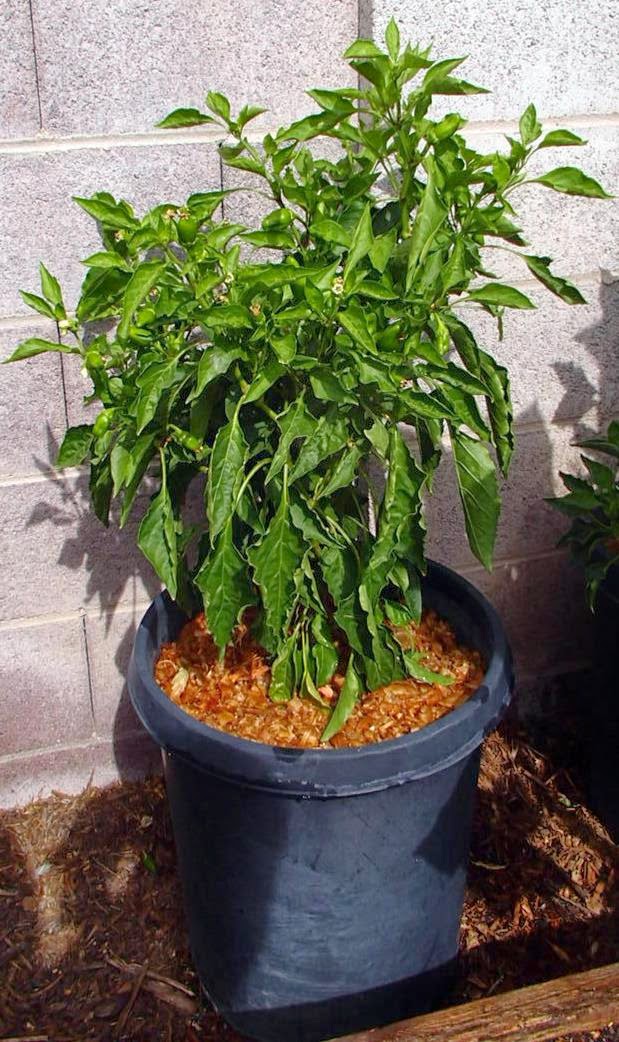
Pepper in container
Q. I would like to plant roses or tree roses or possibly a shrub on my balcony in containers. They will be getting morning sun and afternoon shade. When should I plant them? Can the pot rest directly on the plate or should there be a space between the pot and the plate? I want to make sure it drains properly and I don’t want the water staining my white balcony.

A. You have a lot of flexibility in this location because they are in container soil and receive late afternoon shade. The limitations would be the total hours of sunlight the plants receive and winter low temperatures. Flowering or fruiting plants need six hours of very bright sunlight at a minimum to do well.

Best times for planting are in February through April or May. Another great time is in the fall from late September to mid-November. The winter months are okay for winter hardy plants but plants don’t establish quickly when container soils are cold.

Roses and other flowering or fruiting plants will be well as long as they get at least six hours of direct sunlight. Weight is a problem on balconies so use lightweight soil mixes that contain a large percentage of perlite or vermiculite. These types of soils need water frequently.

Mint in container

Because of weight, stay with containers no larger than 15 gallon. The plate under the container that catching the water can be in direct contact with the container with no problems.

If you are using tap water then about about 20% of the water that you apply should drain out the bottom of the container to move salts flushed and not accumulating.

You might also consider vegetables, herbs and smaller citrus such as kumquat or lime.